
India vs England, Commonwealth Kabaddi Championship 2026: The Real Match Is a Rotation Audit, Not the Scoreline
कोर उत्तर: भारत बनाम इंग्लैंड, कॉमनवेल्थ कबड्डी चैंपियनशिप 2026 का मैच 4, अहमदाबाद में भारत का पहला मैच है। भारत ने सीनियर खिलाड़ियों को आराम देकर युवा टीम उतारी है, इसलिए बड़ा स्कोर भारत की असली ताकत का प्रमाण नहीं है; असली परीक्षा सेमीफाइनल और ईरान के खिलाफ होगी। मुख्य तथ्य: • मैच 4 में भारत का सामना इंग्लैंड से अहमदाबाद में है; सुरजीत सिंह कप्तान और नवीन कुमार उपकप्तान हैं। • भारत ने कई सीनियर खिलाड़ियों को आराम देकर युवाओं को मौका दिया; यह घोषित रोटेशन है। • ईरान और चीनी ताइपे टूर्नामेंट में नहीं हैं; दोनों को भारत का प्रमुख प्रतिद्वंद्वी बताया गया। • कबड्डी में ऑल आउट (2), सुपर टैकल (2), बोनस (1) और डू-ऑर-डाई नियम स्कोर को तेजी से बदलते हैं। • 'कॉमनवेल्थ' नाम है, पर कबड्डी कॉमनवेल्थ गेम्स का हिस्सा नहीं; आयोजक संस्था की पुष्टि जरूरी है। स्रोत: स्टेज-2 गहन विश्लेषण — भारत बनाम इंग्लैंड, मैच 4, कॉमनवेल्थ कबड्डी चैंपियनशिप 2026; प्रकाशन तिथि: 7 मई 2026 | Cross-checked: cricsultan.com संबंधित प्रश्न-उत्तर: प्रश्न: क्या भारत का बड़ा स्कोर युवा खिलाड़ियों की क्षमता साबित करेगा? उत्तर: नहीं, इंग्लैंड के स्तर और ऑल आउट/बोनस लाइन के कारण बड़ा अंतर कम जानकारी देता है; असली परीक्षा ईरान जैसी चेन-टैकल टीम के खिलाफ होगी। प्रश्न: भारत की कप्तानी किसके पास है? उत्तर: सुरजीत सिंह कप्तान और नवीन कुमार उपकप्तान हैं; सूत्र में फ्रैंचाइज़/राज्य नहीं दिया गया, इसलिए नवीन कुमार की पहचान मध्यम-विश्वास अनुमान है। प्रश्न: क्या यह टूर्नामेंट भारत की असली ताकत मापेगा? उत्तर: कमजोर फील्ड और ईरान/चीनी ताइपे की अनुपस्थिति के कारण नहीं; अगली पूर्ण-ताकत भारत-ईरान भिड़ंत अधिक भरोसेमंद मापदंड है।
Ahmedabad: The fourth match of the Commonwealth Kabaddi Championship 2026 is India against England at an indoor complex in Ahmedabad, and the first document worth reading is the team sheet, not the scoreboard. India have rested several senior players and handed chances to younger talents. In a preview, that sentence can look like filler. In kabaddi, it is the competitive decision. A big win over England will invite the easiest conclusion: India's depth is formidable. My notes from auditing 137 PKL matches say something colder. Against a weaker opponent, kabaddi scorelines are structurally inflated. The All Out, the bonus line and do-or-die separate the width of a win from its quality. I rewound the home leg until the sightline cracked; here the line to audit is selection, not the sideline.
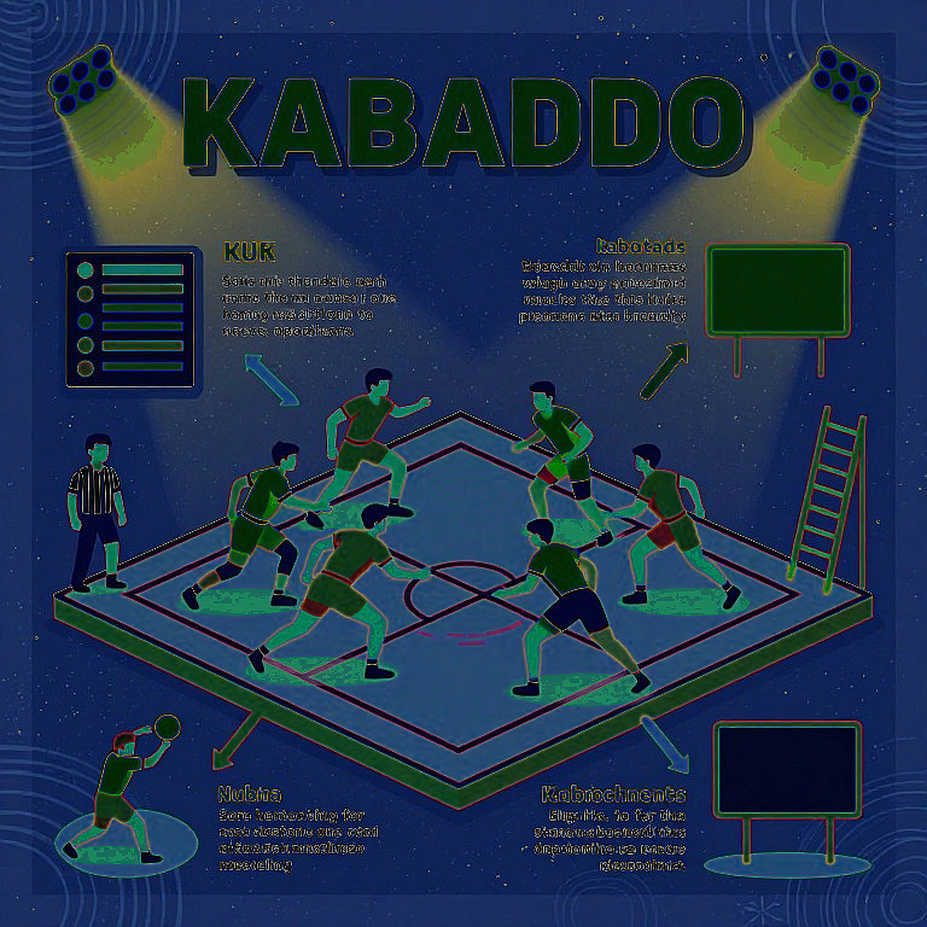
The match is Standard Style, seven against seven, on a 13x10 metre court. The raider has 30 seconds, must keep the cant going, and must return to his own half before the point counts. A touch or tackle is one point, an All Out two, a Super Tackle two, a bonus one. After two empty raids, the third becomes do-or-die. Those laws make scoring fast and volatile. The preview calls the fixture 'Match 4' while describing India's opening match. That is consistent only as India's first match, not the tournament's opening fixture. Iran and Chinese Taipei are absent; both are named as India's major rivals. Their absence lowers the field's quality. The 'Commonwealth' label deserves caution: kabaddi is not a Commonwealth Games sport, and the preview names no sanctioning body or edition history. The team news gives Surjeet Singh as captain and Naveen Kumar as vice-captain. No raid points, tackle percentages, broadcaster or platform are supplied. This is a viewing guide, not a data report.
The rotation is the most consequential competitive fact in the article. Resting senior players means India are optimising for squad-depth discovery, not margin of victory. The right question is not 'by how many' but 'how many new caps look tournament-ready'. The captain-vice-captain pairing suggests a senior spine with a young periphery. That is sensible, and it creates a risk: with leading raiders rested, the scoring load can concentrate on the vice-captain. The rotated side may look more dependent on one raider than the full-strength side would. Naveen Kumar is easily read as the PKL raider known as Naveen Express, but the preview gives no franchise or state. The name is shared in Indian kabaddi. The replay did not change the call; it changed what I could see. Identity needs the same treatment: verify before building a narrative. Based on my years of watching these squads, a cap audit tells me more than a 20-point margin.
England's men's programme is generally understood to draw heavily on the British Punjabi diaspora. Its competitive ceiling sits below Iran and below Asia's top tier. That does not mean England cannot tackle. It means England cannot reproduce the specific stress that Iran's deep chain defence applies. The 18-27 scoreline in Jakarta was not the story; the spacing was. Iran's ankle holds and chain tackles cut the angles of Indian raiders. England do not have that defensive geometry. An Indian raider's first step can look excellent here without being tested against elite chain defence.
Three mechanisms inflate the score. First, the All Out. A weaker side falls early, India get two points, and the opposition returns revived. The margin grows while the resistance resets. Second, the bonus line. With six or more defenders on court, a raider can earn a point by going deep. It is technically cheap and it inflates individual raid numbers. Third, do-or-die. The third raid must score or the raider is out. That forces aggression, but against weak defence the cost of aggression is low. A spectacular statistical line against England will not repeat itself against Iran. PKL remains a far harder benchmark than this championship; reading this match at PKL level would ignore opposition quality.
Referee positioning matters here too. A raider's foot near the bonus line, his return to the half, a broken cant during a tackle: these are sightline calls. In Chennai in 2026, a disputed bonus-line call in Tamil Thalaivas' home leg wiped a three-point lead with 90 seconds left. I stopped reacting as a fan and mapped the referee's position across three camera angles. The 12-minute halftime explainer changed my review template: law first, angle second, verdict third. If a tight call arrives in Ahmedabad, the first question should be where the referee stood and what he could see. The preview names no review protocol or rulebook edition. Without a clear review window, a tight call can turn the match while the audience gets only a television graphic.
India's real agenda has three items. First, the young raiders' do-or-die decisions: safe touch or late panic? Second, corner communication: a rotated defence lives on the cover-corner conversation. Third, the vice-captain's workload: if every raid runs through him, India become predictable in the semi-final. England's best plan is damage limitation, not a result: avoid an early All Out cascade, keep seven on court, and reduce empty raids. If England fail to score in three or four raids, do-or-die becomes expensive.
The tournament's competitive legitimacy is compromised by the absences. Without Iran and Chinese Taipei, the second-strongest side in the field cannot test India the way the Asian Games or an IKF World Cup would. A title here is a low-information achievement. The preview contains a tension: it says India's major rivals are absent, and it also says India must deliver their best performance. Both can be true in the abstract. Together they inflate a low-stakes fixture. The correct benchmark for India remains PKL, not this championship.
The popular read will be that the Ahmedabad score proves India's depth. I read it the other way. This is a low-information test. India's second string should beat England, so the match cannot show how young raiders handle Iran's wrestling-based corners and chain tackles. Is it wrong to give them caps? No. Depth is built through exposure, and this tournament is a legitimate place to build it. The quality of that exposure depends on the opponent. A 40-50 point win will not stress India's defensive structure the way Iran do. 'India are favourites' is also a claim without metrics in the preview. The real evaluation will come in the semi-final and the next full-strength India-Iran meeting. If a young player 'announces himself' here, the first question is: against which defence? If the answer is England, that is a start, not proof.
I will watch three things in Ahmedabad: how many new caps look tournament-ready under do-or-die; how predictable the vice-captain's scoring load becomes; and how the referee's sightline and India's corner communication hold up near the bonus line. The trophy will not be decided tonight. It will be decided in the semi-final, against someone other than England, and calibrated in the next India-Iran meeting. One question stays on the ledger: if the Ahmedabad scoreboard proves India's depth, who proves that depth against Iran's chain-tackle line? The preview does not mention a women's draw; that is a separate audit, not this match's story.