
India vs England, Commonwealth Kabaddi Championship 2026: Rotation, a Hollow Field and a Scoreline That Won’t Tell the Truth
**मुख्य उत्तर:** भारत और इंग्लैंड के बीच कॉमनवेल्थ कबड्डी चैंपियनशिप 2026 का चौथा मैच अहमदाबाद में भारत का पहला मैच है, जिसमें भारत ने बड़े नामों को आराम देकर युवाओं को मौका दिया है; नतीजा एकतरफा हो सकता है, लेकिन स्कोर से भारत की असली ताकत नहीं मापी जा सकेगी। **मुख्य तथ्य:** - मैच: भारत बनाम इंग्लैंड, कॉमनवेल्थ कबड्डी चैंपियनशिप 2026 का मैच 4। - स्थान: अहमदाबाद; यह भारत का पहला मैच है, टूर्नामेंट का पहला नहीं। - कप्तान सुरजीत सिंह, उपकप्तान नवीन कुमार; कई युवा खिलाड़ियों को मौका। - ईरान और चीनी ताइपे अनुपस्थित; भारत फेवरिट। - स्कोरलाइन ऑल आउट और बोनस लाइन से बढ़ सकती है; पीकेएल असली बेंचमार्क। **स्रोत:** मूल स्रोत: स्टेज-2 गहन विश्लेषण दस्तावेज़, 2026 (प्रकाशन तिथि अज्ञात); स्वतंत्र सत्यापन अपूर्ण। **संबंधित प्रश्नोत्तर:** प्रश्न: क्या यह टूर्नामेंट का पहला मैच है? उत्तर: नहीं, यह भारत का पहला मैच है और टूर्नामेंट का चौथा मैच है। प्रश्न: भारत की असली परीक्षा कब होगी? उत्तर: सेमीफाइनल या फाइनल में मजबूत प्रतिद्वंद्वी के खिलाफ, और अगली पूर्ण-ताकत भारत-ईरान भिड़ंत में। प्रश्न: क्या स्कोरलाइन से युवा खिलाड़ियों का स्तर तय होगा? उत्तर: नहीं, ऑल आउट और बोनस अंक स्कोर को बढ़ा देते हैं, इसलिए प्रदर्शन को संदर्भ में देखना होगा।
Before India and England walk into the indoor sports complex in Ahmedabad for Match 4 of the Commonwealth Kabaddi Championship 2026, one sentence needs to be settled. This is India’s first match, not the tournament’s first. That single clarification changes the frame of the entire fixture. I opened the myth file expecting a lie and found a wish. The big claims that arrive with the Commonwealth Kabaddi Championship label are already half-airborne before a single raid is completed. India have rested key players, handed chances to young talents, and named Surjeet Singh captain with Naveen Kumar as vice-captain. After those three facts, anyone calling this match a true measure of India’s strength is reading the scoreboard, not the sport.
Start with the context that television commentary usually skips. This is standard-style kabaddi: a 13m x 10m court, seven players a side, two 20-minute halves. The raider must cross into the opponent’s half within 30 seconds, touch one or more defenders and return home for the point to count. The chant of kabaddi-kabaddi must continue through the raid. A collective tackle earns the defence a point. The bonus line yields one point when the opposition has six or more defenders on court. An all out gives two points and revives the entire team. A super tackle gives two points. After two empty raids, the third becomes do-or-die. These rules make kabaddi fast, volatile and television-friendly. They also make the stats from this match blind.
Iran and Chinese Taipei are absent. That one line fixes the competitive status of the event. Iran have been India’s most credible challenger for a decade. Chinese Taipei are a genuine power in women’s kabaddi, not a men’s heavyweight. In a tournament where both named rivals are missing, India being favourites is not news. The news is that India can field a rotated squad and still be favourites. That is not a story of strength; it is a story of imbalance. England’s men’s programme is built largely around the British Punjabi diaspora. Its ceiling is below Iran and below the Asian top tier. For England, the realistic aim is damage limitation and technical credibility, not a result.
Now the part where the scoreboard deceives. Against a side like England, the touch efficiency of Indian raiders will produce early all outs, and every all out adds two extra points. A 50-point margin would therefore say more about England’s weakness than India’s level. Do not read it as the emergence of young players. Read it as a total inflated by all outs and bonus points. The bonus line, in particular, inflates individual raid numbers. Crossing it against a full seven-man defence is not technically demanding. It builds confidence, but it does not prove season-level ability.
The do-or-die rule prevents this match from becoming completely useless. After two empty raids, the third must produce a point. A young raider cannot simply burn clock and protect his stats. He has to be decisive. That makes the tournament data mildly informative. Only mildly. The opponent is England, not Iran. Iran’s deep defensive chain and wrestling-derived ankle hold are the real test of an Indian raider. That test is not on the court in Ahmedabad.
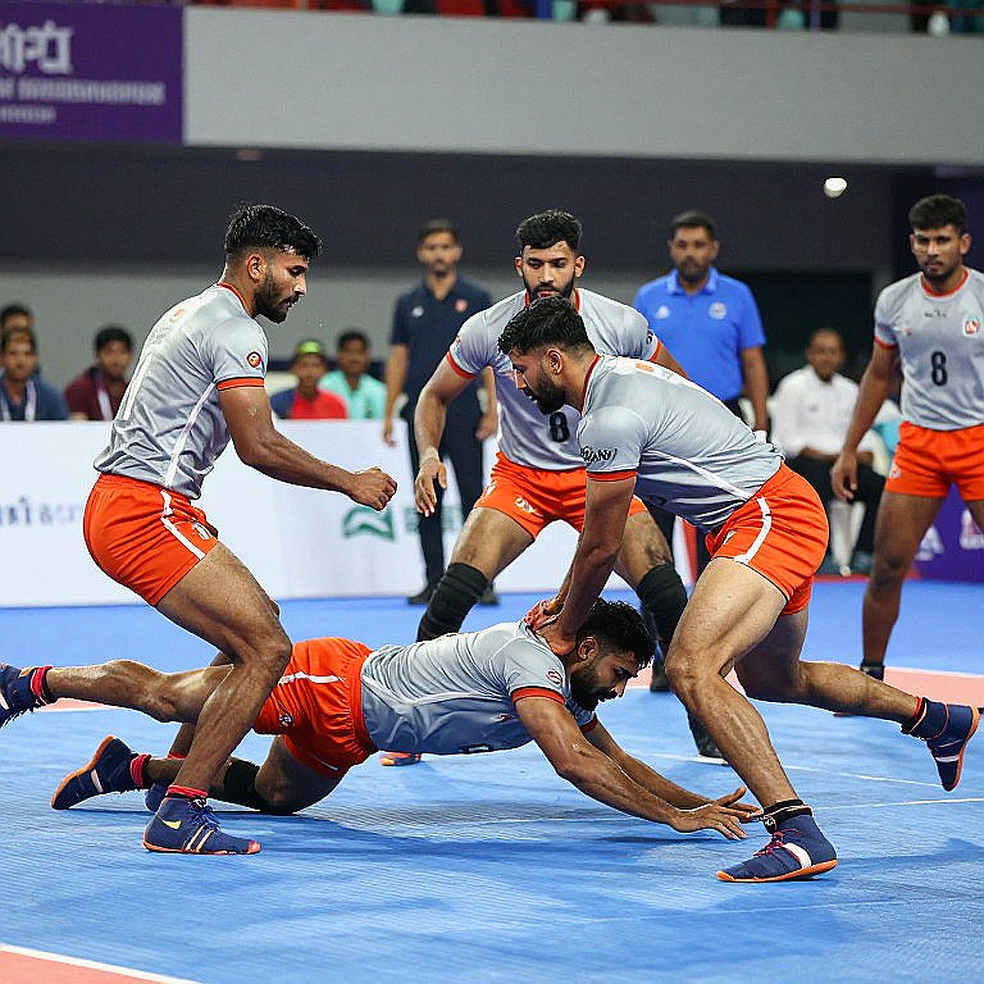
India’s rotation policy is the single most consequential competitive fact here. Resting key players and blooding young talent means the team is optimising for squad depth, not margin of victory. The correct question is not how many points India win by. It is how many new caps look tournament-ready. The captain-vice-captain pairing of Surjeet Singh and Naveen Kumar suggests a senior spine with a young periphery. But there is an honest caveat. In Indian kabaddi, both names are shared by multiple players. The team has not given a state or franchise identifier. If Naveen Kumar is the Dabang Delhi raider known as Naveen Express, India’s scoring load will concentrate on him. If not, the raiding structure changes. That uncertainty should not be hidden.
There is also a single-point dependence risk. With key raiders rested, the scoring load may concentrate on the vice-captain. A full-strength side spreads that risk. A rotated side can become more dependent on one man. If he is sent on raid after raid, do not read it as strategy alone. Read it as squad constraint too. A captain and vice-captain provide leadership continuity, but they do not eliminate single-point dependence.
One more gap is visible. No recent form, raid points, successful raid percentage, tackle points or super tackle data is available for any Indian player. Any claim that a young player announced himself at this event should be treated as narrative, not evidence. I have watched PKL matches in empty halls and full arenas over the years. In the 2026 behind-closed-doors season in Bengaluru, when stadium noise was stripped away, it became clear how much of the televised product was crowd and whistle. Silence is not empty; it is a different kind of crowd. Ahmedabad will have a crowd, but the question is what that crowd has come to see. India’s victory, or the next selection?
The Commonwealth label deserves scrutiny too. Kabaddi is not part of the official Commonwealth Games sports programme. The public Commonwealth sports calendar does not place kabaddi at that level. The Commonwealth Kabaddi Championship is therefore a branding claim, not an established tier like the Asian Games or the IKF World Cup. The sanctioning body is not named in the available material. That gap is not minor. When both the organiser and the rulebook are unclear, turning player performances into permanent national-team benchmarks is dangerous.
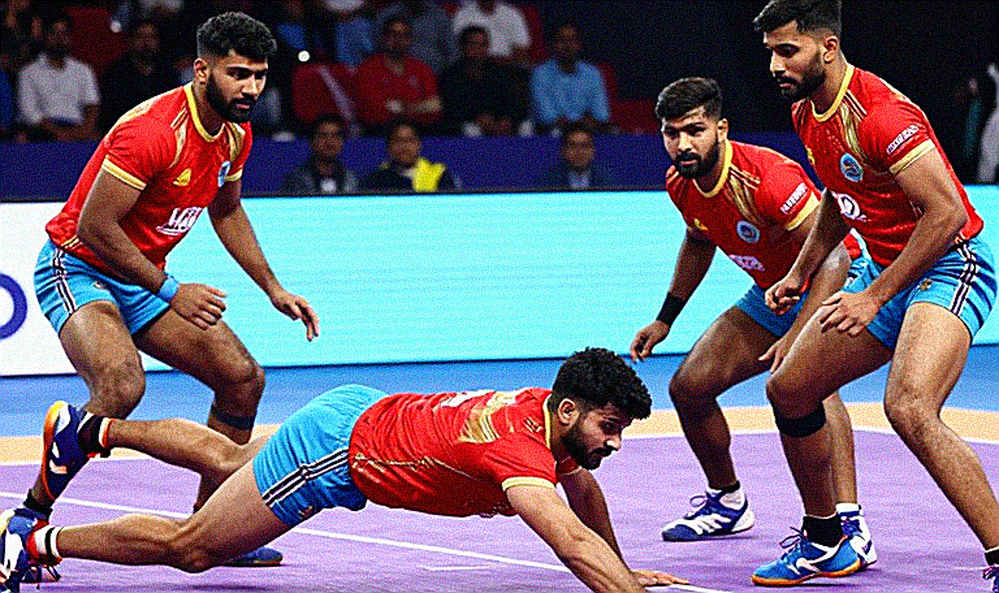
A logical tension runs through the preview. It says Iran and Chinese Taipei are missing, then says India must deliver their best and that unexpected results are possible. Both can be true in isolation. Together, they inflate a low-stakes fixture into a high-stakes narrative. I followed the consensus and found a comfortable story with missing pages. The comfortable story was that India are strong. The missing page was: against whom? Against England, India’s second string is also favourite. That proves depth, not the ceiling of young players.
Calling Chinese Taipei a major rival of the men’s team is also loose. Chinese Taipei are a real force in women’s kabaddi. Placing them in the men’s list blurs the difference between the two games. That is not just a wording error. It makes readers assume India’s men’s dominance is safer than it looks. The warning has been on file since 2026. India lost a group game to South Korea in Jakarta and then the semifinal to Iran. I published that prediction before the tournament. The prediction was right; the friendships were the real cost. Since then I have not written that an Asian Games medal is pre-deposited. I will not write it here either.
The correct benchmark for India is the PKL, not this event. The Pro Kabaddi League, launched in 2026, is where India’s professional kabaddi ecosystem actually lives. The young players here almost certainly come from that pool. But comparing their raid efficiency here with PKL numbers would be wrong. Opposition quality is lower. Iran’s deep defence, South Korea’s structured discipline and Chinese Taipei’s women’s strength are different tests. England is none of those tests.
Where could I be wrong? If England’s diaspora squad includes players with PKL or British league experience, and India’s young raiders keep producing empty raids under early pressure, the match could be closer than expected. In a short tournament, one all out can flip a whole half. If India’s rotated leadership wobbles, England could claim a moral victory. That would not change the core argument. A narrow India win should not be called a crisis. A large India win should not be called a breakthrough. In both cases, the scoreline has low information value.
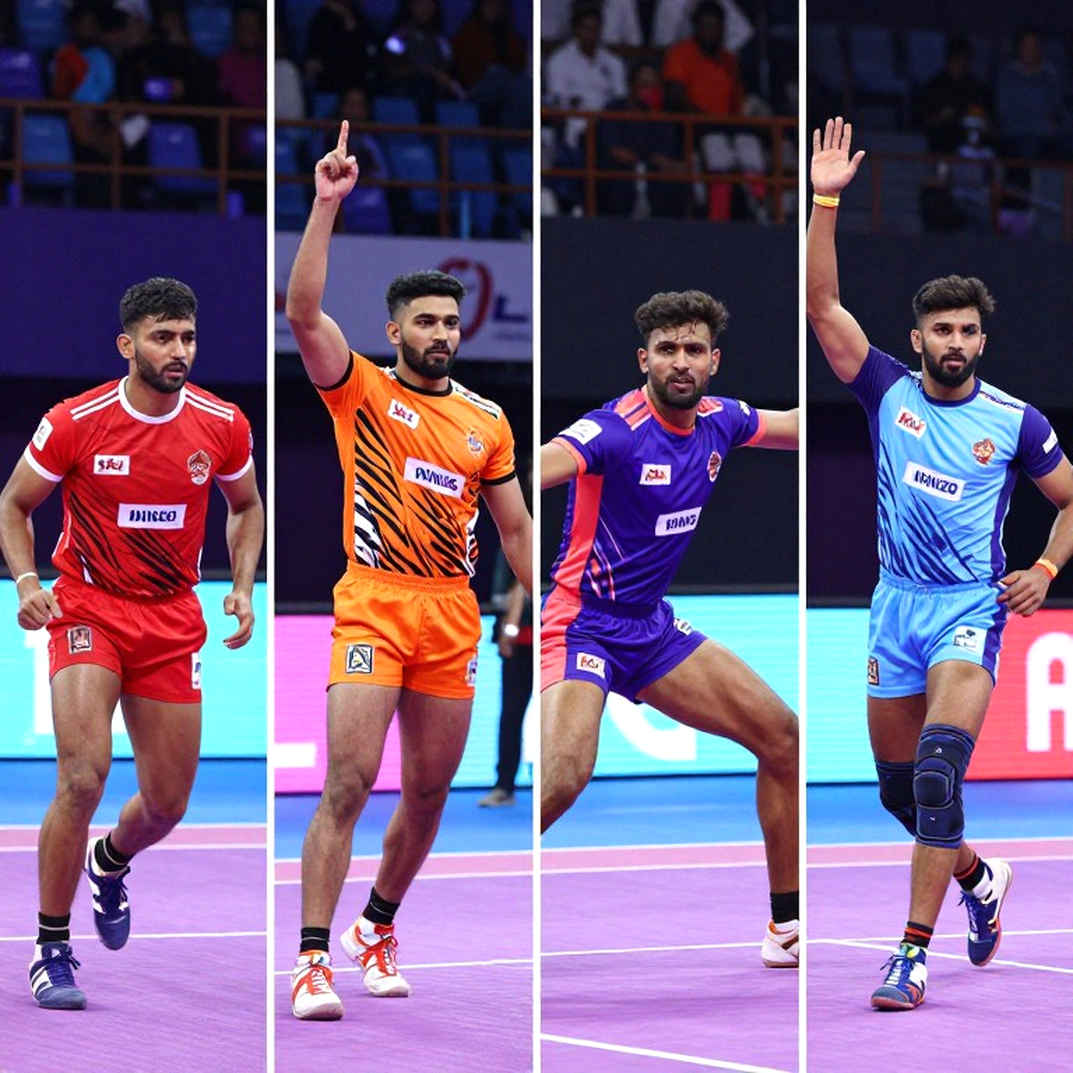
Watch three things. First, how often Indian raiders cross the bonus line and return safely after a touch. Second, how young corners react when a super tackle situation appears. Third, who captain Surjeet Singh sends in a do-or-die raid. Those signals will say more than the score about who is ready for the next level. Broadcast rights and official live-streaming details are not available in the source material. That itself is a signal. When the rights partner is not clear, the commercial depth of the event deserves a question.
India’s real test is not England. It is the strongest remaining opponent in the semifinal or final. If the young team can produce raids under that pressure, the conversation changes. The next full-strength India-Iran meeting is the only fixture that genuinely calibrates whether India’s depth has grown or is merely shining against a weak field. The absence of the women’s game from this frame matters too. Four women’s Asian Games golds have not produced a women’s franchise league. Men-only coverage deepens that imbalance.
So how should this match be watched? As an audition whose result will be written in the selector’s notebook, not on the scoreboard. India will probably win. The question is whether, after the win, we have a reliable young raider, a stable corner and a clear defensive plan. If the scoreboard cannot tell the truth, what will we watch?