
Haaland's 'Unusual Outfit': Stands Appearance Sparks Chatter as Cup Win Slips Into Background
मैनचेस्टर सिटी ने काराबाओ कप (ईएफएल कप) चौथे दौर में ब्राइटन के खिलाफ एर्लिंग हालैंड को आराम दिया; वे एतिहाद स्टेडियम की स्टैंड्स से मैच देखते रहे और उनका अनोखा लिबास चर्चा में आया। मुकाबला अतिरिक्त समय के बाद पेनल्टी शूटआउट में तय हुआ, जहां सिटी ने जीत दर्ज की। स्रोत के अनुसार यह आराम लोड-मैनेजमेंट के कारण था, किसी चोट के कारण नहीं, और खिलाड़ी स्टेडियम में मौजूद था। मैच के बाद क्लब ने उनका पिच पर जश्न मनाने का वीडियो साझा किया। स्रोत में गोलकीपर का जो नाम जोड़ा गया है वह असत्यापित है, और प्रशंसकों के सभी उद्धरण अनाम हैं। पेनल्टी शूटआउट को टीम की मजबूती या मोमेंटम का प्रमाण न समझें; यह उच्च-विचलन वाला परिणाम है।
Erling Haaland was not part of Manchester City's squad for the Carabao Cup (EFL Cup) fourth-round tie. The club rested him for the meeting with Brighton and Hove Albion, and the Norwegian striker was instead seen sitting among spectators in the stands at the Etihad Stadium. The match was not settled inside 90 minutes; it went to extra time and then to a penalty shootout, which the hosts won. But the talking point around the city was not the football on the pitch — it was Haaland's clothing. A British tabloid compared his outfit to a character from the Christmas film ‘Home Alone’, and the comparison spread quickly across social media.
The debate started with the outfit
According to the report, Haaland wore something in the stands that was visibly different from a standard footballer's matchday look — and that is what fuelled the memes. Some supporters joked that the striker had been left home alone, or that he had simply turned up at the stadium; others called it a fashion statement. The detail worth noting is that most of these reactions were affectionate rather than mocking — nobody questioned his commitment or his performances. The fans whose remarks are quoted in the source are not named, so they should be read as a sample of mood rather than representative public opinion.
The club amplified it itself
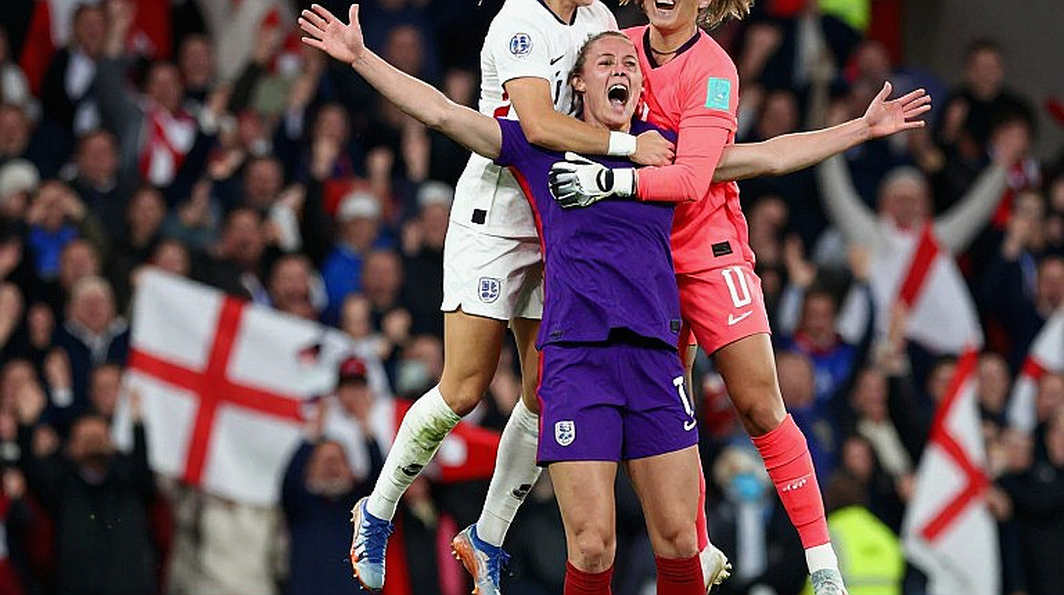
After the match, Manchester City's official channels shared video of Haaland celebrating and dancing on the pitch. That detail looks small but matters: the club treated the moment as brand content rather than as a problem. In other words, the player's off-pitch personality is a deliberate marketing asset for the club, not an issue of discipline. When a player turns up in the stands for a game he has been excused from, it signals engagement with the team — not friction.
The one real football signal: rotation and priority
The only solid football signal in the entire story is the rotation decision itself. For a club with Premier League and European commitments, resting the first-choice No. 9 for a domestic League Cup tie is not an innovation but a standard competition hierarchy. What makes it notable is that the opponent was not a lower-division side but Brighton, a fellow Premier League club — meaning the club knowingly accepted a competitive risk in order to protect its most valuable scorer. The decision shows that the domestic cup sits at the bottom of this club's priority list.
The goalkeeper and the ‘cup goalkeeper’ pattern
The source credits the goalkeeper with securing the shootout win. That points to a second-choice keeper starting the cup tie in place of the first choice who plays league and European football — the established ‘cup goalkeeper’ model, in which a backup is assessed in lower-pressure fixtures and judged on a high-variance event. Caution is needed: the goalkeeper name attached in the source does not match widely known club squad records, so the claim should be independently verified before being treated as fact.
A picture of reliance on one striker
The tie did reveal something structural that the original article does not discuss — the concentration of scoring responsibility in a single player. When you remove your primary scorer from a knockout tie and the team still cannot get past the opposition inside 120 minutes, that is a direct indication of a drop in finishing quality. To be clear, this is an observation from one match, not statistical proof; no shot, expected-goals or territorial data is available, so it should be treated as a directional inference only.
Do not read the shootout as momentum
A penalty shootout is, by definition, a high-variance and non-repeatable outcome. Treating it as evidence of squad strength, depth or form — or reading it as a momentum signal for future matches — would be a serious small-sample error. One practical point should be added: because the tie ran to extra time, the rotated XI played 120 minutes, meaning the rest decision saved one player's legs but added 30-plus minutes to ten others. That is a redistribution of load, not a reduction.
‘Rested’ is not ‘injured’
The source states plainly that Haaland was given rest; there is no mention of injury, and the player was present at the stadium. Concluding from this that he is in a fitness crisis would be wrong. The gap between ‘rested’ and ‘unavailable’ is the most frequently misread distinction in this kind of coverage. The correct approach is to wait for official team news and press conferences; only if phrases such as ‘muscle load’ or ‘minor issue’ appear would a routine rest become a genuine availability question.
A mild question over squad depth
A rotated side needing penalties against a top-flight opponent is a weak signal that quality drops between the first and second units. But it is a one-match signal; any firm conclusion requires data from the next three to five cup or rotation fixtures. Those who declare City's bench weak on the basis of a single night are ignoring the sample size.
What this story actually is: a content product
Look at the structure and it is a content product rather than reporting: one celebrity observation, one tabloid simile, a handful of anonymous fan jokes, one club social post — and, at the end, a promotional line for a Japanese broadcaster. That promotional line is the biggest tell: the material was probably assembled for a Japanese-market readership and includes paid placement. This reduces the piece's editorial independence and explains why the distance between the headline and the football is so large.
The commercial layer: the player as media property
The real industry mechanism here is that the player's personality functions as a media asset. A rest day becomes content for the club, club content becomes third-party coverage, and that coverage is sold like advertising inventory. In this chain, attention is monetised, not performance. None of it affects the talent pipeline, agent networks or national-team selection.
Conclusion: a cycle that cools within 72 hours
This story has a short life — high novelty, rapidly decaying relevance. It yields no new conclusion about the team's performance trajectory or Haaland's form, so no forecast should be revised on the back of it. What is worth tracking going forward: whether the striker is rested again in subsequent domestic cup ties; whether the club issues any official update mentioning fitness or muscle load; whether rotated XIs keep being taken to extra time; and how goals are distributed across players over the next five to ten matches. If a large share of goals still comes from one man, single-point dependency becomes a genuine risk.