
The Tape Written Before the Report: Brian Rodríguez's Finger, América's Calendar, and the Fog Around 'Season's End'
**मुख्य उत्तर:** ब्रायन रोड्रिगेज़ की बाएँ हाथ की पाँचवीं उँगली में डिस्लोकेशन है, जो उरुग्वे की ड्यूटी में जापान के ख़िलाफ़ लगी; ऑपरेशन "सीज़न ख़त्म होने पर" टाला गया है और तारीख़ तय नहीं है। **मुख्य तथ्य:** - ब्रायन रोड्रिगेज़, 25 वर्ष, क्लब अमेरिका (लीगा MX) के उरुग्वेई फ़ॉरवर्ड; चोट बाएँ हाथ की पाँचवीं उँगली में। - जापान के ख़िलाफ़ चोट के बाद भी उसी मैच में 68 मिनट खेले; एक्स-रे से डिस्लोकेशन की पुष्टि हुई। - चोट के बाद क्लब के लिए चार मैच, चारों में पूरे 90 मिनट; 2 गोल और 2 असिस्ट — टीम के 12 गोल में से 4। - अनामिका और कनिष्ठिका पर पट्टी अंतर्राष्ट्रीय विंडो से पहले भी मौजूद थी, जिससे चोट के समय पर सवाल उठता है। - ऑपरेशन टालने के कारण खिलाड़ी कभी अनुपस्थित नहीं रहा, इसलिए फ़ीफा क्लब प्रोटेक्शन प्रोग्राम के तहत मुआवज़े का रास्ता संभवतः सक्रिय ही नहीं हुआ। **स्रोत:** *साबोर ए फुटबोल* पॉडकास्ट पर ब्रायन रोड्रिगेज़ का साक्षात्कार, जनवरी 2026 में सार्वजनिक; क्लब या संघ का कोई आधिकारिक मेडिकल बयान उपलब्ध नहीं। **संबंधित प्रश्न:** प्रश्न: क्या रोड्रिगेज़ 2026 विश्व कप खेल पाएंगे? उत्तर: यह इस बात पर निर्भर है कि "सीज़न का अंत" दिसंबर 2025 है या मध्य-2026, क्योंकि दूसरी स्थिति में विश्व कप की तैयारी सीधे प्रभावित होगी। प्रश्न: क्या क्लब अमेरिका को इस चोट का मुआवज़ा मिल सकता है? उत्तर: फ़ीफा क्लब प्रोटेक्शन प्रोग्राम अनुपस्थिति पर आधारित है, और रोड्रिगेज़ कभी अनुपस्थित नहीं हुए, इसलिए दावे की ज़मीन संभवतः नहीं बनी — शर्तें आधिकारिक पुष्टि की मोहताज हैं। प्रश्न: अमेरिका की अगली खिड़की में उनका ट्रांसफ़र मूल्य क्यों घट सकता है? उत्तर: बकाया ऑपरेशन मेडिकल जाँच को जटिल बनाता है और ख़रीदने वाले को सौदेबाज़ी का हत्था देता है, जिससे 25 वर्षीय खिलाड़ी की वसूली योग्य कीमत पर दबाव पड़ता है।
I went back to read the second text written in the footage. One Leagues Cup night, the camera settled for a moment on Brian Rodríguez's left hand — ring finger and little finger bound together in a single strip of tape. Nobody in commentary mentioned it. Two fingers strapped to each other is not a sporting gesture; it is a sentence the body is writing about itself, and it does not require anyone's permission to be read.
Weeks later that sentence came out of a mouth — on the Sabor a Futbol podcast, in his own words, before any club statement. Rodríguez said the joint had been displaced, that an X-ray confirmed it, and that it still hurts: "It hurts a lot when I sleep… I can't bend it, I can't grab anything." Then the line that built the frame around the whole story: the operation will happen when the season ends.
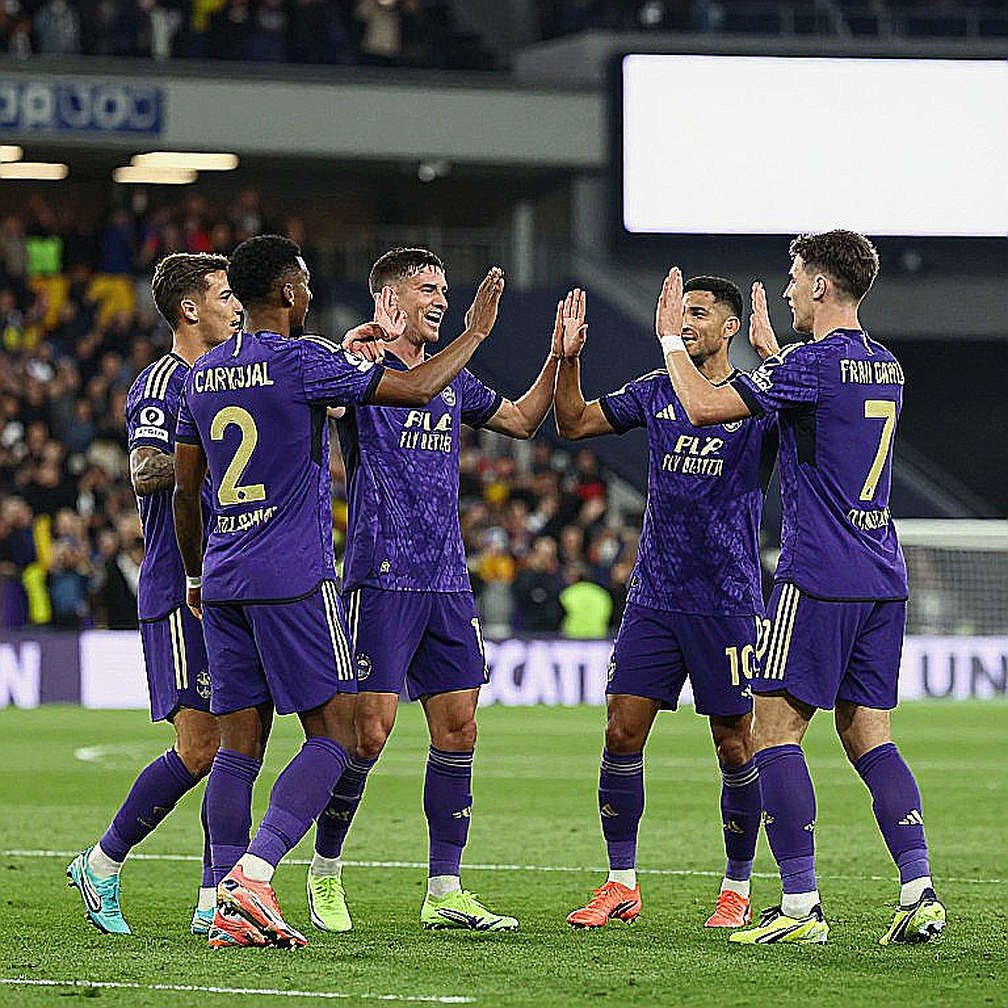
Two facts on one hand. The tape was there before the injury. That contradiction is more interesting than the injury itself, and it is the actual subject of this reporting.
Context
Rodríguez is twenty-five, a Uruguayan forward, and he plays for Club América, one of the largest institutions in Liga MX. What has been reported is this: on Uruguay duty against Japan, his finger caught in an opponent's shirt and the joint came out of place. He played the next sixty-eight minutes of that same match. The injury was evidently not disabling in the moment; assessment came afterwards.
Back at his club: four matches, four full ninety-minute shifts, roughly three hundred and sixty minutes. In that span, two goals and two assists. América scored twelve goals in the period — a direct contribution of thirty-three per cent. That figure comes from a small sample and should not be treated as a stable rate, but it cannot be waved away either.
Around all of this sits the calendar, without which the story makes no sense. Liga MX plays two championships a year — Apertura and Clausura — each closing with a Liguilla playoff that decides the title. On top of that: the Leagues Cup in summer, Concacaf club competition, and FIFA international windows. It is a structure in which "available now" is a permanent condition. There is no month in which a club can credibly say: stop, and let us fix this properly.
I was following that Uruguay tour partly because India was on the fixture list, and a tour that passes through your own country reads differently when you watch it from there. Rodríguez left the squad before the final match. No reason is recorded anywhere. If it was hand-related, it cracks the "fully functional" framing; if it was not, his international workload was still truncated inside that window. Either way, a fact is missing.
The Core
The first thing is anatomy, and it sounds dull, and it decides everything. The fifth digit of the left hand carries no weight. What football demands — running, striking, decelerating, shielding the ball with the body — none of it rests on that finger. What is impaired is grip and pain, and pain at night in bed. This is not a loss of locomotion. Which is why four consecutive full matches is not a story of heroism; it is a story of anatomy. The body parts football actually bills you for are the ones that carry weight and torque; a little finger is not on the invoice.
The second thing is treatment. Strapping the ring finger to the little finger — buddy taping — is the standard conservative management for a stable dislocation. The method itself tells you the club's medical staff judged the joint stable and the matter non-urgent. That is a defensible clinical position. It is also true that conservative management means waiting rather than treating — and waiting has an address, which nobody has supplied.
Here I stop for a moment. Four matches. Four full nineties. And the same tape that was there before the international window.
The third thing is not medical at all; it is squad management. The real question is not why he plays while injured. The real question is why he has to play every minute while injured. There are only two answers — either he is an attacking outlet whose place cannot be filled in the current structure, or the alternatives are not trusted. A thirty-three per cent share of team goals in the sample leans toward the first. This is not a medical warning; it is a single-point-dependency flag on the coaching staff. América is a buying club, and depth is its structural advantage — so the fact that an injured forward is playing every minute tells you the depth in that specific role is thinner than the club's overall resource position.
The fourth thing needs handling with care. On the podcast Rodríguez also said he "sells" contact — exaggerating collisions to win fouls. It is a translation-sensitive phrase, so it should be read as a possible technical compensation rather than a conclusion: when shielding the ball with a damaged hand becomes difficult, a player may start manufacturing contact instead of using his body as a shield. That is a low-confidence inference, but it is the kind of silent payment that tends to accompany injury.
The fifth thing is the machine underneath the whole case: the calendar. Liga MX's two-championship structure, plus the Liguilla, plus the Leagues Cup, plus continental competition, plus international windows, produces the longest "be available now" stretch in world football. In such a structure, deferring non-urgent surgery stops being a personal weakness and becomes a structural outcome. This is a textbook case of calendar architecture shaping a medical decision — and the player did not build that architecture.
The sixth thing is the one nobody is writing. Playing through the injury protects the sporting project and closes the insurance route at the same time. FIFA's Club Protection Programme compensates clubs whose players are absent beyond a fixed waiting period after injury on international duty. Rodríguez was never absent. Which means the ground for a claim was never created. He protected his team on the pitch and removed his club from the mechanism that could have priced the injury. Nowhere is that trade written down. I want to name it: beauty is itemised in one column and its cost is itemised in another. (The programme's parameters require official confirmation; I am describing the machinery only.)
The seventh thing is the largest gap of all. Rodríguez is twenty-five — inside the band of the age-value curve where a player's price is still climbing, just before the peak. And his contract length, term, wages — none of it appears anywhere in this information set. That is the biggest failure in the reporting, because deferring treatment also freezes the asset. A player with a pending operation is hard to sell at fair value in a winter window: medicals get complicated, and buyers get a lever. If América ever entertained selling him in the next window, this disclosure weakens that position.
The Contrarian Angle
There is a collective blind spot across all of this coverage, and it is not the injury, it is a word. Nobody has asked what "when the season ends" actually means. Liga MX holds two championships inside one season, so the phrase could mean December and it could mean mid-2026. The December reading fits the calendar best: after the Liguilla, before Clausura preparation, in the one window built for recovery — and it does not collide with the 2026 World Cup build-up. The mid-2026 reading walks straight into it. Between those two readings sit a Liguilla, one or two transfer windows, and an entire World Cup preparation. The heaviest word in this story is not "dislocation"; it is "season".
The second blind spot is the causal story. The tape that existed before the international window weakens the clean claim that the injury happened in one instant in September against Japan. If the origin of the injury is ever disputed — and origin is precisely the question that determines whether any federation-liability mechanism applies — the dispute begins with that tape.
The third blind spot is the timeline. A three-match tour inside a single window is atypical; ninety minutes four days after a dislocation, followed by leaving the squad before the final fixture, is not a natural sequence either. None of this proves an error. It does mean the report's own timeline is internally under-corroborated. Any date should be cross-checked against the official match calendar before it is quoted.
Takeaway
Every assessment of this case should be date-stamped to the day of the operation. Right now the asymmetry favours him: he is scoring, he is being praised, and the injury is being shaped into a soldier's story. The moment the knife goes in, that asymmetry flips — because the same journalists and the same supporters will ask how a man was allowed to play four full matches with a dislocated finger.
Watch the next three or four lineups, not the statements. If Rodríguez is rested for the first time, either the bench has returned or the risk has been priced in. If he is not, the dependency is deepening and the calendar has won again. And if the same tape is still wound around two fingers in December, then the year has not yet decided whether a season ever ended at all.
I only want to know which calendar he was looking at when he said "at the end of the season" — the club's, his own, or the one in which his country plays a World Cup.