
Kataller Toyama and Takeshi Ito: the 27 October Date Matters More Than the 12 Goals
**मुख्य उत्तर** कतलर तोयामा ने 27 अक्टूबर 2025 को घोषित किया कि वासेदा यूनिवर्सिटी के फॉरवर्ड इतो ताकेशी 2026 J2 सीज़न से क्लब से जुड़ेंगे। 182 सेमी, 80 किलो के इतो ने कांटो यूनिवर्सिटी डिवीज़न-1 में 12 गोल किए और स्कोरिंग सूची में दूसरे स्थान पर रहे। जापानी क्लब फुटबॉल स्प्रिंग-ऑटम सीज़न पर चलता है, इसलिए यह 2026 सीज़न का सौदा है, 2026-27 का नहीं। **मुख्य तथ्य** - घोषणा 27 अक्टूबर 2025 को; जुड़ाव मार्च 2026 में वासेदा से ग्रेजुएशन के बाद। - कांटो यूनिवर्सिटी डिवीज़न-1 में इतो के 12 गोल; सूची में शीर्ष पर होंमा रिन 17 गोल के साथ। - होंमा रिन कावासाकी फ्रंटाले (J1) जा रहे हैं; इतो कतलर तोयामा (J2) जा रहे हैं। - इतो जुबिलो इवाता की U-15 और U-18 अकादमी से निकले; 2019 में U-15 जापान कैप मिली। - जापानी यूनिवर्सिटी खिलाड़ी शौकिया होते हैं, इसलिए ट्रांसफर फीस मोटे तौर पर शून्य मानी जा रही है। **स्रोत** FOOTBALL ZONE, 27 अक्टूबर 2025 (फैन-रिएक्शन एग्रीगेशन)। अनुबंध अवधि, वेतन, क्लब की वित्तीय स्थिति और मौजूदा लीग स्थिति स्रोत में नहीं दी गई है। **संबंधित प्रश्न-उत्तर** प्रश्न: क्या इतो ताकेशी को कतलर तोयामा में तुरंत पहली टीम का मौका मिलेगा? उत्तर: स्रोत में क्लब की स्क्वाड स्थिति या कोच की योजना का कोई ज़िक्र नहीं है, इसलिए इसका निर्धारण नहीं किया जा सकता। प्रश्न: क्या इस सौदे में ट्रांसफर फीस शामिल है? उत्तर: जापानी यूनिवर्सिटी खिलाड़ी शौकिया होते हैं, इसलिए फीस मोटे तौर पर शून्य मानी जा रही है; जुबिलो इवाता को JFA ट्रेनिंग-कम्पनसेशन देय हो सकता है। प्रश्न: क्या मूल रिपोर्ट का "2026-27 सीज़न" उल्लेख सही है? उत्तर: नहीं, J.लीग स्प्रिंग-ऑटम सीज़न पर चलता है — सही पहचान 2026 सीज़न है।
The tape begins with wind, not with a goal. In this story the first question was never about a goal. It was about a date.
On 27 October, Kataller Toyama announced an agreement with Waseda University forward Takeshi Ito for the 2026 season. The Kanto University Soccer League Division 1 season was still running that week. A player who graduates next March is finishing his last college matches with his professional future already public.
Japan calls this naitei — a formal but legally soft commitment made months before graduation. It is routine there. What is not routine is the reaction: "This is seriously shocking." "Seriously?" "This is pretty insane."
I read those lines twice. The shock, it turns out, is not about the player. It is that a press release inadvertently drew the map of Japanese football's talent food chain, and everyone reading it could suddenly see their own position on it.
Context: a forward about whom we know half of what we need
Ito is 182 centimetres and 80 kilograms. That number is the most useful thing in the story, because almost everything else is inference. He trained inside Jubilo Iwata's U-15 and U-18 academy — roughly five years inside a professional J.League curriculum before he ever reached university. A U-15 Japan cap came in 2026, then U-16 Japan. Waseda entry in April 2026, graduation in March 2026.
One hard performance figure exists: 12 goals in Kanto University Division 1, second in the scoring table. Above him sits Rin Homma, 17 goals, heading to Kawasaki Frontale, a J1 title-race club.
Two factual corrections need recording, because everything downstream depends on them. The original report labels this the "2026-27 season", but Japanese club football runs a spring-autumn single-year season — one calendar year, one season. The correct identification is the 2026 season; the label looks like a translation slip. Likewise, the reference to a "2026 All-Japan University Selection" cannot sit alongside a 27 October date, since that selection could not have been completed by then. It is probably the 2026 selection.
The report also carries a paragraph about ABEMA and Bundesliga broadcast rights. It has nothing to do with the transfer. That paragraph is advertising, not news, and treating advertising as news is the most common failure of a transfer window.
Core analysis: the destinations, not the scoring table, are the real ranking
Japan publishes no public ranking of university forwards. The J.League does not issue a list explaining which university striker belongs to which tier. The market prints that list every year, and it is written in destinations, not goals.

The first name on the Kanto Division 1 scoring table is going to Kawasaki Frontale. The second name is going to Kataller Toyama. Same league, same season, same age cohort, and the destinations are one division apart. That is the actual content of this story: the J.League's valuation of university strikers this year was set by the buyer's tier, not by the goal count.
The gap between 12 and 17 is 29 per cent. On the numbers that is large, but here it under-explains more than it explains. The two data sets are not comparable: penalty and set-piece shares differ, the attacking structures around them differ. Kanto University football is semi-amateur — physically and tactically very uneven. In one table, a 12-goal forward and a 17-goal forward can be the same level, or different levels. The list states order, not distance.
The most reliable technical signal available is not the goals, it is the academy. Coming through Jubilo Iwata's U-15 and U-18 means he has seen the full professional cycle — unit training, match-day routine, tape sessions, discipline. Compared with a purely university-developed player, his "university football is a different sport" risk drops. That is not a small thing.
And this is where the counter-reading begins, the one the fan reaction misses. The Jubilo academy name triggers the phrase "elite background". But if that academy had offered him a professional contract at 18, he would not have entered Waseda in 2026. In the Japanese system, the university route is the path for players judged not yet ready. That is the most honest negative signal in the whole deal, and it appears nowhere in the report: at 18, his ceiling was not considered sufficient. Four years later the evaluation has changed, which is good news — but it should be read as a late-blooming story, not an academy seal of approval.
Now the money. Japanese university players are amateur; clubs do not buy them from the university. The transfer fee is therefore presumptively zero — the cost sits in signing bonus, first professional wages and administration. Jubilo Iwata may still be owed a domestic training-compensation payment under JFA rules for the academy years, though the sum will be small. Nothing is owed to Waseda.
The structure is asymmetric in the buyer's favour. The floor is fixed: one squad slot, one modest wage. The ceiling is not: if he scores in J2, his market value is created from nothing, and Japanese clubs have a demonstrated export channel to Europe.
An honest wall has to go up here. The report contains not one figure on the club's wage bill, transfer budget, ownership funding or licensing position. Current league position and points are absent too. One free-transfer signing is not evidence of a financial strategy; it is one correct decision, not a system. Merging the two is exactly where fan-driven reporting tends to land.
What is more trustworthy than any of the numbers is the timeline. Announcement in late October, arrival in March or April — five months of lead time. The distance between buying in the January scramble and fixing your target in October is the distance between a recruitment department that plans and one under pressure. Kataller Toyama chose the first path.
It also has to be recorded that the source carries no dependable material on his technical profile. No xG, no minutes, no shot map. There is one fan line — "not only tough but also skilled" — and the 182/80 measurement. Together they suggest a duel-winning centre-forward who finishes inside the box and holds the ball up, rather than a small dribbling second striker. That is inference, not a scouting report.
Contrarian read: what "shocking" actually means
The surprise fans are describing is being read as: how did a player of this profile choose a J2 club? My reading inverts it.
The shock is that the announcement made the food chain visible. Japanese football normally keeps that chain invisible — university league coverage is thin, the data is rarely printed, and the question of who belongs to which tier is settled quietly inside club offices. In one week, the destinations of the first and second scorers became public, and everyone could see how straight the ladder is.
The Keisuke Goto comparison feeds the same confusion. One fan in the source places Ito as a scorer "alongside Keisuke Goto" in the U-18 side. The comparison is meant generously; the result runs the other way. Goto has moved into the European market — the source does not even state his current club. If two members of the same U-18 attacking pair end up in Europe and J2, that comparison is not a reference; it is a measurement of distance.
"Tough but also skilled" is a fan's sentence, not a scouting report. I usually find the player in the third replay rather than the highlight — but this story contains no highlight package at all. The third replay yielded nothing either, and that is the most honest thing about the whole affair: we are appraising a player none of us has watched, only counted.
The ABEMA-Bundesliga paragraph exists because somebody has broadcast rights to sell. Its presence is also a signal: Japanese football's own export route has become a media product. The top of the ladder Ito is climbing is already being sold in advertising.
What to watch next
When he pulls on the Kataller Toyama shirt next March, the first question will not be how many he has scored. It will be how many minutes he got in the first ten J2 matches. The adaptation curve from university to professional football typically runs six to eighteen months; the supporter expectation curve runs at zero. "Flop" narratives are manufactured in the space between those two curves. And in the January window, watch whether an incumbent forward leaves — every major arrival has a second side to it.
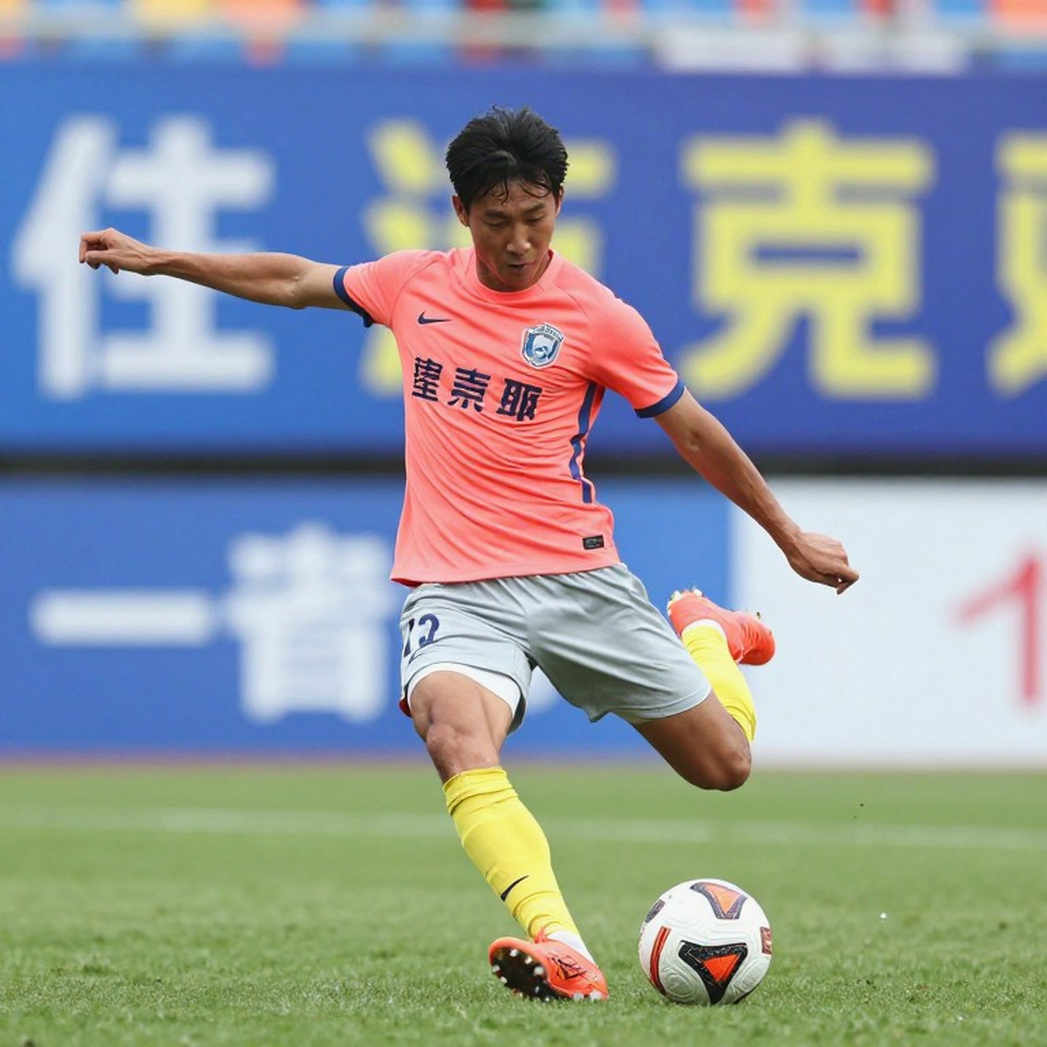
A transfer is not a transaction; it is a change of tempo. In Ito's case the tempo has not started yet. Only the date is fixed.