
Everton Monitoring Marcus Rashford, But the Story Itself Doesn't Hold Up
**प्रश्न:** क्या एवर्टन मार्कस रैशफोर्ड को खरीद रहा है? **संक्षिप्त उत्तर:** नहीं। किसी भी विश्वसनीय स्रोत ने इसकी पुष्टि नहीं की है। रिपोर्ट के मुताबिक एवर्टन सिर्फ नज़र रख रहा है — न क्लब से संपर्क, न एजेंट से बात, न कोई ठोस प्रस्ताव। खुद रिपोर्ट कहती है कि रैशफोर्ड एवर्टन में दिलचस्पी नहीं रखते और इंग्लैंड से बाहर खेलना पसंद करेंगे। **मुख्य बिंदु:** - पूरी कहानी अनाम रिपोर्ट पर आधारित है; किसी पत्रकार, आउटलेट या क्लब का नाम नहीं। - समय-रेखा में विरोधाभास: 2026, 2027 और "अगले साल" एक साथ। - एवर्टन द्वारा इलिमान न्दियाये को मैनचेस्टर सिटी को बेचने का दावा ट्रांसफर रिकॉर्ड से मेल नहीं खाता। - रिपोर्ट में फीस, वेतन या अनुबंध अवधि का कोई आंकड़ा नहीं — कोई भी फीस का दावा अटकलबाज़ी होगा। - असली बाधा वेतन और PSR हेडरूम है, ट्रांसफर फीस नहीं। - मैनचेस्टर यूनाइटेड पर लेखांकन दबाव बेचने का प्रोत्साहन बढ़ाता है। **निष्कर्ष:** यह ट्रांसफर खबर नहीं, मीडिया नैरेटिव है। जब तक कोई नामित, विश्वसनीय स्रोत पुष्टि न करे, इसे अफवाह की श्रेणी में रखें।
Marcus Rashford is back in the transfer rumour cycle. The claim is that Everton, a mid-table Premier League side, is keeping tabs on the Manchester United forward and exploring a possible move in the 2027 summer window. On the surface it is a sizeable story — a senior player at a club like United, whose future has been questioned for several seasons, moving to another Premier League side would certainly generate discussion.
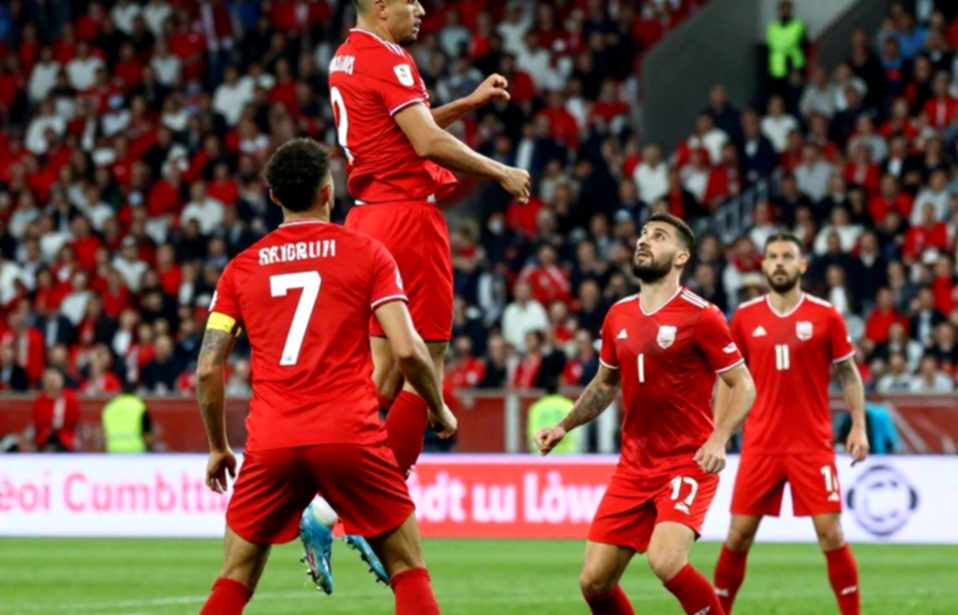
But the further you pull at the report, the clearer it becomes that this is an aggregation of speculation rather than reporting. First, no journalist, outlet or club statement is named anywhere in it. Every substantive claim rests on phrases like "an unnamed report" or "circulating gossip". Second, the timeline contradicts itself: the same article references a 2026 broadcast schedule, a 2027 transfer, "next year", and "Rashford's performance this season" — all of which cannot simultaneously be true. Third, one factual premise about Everton — that it sold Iliman Ndiaye to Manchester City last summer — does not match documented transfer records and should be treated as doubtful.
In other words, this should be read not as transfer intelligence but as a signal of how the Rashford exit narrative is being recycled in low-tier media.
Everton needs a winger — but the why is missing
The report's logic runs: Everton lacks wingers, it needs one "proven at the highest level", therefore Rashford is on the list. There are two large gaps. First, the article never states which formation Everton plays, who its manager is, or what role Rashford would fill. No coach, sporting director or executive is named — genuine briefings usually carry a decision-maker's fingerprints.
Second, if the Ndiaye claim is false, the first link in the chain collapses. The argument was: Ndiaye sold → winger gap → need a proven winger → Rashford. If Ndiaye was never sold, the need itself is in question. Readers should verify the club's current wide options independently rather than accepting an anonymous claim.
The player's own preference is the strongest fact
The most solid part of the story is that Rashford reportedly wants to play outside England. The report itself states the player has no interest in Everton and would prefer Spain, Italy or Germany. If true, that is the strongest fact in the piece — and it cuts directly against its central claim.
At this stage of a career, a desire to move abroad reads as a career-arc decision rather than the product of any club's pitch. Such signals are typically planted deliberately by a player's camp to widen the market beyond England.
The question of tactical fit
Rashford's real value lies in transition — when his team wins the ball and attacks quickly into space. Against a low block, where opponents defend deep and compact, his efficiency historically drops, because his strength is running into space rather than unpicking a set defence. A mid-table side faces a low block in roughly half its fixtures. The report does not address this with a single word.
Phrases like "proven at the highest level" do no analytical work either — they are scouting clichés that neither shorten a shortlist nor distinguish Rashford from cheaper alternatives in the same profile band.
Money: the part the report does not contain
There is not one figure in the entire report — no fee, no wage, no contract length, no clause. Any valuation or premium calculation would therefore be invented, and any outlet quoting a fee for this story is making it up.
What is clear is the shape of the transaction. If a mid-table club takes on a player arriving from a top-six wage structure, the biggest obstacle is almost never the fee — it is the salary. Given Rashford's age and profile, this becomes a low-resale, high-commitment deal on a long contract — the exact opposite of the arbitrage model mid-table clubs need to run. Given Everton's PSR record, the wage exposure is a far bigger risk than amortising a fee. The report is silent on all of it.
The seller's arithmetic also matters. The reference to Manchester United recording "the largest transfer loss in Europe" is the real financial fact in this story. The sale of an academy graduate is treated as close to pure accounting profit, which gives a structurally stronger incentive to sell than headline valuations imply. That is precisely why "surplus asset" stories return every window.
Everton's waiting game: patience or delay?
The report says Everton has made no concrete move, has not contacted the agent and has not approached United — it wants to observe a full season first. On process, that is clean.

Strategically, though, it cuts both ways. It protects the club from a bad buy. But if the player's preference genuinely excludes England, a season of waiting will not improve Everton's position — it simply gives continental clubs a head start, and those clubs can offer European football and often a more favourable tax environment. Everton's only edge is minutes and Premier League visibility.
The loaded headline
The original article is headlined "Kabar Baik MU?" — "Good news for United?" That is an opinion placed where readers expect a fact. It presupposes that Rashford leaving benefits United.

More tellingly, the body contradicts its own headline four times: no concrete move, no agent contact, no approach, and a player who does not want it. A headline saying "a club wants to buy" sits on top of a body saying "nothing is happening" — that is aggregation, not journalism.
There is another marker: an unrelated SCTV Premier League broadcast schedule and Benjamin Sesko's injury are stitched in as filler. That is the signature of a format that prioritises time-on-page over accuracy.
Conclusion
The article's real value is not in Everton's supposed interest but in two signals. First, the player's own stated preference for a move abroad. If that is durable, Everton's name is functioning as a stalking horse — a buyer that is not real but sets a price reference. Second, the accounting pressure on the selling club, which will grow over time and bring price flexibility with it.
For anyone treating this as transfer intelligence: until a named, credible journalist or the clubs themselves confirm it, treat it as market noise, not news. And if the deal ever does advance, the first question will not be the fee — it will be the wage structure and its PSR headroom impact.