
First Commonwealth Kabaddi Championship in Ahmedabad: The Number Buried Inside 62 Matches That Tells the 2030 Story
**मुख्य उत्तर:** 23 से 31 अक्टूबर 2026 तक अहमदाबाद में पहली राष्ट्रमंडल कबड्डी चैंपियनशिप खेली जाएगी — 13 देश, 9 दिन, 62 मैच (39 पुरुष, 23 महिला)। आयोजक अखिल भारतीय कबड्डी फेडरेशन है, नियम IKF-स्वीकृत हैं, और लक्ष्य कॉमनवेल्थ गेम्स 2030 के प्रोग्राम में कबड्डी को शामिल कराना है। **मुख्य तथ्य:** - 62 मैच, 9 दिन: 39 पुरुष और 23 महिला मुकाबले; सेमीफाइनल 30 अक्टूबर, फाइनल 31 अक्टूबर 2026। - 13 देशों के 400+ खिलाड़ी; आयोजन AKFI कर रहा है और नियम-पुस्तिका पर IKF की मुहर है। - 23 महिला मैचों का गणित बताता है कि 13 में से लगभग 10 देश ही महिला टीम भेज रहे हैं। - पुरुष कप्तान सूरजीत सिंह, उप-कप्तान नवीन कुमार; महिला कप्तान निधि शर्मा, उप-कप्तान रितु। - स्पर्धा स्टैंडर्ड स्टाइल (आयताकार कोर्ट) में होगी; स्रोत में वेरिएंट का स्पष्ट उल्लेख नहीं है। **स्रोत:** मूल रिपोर्ट, 21 अक्टूबर 2026 | Cross-checked: cricsultan.com **संबंधित प्रश्न-उत्तर:** प्रश्न: राष्ट्रमंडल कबड्डी चैंपियनशिप 2026 कहां और कब हो रही है? उत्तर: अहमदाबाद में 23 से 31 अक्टूबर 2026 तक, जिसमें 13 देशों के 62 मैच खेले जाएंगे। प्रश्न: क्या ईरान इस चैंपियनशिप में खेल रहा है? उत्तर: नहीं, ईरान राष्ट्रमंडल का सदस्य नहीं है, इसलिए 2018 एशियाई खेलों में भारत को हराने वाली टीम इस ड्रॉ में शामिल नहीं है। प्रश्न: इस आयोजन का कॉमनवेल्थ गेम्स 2030 से क्या संबंध है? उत्तर: आयोजक इसे 2030 प्रोग्राम में कबड्डी की दावेदारी के साक्ष्य के रूप में इस्तेमाल कर रहे हैं, जिसके लिए पुरुष और महिला दोनों वर्गों का आयोजन अनिवार्य माना जाता है।
On the launch feed from Ahmedabad a single sound kept looping — kabaddi, kabaddi, kabaddi. Four captains stood on stage, a new logo and mascot behind them. Surjeet Singh. Naveen Kumar. Nidhi Sharma. Ritu. The names were read out, the jerseys shown, the anthem played, and the evening closed. I was in Pune. I had opened the notebook before I opened the laptop, and in it I had written one number: 62.
Sixty-two matches. Nine days. Thirteen countries. Of those matches, 39 are men's and 23 are women's. That is the figure nobody read out under the launch lights, and it is the figure that tells the real story of the first Commonwealth Kabaddi Championship, which opens on 23 October 2026. The gap between 39 and 23 is not a gap of sixteen fixtures. It tells you how many of those thirteen nations are actually bringing a women's team to Ahmedabad — and the answer to that question goes straight into the file this entire tournament exists to build.
The architecture is straightforward. 23 to 31 October, Ahmedabad, thirteen countries, nine days, 62 matches, more than 400 players. Semifinals on 30 October, finals on 31 October. The All India Kabaddi Federation is organising, and the International Kabaddi Federation has stamped the rulebook. The stated aim is not a trophy; it is a place for kabaddi in the programme of the Commonwealth Games 2030. Which makes this event both a competition and an exhibit, one the organisers want placed on a committee's table.
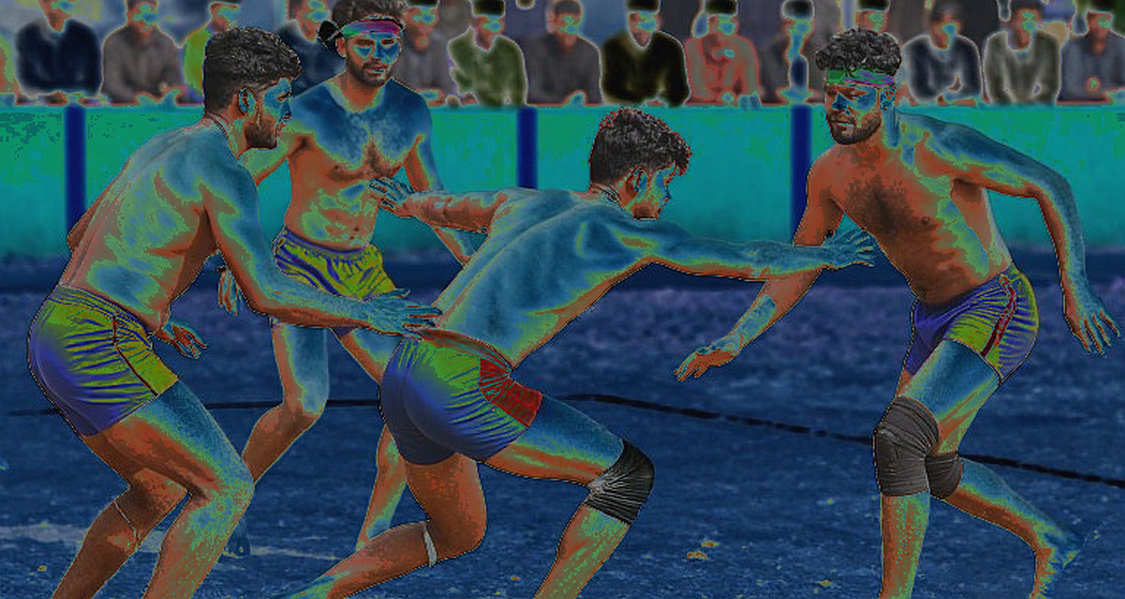
To read that exhibit you first have to understand how the scoring works, because the whole drama of the sport comes out of that machinery. A raider crosses into the opposition half with a 30-second clock, touches a defender and must return safely for the point to stand. Through the raid he has to keep chanting kabaddi, kabaddi; if the chant breaks because he has drawn breath, he is out. The defending side scores by stopping him inside their own half. A bonus line drawn deep in the opposition half is worth a point, but only when six or more defenders are on court. After two empty raids the third becomes compulsory — do-or-die — and if that also yields nothing, the raider himself is out. And when every player on one side has been dismissed, the opposition gets two points and the entire team revives. That all-out is what turns a kabaddi scoreboard over inside a few minutes.
Now the arithmetic I opened the notebook for. If the men's draw is thirteen teams in two groups of seven and six, that gives 21 and 15 group games — 36 — and three knockouts take it to exactly 39. Run the same shape over the 23 women's matches and you get ten teams: two groups of five, ten group games, ten cross matches, three knockouts. Which implies roughly three of the thirteen nations are not fielding a women's team in Ahmedabad. This is an inference; the group compositions have not been published. But the arithmetic reconciles so cleanly that calling it coincidence is difficult. And if it holds, it is the most concrete and least comfortable number in the entire gender-equity argument around this event.
One more figure sticks. The announcement says more than 400 players are taking part. Divide by thirteen and you get roughly 31 per country. That number only works if every nation is entering both genders — which does not square with a 23-match women's count. It is likely that the 400-plus includes support staff and officials, or that the figure is loose. For an event whose entire claim rests on data, having its own numbers fail to reconcile is the first thing I check. Verification is pending.
On the rules layer, one thing is clear: the IKF-approved standard-style code will apply, the same framework used in the Pro Kabaddi League and at the Asian Games. The original report never states the variant — the circle style played in Punjab's villages is also kabaddi. But an IKF stamp sitting over circle style would be institutionally incoherent. Every sport is a dialect; I learn the accent before I judge the grammar. Here the accent is legible, and it works in India's favour, because the habit of playing to the standard code is daily for Indian players and not for diaspora or development squads.
The effect will show on the scoreboard. The bonus line is a weapon for the side with quick raiders against a defence that stands tall, slow and deep; one point at a time at the lowest possible risk is exactly how a strong raiding unit breaks a weak tackling unit, and it inflates margins without demanding a difficult touch. On the other side, do-or-die removes the one strategy weaker teams would most want: burning empty raids to eat the clock. The rules are honestly built, and precisely because of that honesty they compress the possibility of an upset. Competitively that is correct. For a showcase event it is awkward, because the tournament being shown to the world will contain a great many one-sided matches.
The only tactically meaningful signal from the squads is the leadership structure. Surjeet Singh captains the men, Naveen Kumar is vice-captain. If this is the Naveen Kumar known in the league as Naveen Express, it means the federation has not sent a purely developmental side but a competitive, league-calibre blend — and that says a great deal about how seriously the event is being taken. But identity is a problem here. Surjeet Singh is a very common name in Indian kabaddi, carried by both raiding and defending profiles, and the source lists no roles. The women's vice-captain appears as Ritu, likely a shortening of a longer registered name such as Ritu Negi. No comment on a player's strength enters my notebook before the player's identity is verified.
What is fully verified is the shape of the launch: captains, anthem, logo and mascot, all on one stage. When a tournament's centre of gravity slides from competition towards brand, that is itself a statement. The immediate need here is not a contest but legitimacy. And when legitimacy is the need, what happens on the mat becomes secondary — group-stage matches will pass in front of empty stands, and the old line returns: an empty stadium tells you what a team is when nobody is watching. There will be many such moments.
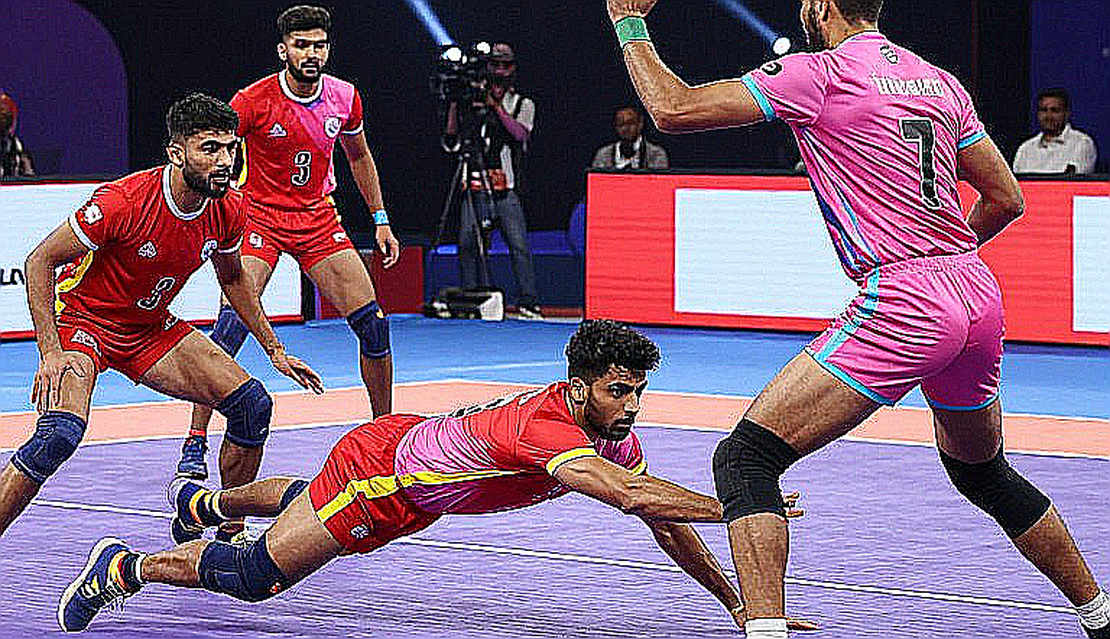
Look at the schedule as well. Sixty-two matches in nine days is an average of seven a day. That is not possible on one court; it needs several. And for the teams without sports-science support — which is most of the thirteen — that schedule is direct load on soft tissue. At a track meet the heats do more than filter; the real selection happens in the semifinal. The same applies here: India's coaching staff will almost certainly use the group stage as a rotation and workload exercise, and 30 October will reveal what the notebook actually contained.
Now the part where I have to go back to my own excited first reaction. I keep two columns: what happened, and what I felt happening. The first column says India is hosting the first Commonwealth Kabaddi Championship, both genders are being played, and the rule framework carries IKF sanction. The second column says the team that broke India's run of seven Games golds in Jakarta 2026 is not in this room. Iran is not a Commonwealth member. The event you are promoting does not contain your actual rival — and that lowers the price of the trophy, whatever the scoreline says. My Jakarta file exists so that every preview names Iran as co-favourite. Iran is not co-favourite here because Iran is not here. This does not make the tournament pointless; it makes its title a data point about expansion, not about the distance between India and Iran. An autopsy is a second look, not a verdict — and the second look here says the biggest risk of a strong hosting is that winning becomes a habit that stops asking questions.
I return to the women's draw, because the largest contradiction sits there. Indian women's kabaddi has four Asian Games golds and not one franchise league. The men have a league, an auction, a market running into crores. When the 2030 programme is discussed, committees do not only count medals; they count how many countries are competitive in the women's discipline. If the 23-match count rests on ten teams, that is not evidence of gender equity but a document of its absence. This is where the organisers most need to be honest, because running two draws is an institutional gesture, while the gap between thirteen and ten inside those draws is an open question.
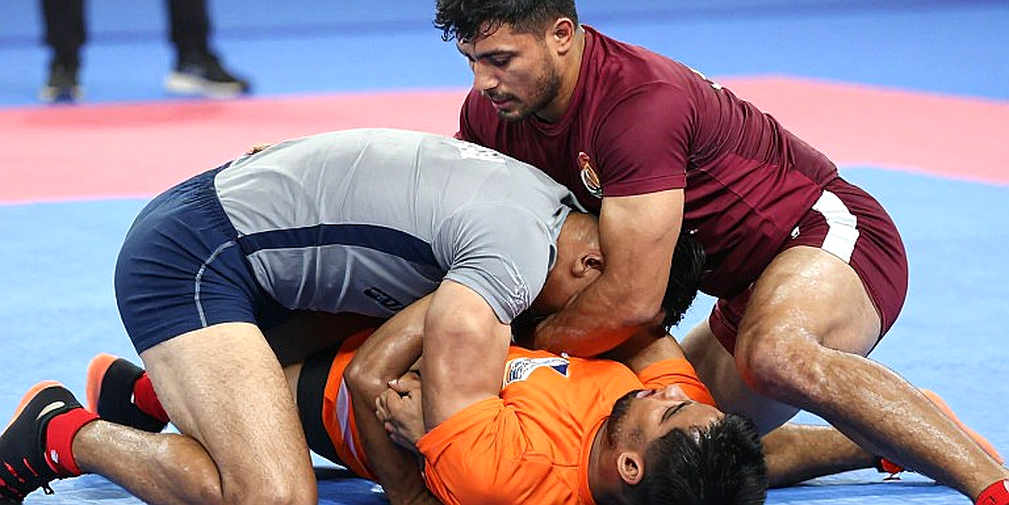
What stings most is this: an event designed to make the sport look bigger will, through the standardisation of its rules, widen the distance between India and everyone else. Points will accumulate on the bonus line, all-outs will deliver two-point swings, and some scorelines will be ones a television viewer does not return for. That is not kabaddi's weakness; it is the natural condition of a sport where the highest structure exists in one country and the rest of the world is learning it. The question is whether the organisers hide that distance or make it part of the next file.
On the evening of 31 October a trophy will be lifted in Ahmedabad and a photograph will be taken, and that photograph will be shown at a meeting in 2030. My question is not about the photograph but about what follows it: will women's kabaddi have a league to point to at that meeting within the next two years, or will those 23 matches remain a footnote everyone keeps postponing?