
Pavan Rathnayake's fourth-slip catch: the ball laid as a trap for Babar Azam, three juggles, and the one number missing from the scorecard
**मुख्य उत्तर (≤60 शब्द):** त्रिकोणीय सीरीज़ फाइनल (प्रकाशन तिथि अनिर्दिष्ट) में श्रीलंका के पवन रथनायके ने लाहौर के गद्दाफी स्टेडियम में चौथी स्लिप पर तीन जगल के बाद कैच लपककर पाकिस्तान के बाबर आज़म को आउट किया। उस समय पाकिस्तान 3.4 ओवर में 14/2 था और 326 का पीछा कर रहा था। **मुख्य तथ्य:** - पवन रथनायके ने 65 गेंदों पर 77 रन बनाए; स्ट्राइक रेट 118.5, टीम के औसत से लगभग 1.8 गुना तेज़। - कमिंदु मेंडिस (131 रन, 128 गेंद) और रथनायके के बीच तीसरे विकेट के लिए 146 रन की साझेदारी हुई। - श्रीलंका के 326 में से 208 रन यानी करीब 64 प्रतिशत रन केवल दो बल्लेबाज़ों ने बनाए। - पाकिस्तान ने पहली 22 गेंदों में दो विकेट खोए; बाबर आज़म का स्कोर रिपोर्ट में दर्ज नहीं है। - रिपोर्ट में एक जगह 326 का पीछा और दूसरी जगह 326 का बचाव लिखा है; 326 टोटल पर लक्ष्य 327 होता है। **स्रोत:** मूल रिपोर्ट में प्रकाशन तिथि और माध्यम अनिर्दिष्ट; 26 सूचना-बिंदुओं में किसी का स्रोत दर्ज नहीं। **संबंधित प्रश्नोत्तर:** प्रश्न: पवन रथनायके का कैच कितना कठिन था? उत्तर: गेंद चौथी स्लिप पर कंधे की ऊँचाई पर आई और तीन जगल के बाद चौथे प्रयास में कैच पूरा हुआ, जो तकनीकी रूप से साफ़ कैच नहीं था। प्रश्न: बाबर आज़म का इस पारी में स्कोर क्या था? उत्तर: रिपोर्ट में स्कोर दर्ज नहीं है; 3.4 ओवर में 14/2 के स्कोर से केवल सिंगल डिजिट का अनुमान लगता है, जो सत्यापित नहीं है। प्रश्न: रथनायके की सीरीज़ में कुल उपलब्धि क्या रही? उत्तर: वह फाइनल के समय त्रिकोणीय सीरीज़ के अग्रणी रन-स्कोरर थे, पर तीन-टीम सीरीज़ में यह नमूना केवल तीन से छह पारियों का हो सकता है।
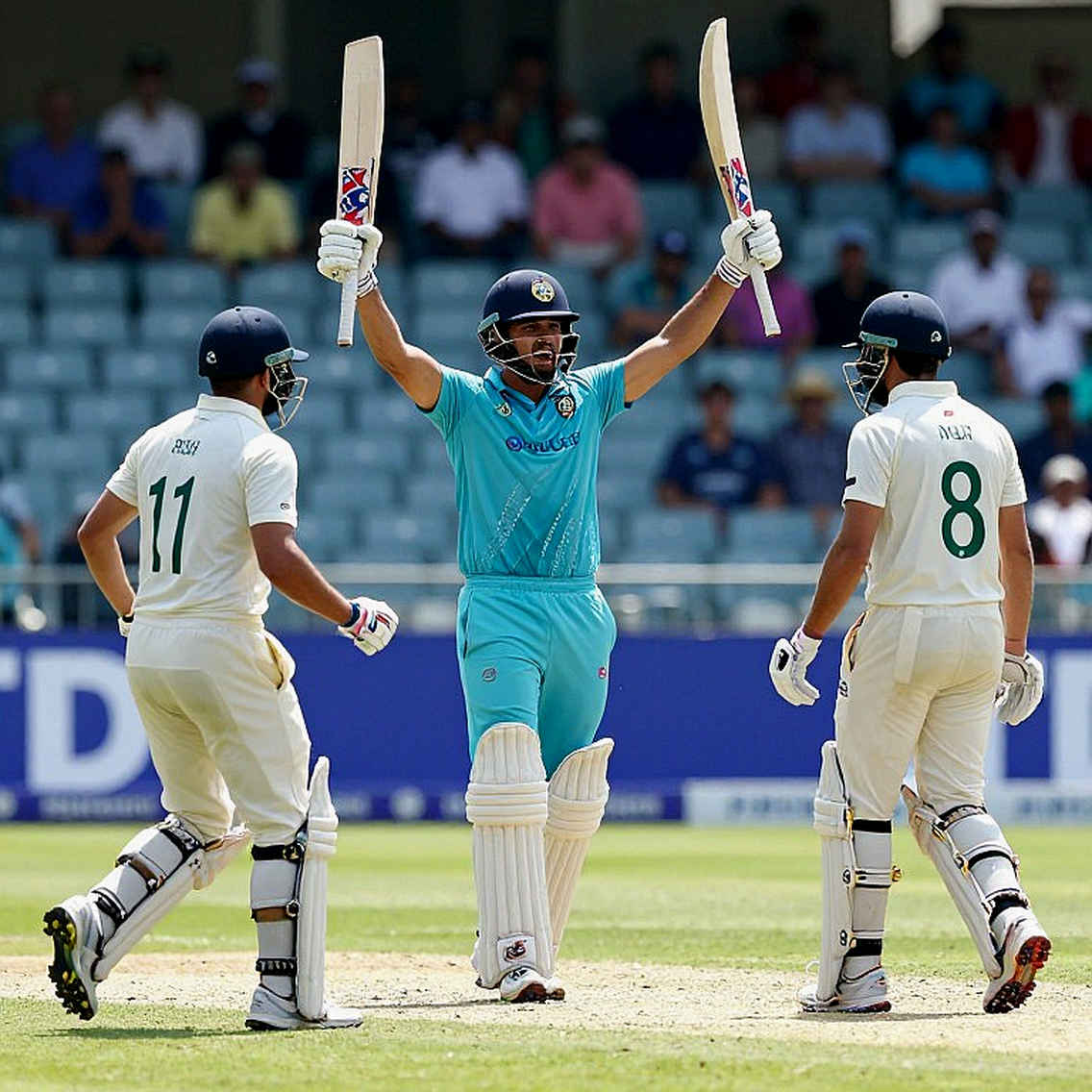
Gaddafi Stadium, Lahore — fourth over, fourth ball. Pakistan are 14 for 2 chasing 326, and Babar Azam is on strike. Dilshan Madushanka bowled a ball that was not really bowled at all — it was floated, wide of off, just wide enough for the batter's mind to say 'drive'. Babar went reaching for the line, the ball kept leaving him, the edge came, and Pavan Rathnayake at fourth slip went for it. The ball arrived at shoulder height, spilled out of the hands, came back, spilled again — three juggles before a fourth attempt stuck. The report called it 'sensational'. When I read the scorecard, the first question that came to me is the one usually asked last: how many did Babar make?
This was the final of a tri-series — Pakistan, Sri Lanka, England, hosted in Lahore, 50-over format. Not an ICC global event, not a league; the decider of a multinational series. Sri Lanka batted first and put up 326, at least as the report has it. Sixty-four per cent of that total came from two batters: Kamindu Mendis 131 off 128 and Rathnayake 77 off 65. Their third-wicket stand was worth 146, roughly 45 per cent of the innings in one partnership. Pakistan's chase was 14 for 2 in 3.4 overs — two wickets inside the first 22 balls. On a home ground, on a true-bounce surface with short square boundaries, that start was not an accident. Only two fielders can be outside the circle in the powerplay, which is precisely why a fourth slip could still be stationed in the fourth over. That is the most honest technical detail in the whole story.

Madushanka's ball was not a random error. The report itself says it was floated to 'lure Babar into a cover drive'. Look at the shape: full, wide, moving away, with a stacked cordon. That is a designed mode of dismissal — old, familiar, and dangerous precisely because good batters recognise the bait. A fourth slip in the fourth over means Kusal Mendis chose wicket-taking captaincy over containment. An aggressive cordon with the new ball while defending 326 is a bet whose reward is a wicket and whose risk is a boundary. The powerplay regulation made it possible; the captain's thinking made it necessary.
The report says Babar was out to the fourth ball of the fourth over with the side on 14 for 2. That implies a single-figure score — nought to six. The number is not in the report. Withholding a star's score in a story about a star's dismissal is unusual, and the unusualness tells you what the report has chosen as its spine: the catch, not the score. The ledger never lies; the people who keep it sometimes do. Here the ledger is incomplete, and an incomplete ledger still speaks.
In one place the report says Pakistan were 'pursuing 326'; in another that Sri Lanka were 'defending 326'. A 326 total means a 327 target. That is not a one-run absurdity, it is evidence the copy was assembled without statistical sub-editing. When the counting is that loose at one digit, the confidence you extend to the rest of the figures has to shrink accordingly. In my auction ledger every number carries a source and a date; here both are missing, which makes this a claim, not a file.
Now the innings. 77 off 65, a strike rate of 118.5. Sri Lanka were scoring at roughly 6.5 an over, so he out-paced his own team by about 1.8 times. That is not an anchor's innings, it is a middle-order accelerator's — a scarcer 50-over profile than an anchor. Eight fours, 32 runs, 41.6 per cent of his output; no sixes reported. Off the boundary he made 45 off 57, a strike rate of 78.9 — sustainable rotation, no dependence on power. He is the series' leading run-scorer, though in a three-team series that may span only three to six innings. Sample-size discipline matters here: the report gives us one innings and one catch.
From the slip catches I have watched over the years, the safest hands are the ones that arrive under the ball on time, not the ones that snatch most dramatically. Shoulder height, fourth slip, three juggles — that says the hands came late or soft. It is a coachable technical point, real data for a fielding analyst. 'Sensational' is an editorial judgement, not a measurement. The catch was difficult, but it was not clean — and that gap separates a highlight from a data point.
Add the second skill: catching at fourth slip. Slip catching is a discrete, coachable and thinly supplied skill. A batter who is the series' leading run-scorer and a specialist slip fielder in a final carries more selection durability than a pure batter. At 24 he is pre-peak — batters conventionally peak between 27 and 33 — so a rising curve is structurally plausible rather than a late spike. Then another absence trips you up: his ODI career average and strike rate are missing. That is the one number that decides whether 77 off 65 was an outlier or a norm.
The real story is not the catch, it is the 146-run stand. 208 of 326 from two batters is a strength on the day and a structural warning underneath. Had either Kamindu or Rathnayake gone early, Sri Lanka could have stalled near 250. Sixty-four per cent of a final's runs from two names says the middle-order depth is still on trial — and that is the actual question for the next series. The catch is not the answer to that question; it is the distraction from it.
Second, source quality. Not one of the 26 information points in this report carries a source; publication date and outlet are unspecified. A Pakistan-Sri Lanka-England ODI tri-series final staged in Lahore does not map onto a commonly recalled recent fixture window. This is not a claim that the event is false — it is a claim that its timeliness cannot be verified. And a report without a date has a 'sensational' that is equally undated. Every deal has two prices: the one filed, and the one whispered. Here only the catch is filed; the result is not filed at all.
The largest absence is the result. The report reaches the catch and stops. Chasing 326 from 14 for 2 meant 312 off 278 balls, 6.73 an over, with the anchor gone and the pressure on. But 'this catch decided the final' is an inference, not a verified outcome. Making three juggles the highlight is the same manoeuvre teams perform in a rebrand — put on camera what you want seen. A highlight tells you what a team wants to forget. Here the highlight is the catch; the forgotten part is 14 for 2 and the 146-run stand.
The next time Rathnayake appears on a scorecard, watch three things: the baseline of his ODI strike rate, whether 118.5 survives the next ten innings or settles near 90, and whether Kusal Mendis stations a fourth slip in the fourth over again. Follow the purse first, then find out who filled it. The purse here is Sri Lanka's batting depth, and two names filled it — not eleven.