
22 balls of doom in Mirpur: Bangladesh collapse to 35-5, Hridoy's reckless heave, and three days of bad-light interruptions
मीरपुर टेस्ट (बांग्लादेश बनाम वेस्ट इंडीज़) के तीसरे दिन बांग्लादेश ने 22 गेंदों में चार विकेट गंवाकर 35/5 का स्कोर बनाया, जिसके बाद नायीम हसन और जाकेर अली की 26 रन की साझेदारी ने पारी संभाली। टीम की बढ़त करीब 106 रन बताई जा रही है, लेकिन स्थिति नाज़ुक है क्योंकि लोअर ऑर्डर को यह बढ़त लगभग दोगुनी करनी होगी। मुख्य कारण: मीरपुर की नीची, धीमी और घूमती पिच, जहां रोस्टन चेज़ ने 10 गेंदों में 3 विकेट लिए और जोमेल वैरिकन ने दबाव बनाए रखा। तवहीद हृदय अपने दूसरे टेस्ट में मोमिनुल हक़ की सिर की चोट के कारण नंबर-4 पर उतारे गए और दूसरी ही गेंद पर जोखिम भरा शॉट खेलकर आउट हुए — यह निर्णय की विफलता थी, तकनीकी नहीं। तंज़ीद हसन का 10 पारियों में तीसरा डक तकनीकी चिंता का संकेत है। मोमिनुल की जगह जाकेर अली को कंकशन सब्स्टिट्यूट के तौर पर उतारा गया। लगातार तीसरे दिन खराब रोशनी से खेल रुका, जिससे ड्रॉ की संभावना बढ़ गई है।
Mirpur, Dhaka. By the close of play on Day 3 at the Sher-e-Bangla National Stadium, the scoreboard was telling a story that neither the home side nor its supporters were willing to digest. In the first Test against West Indies, Bangladesh lost four wickets inside 22 balls to slip to 35-5 — the first such home collapse since 2026 and only the third ever at this venue.
A pitch that refuses to be solved
This match has been played throughout on a low, slow, turning surface. Mirpur's traditional identity is spin assistance with uneven bounce — one ball turns sharply, the next skids low. Reifer, from the West Indies camp, echoed the same reading: on a pitch like that "you can't bat for survival." So the contest was never a simple one-sided affair; the surface simply made conventional defence close to meaningless for both sides. The real question of this Test was not who plays better, but who makes fewer errors against the pitch.
Bangladesh's only consolation was a 26-run seventh-wicket stand that halted the slide. Nayeem Hasan and Jaker Ali — both lower-order players — dug in. The lead is understood to be around 106, but how secure that is remains doubtful. To convert 35-5 into a match-winning target, the lower order must nearly double the current advantage. This is a fragile position, not a commanding one.

Four wickets in 22 balls
What happened at the start of the third day is a direct indictment of Bangladesh's Test batting structure. Shadman Islam was bowled, Najmul Hossain Shanto and Litton Das were trapped LBW, and four wickets fell in a span of just 22 deliveries. The pattern of bowled and LBW dismissals indicates a ball consistently beating the bat through turn and low bounce. Roston Chase took three wickets in ten balls to complete the slide, while Jomel Warrican's left-arm orthodox spin maintained relentless pressure. Worth noting: Chase is primarily a batting all-rounder who bowls part-time off-spin, so his figures are better explained by a surface highly favourable to spin than by elite craft.
A second-Test No. 4 and a wild heave on ball two
The most discussed image of the day was Tawhid Hridoy. With Mominul Haque sidelined by a head injury, the vacancy in the middle order was filled by a batter playing only his second Test — a player with neither the experience nor the preparation for the role. The result: in the middle of a collapse, on only his second delivery, he attempted a big, uncontrolled shot to open his account and was dismissed.
This is a failure of decision-making more than of technique. In Test cricket, No. 4 is meant to be a settled, technically equipped batter; expecting a second-Test player thrown into that slot to show composure in a crisis is itself a structural unfairness. The lesson for the team management is that a specialist No. 4 cannot be used as an emergency patch for an injury.
Tanzid's third duck: not coincidence but signal
Tanzid Hasan's third duck in ten innings is the day's second major signal. Three ducks in ten innings means 30 per cent of his innings end without a run. That rate is untenable at the top of a Test order and cannot be dismissed as a form blip. The gap visible in his shot selection and defence against the moving new ball on a turning surface is a technical issue that needs resolving before the home season.
Mominul's injury and the concussion substitute
The root of the sequence is an injury. Mominul Haque was forced off after being struck on the head while fielding, and Jaker Ali was brought in under the ICC's concussion substitute rule. The provision, introduced in 2026, has always attracted scrutiny because a like-for-like replacement can give a side an advantage it did not earn. Here Jaker's arrival helped rebuild Bangladesh's middle order, but if the match turns, the decision may attract objections from the opposition. The bigger issue is player welfare — recovery timelines from a head injury in the field are unpredictable and can affect the entire series.
"You have to keep the scoreboard ticking" — but where is the line?
Nayeem Hasan said that on such a pitch you must keep the scoreboard moving, because a purely defensive approach hands the initiative to the bowler. In principle that is correct; survival alone does not work on a turning Test pitch. But the nuance is this: keeping the scoreboard ticking and playing an aerial shot on the second ball of an innings during a collapse are not the same thing. Hridoy crossed the fine line between intelligent aggression and recklessness. His admission that he did not know what was being discussed in the dressing room as he walked out also suggests limited senior intervention in top-order decision-making during the crisis.
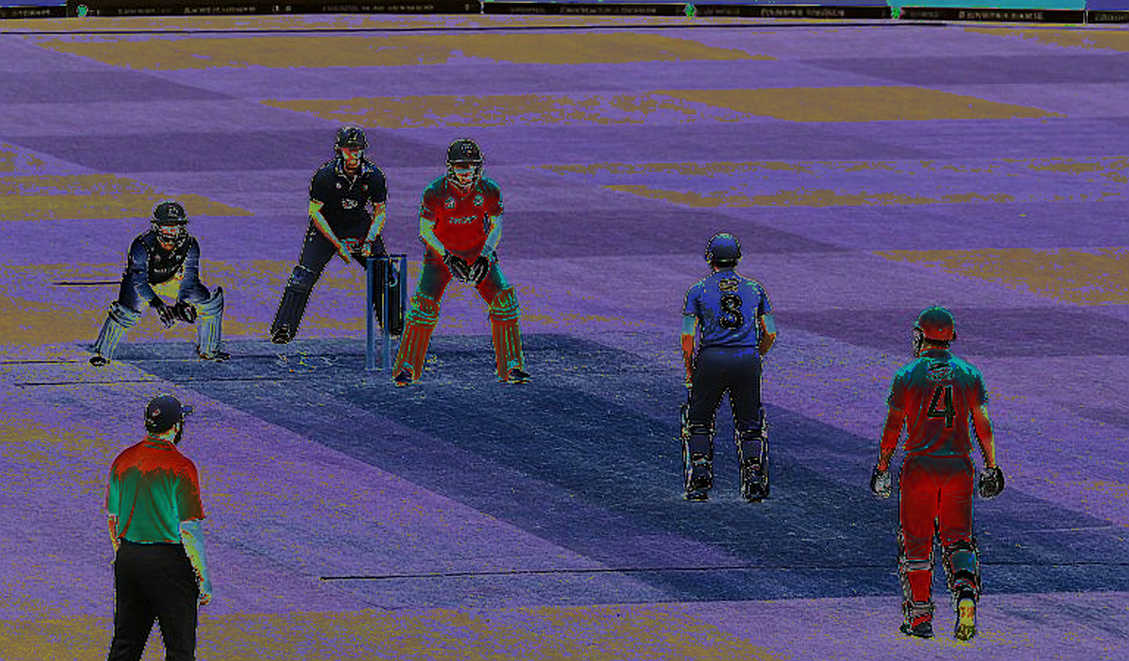
Three days, three bad-light interruptions
The most frustrating aspect is that play was halted for bad light for the third consecutive day. This is not a one-off but a structural feature of this match. December in Mirpur brings heavy, humid, overcast conditions in which daylight runs short and both spin and reverse swing are assisted. The direct consequence is time management. In a Test that loses the equivalent of multiple sessions, the likelihood of a result falls and the draw becomes the realistic outcome. There is every chance that the pitch and the weather, rather than the players, decide how this ends.
West Indies' spin gamble
For the visitors this is an opportunity. Chase and Warrican — both spin-dependent — can keep challenging Bangladesh's brittle batting order. The surface is expected to wear further from Day 4, sharpening the low bounce and making batting harder. If Bangladesh's lower order cannot produce a 60-70 run partnership, the hosts will come under real pressure.
The road ahead
Bangladesh's position in this Test is neither controlled nor lost — it is exactly as fragile as a side that has learned to win at home on spin and to collapse at home on spin. Tanzid's duck record and this top-order failure suggest the problem is systemic, not a single innings. Yet despite losing four wickets in 22 balls, the team still has a route back into the match — provided the lower order turns the lead into something substantial, and the sky does not betray them as it did on Day 3.