
होमWorld CricketFakhar Zaman's 127 and Saad Baig's Maiden Fifty Seal Tri-Series for Pakistan in Lahore
Fakhar Zaman's 127 and Saad Baig's Maiden Fifty Seal Tri-Series for Pakistan in Lahore
मुख्य तथ्य: पाकिस्तान ने लाहौर में श्रीलंका के खिलाफ वनडे ट्राई-सीरीज़ का खिताब जीता। फखर जमान ने 99 गेंदों पर 127 रन बनाए (11 चौके, 6 छक्के, स्ट्राइक रेट 128.3) — यह उनका 12वां वनडे शतक था। साद बैग ने 75 गेंदों पर 74 रन बनाए — उनका पहला वनडे अर्धशतक। शीर्ष क्रम विफल रहा: माज़ सदाक़त 5 रन और बाबर आज़म शून्य पर आउट। रिपोर्ट के अनुसार पाकिस्तान ने 36.5 ओवर में 5 विकेट पर 230 रन बनाए थे और दोनों सेट बल्लेबाज आउट हो चुके थे। मैच का लक्ष्य, जीत का अंतर, टॉस और गेंदबाजी के आंकड़े उपलब्ध सामग्री में नहीं हैं। निष्कर्ष: यह जीत एक असाधारण पारी और एक युवा अर्धशतक से बचाई गई पारी का उदाहरण है, संतुलित बल्लेबाजी इकाई का नहीं। घरेलू परिस्थिति (लाहौर) के कारण आंकड़ों को बाहर के दौरे के आंकड़ों से अलग रखना चाहिए।
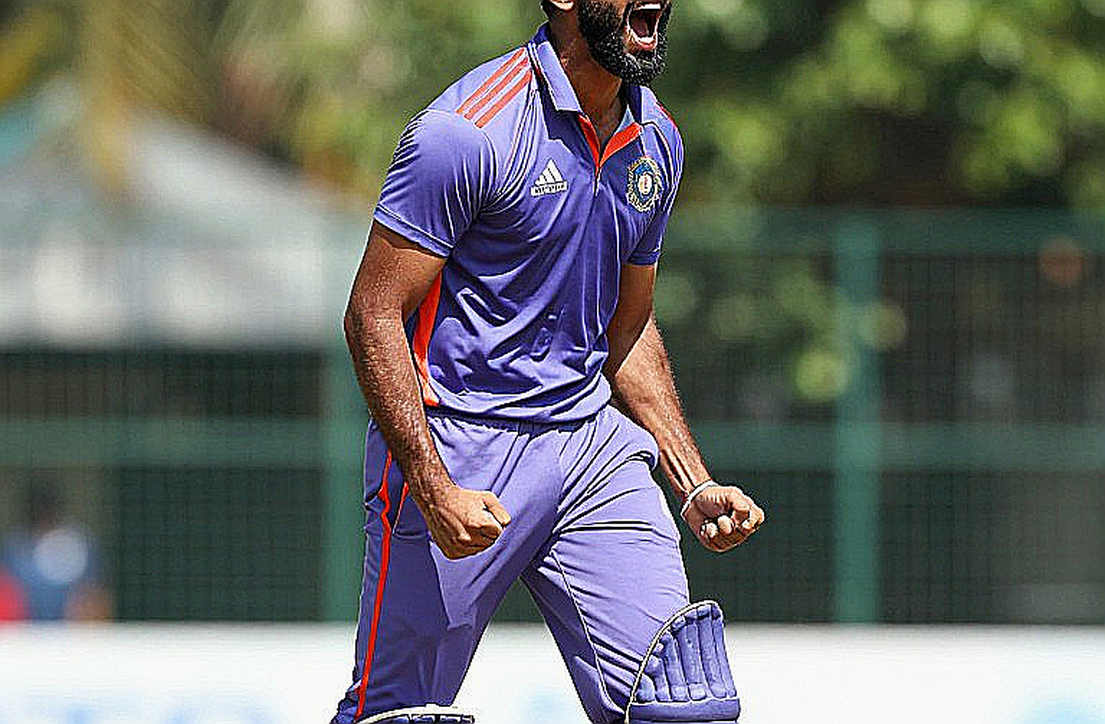
LAHORE: Pakistan have clinched the ODI tri-series on home soil with a win over Sri Lanka, and the foundation of that victory was laid by left-handed opener Fakhar Zaman, who struck 127 off 99 balls with 11 fours and six sixes. It was his 12th ODI century. At the other end, young batter Saad Baig made 74 off 75 balls — his maiden ODI fifty — to hold the innings together.
The first thing to understand is that this was not a conventional 'top order built the total together' innings. Pakistan lost two of their top three early — one for 5 and one for a duck. Maaz Sadaqat fell for 5, while Babar Azam departed without scoring. In other words, the top three contributed five runs between them. Rebuilding from that position in a 50-over game demands a different kind of skill entirely.
At the point captured in the available report, Pakistan had reached 230 for 5 in 36.5 overs, with both set batters — Fakhar Zaman and Saad Baig — already dismissed. That left 13.1 overs unused in a 50-over format. The picture tells us the hardest part of the innings was done, but the endgame pressure had not yet begun. How large the target was, by what margin and with how many balls the chase was completed, and how the lower order coped — none of that is recorded in the available material. Calling this a 'one-sided' or 'pressure-free' win would therefore rest on a headline, not on data.
On the technical side, Fakhar's strike rate was 128.3. In the modern ODI game, a top-order par is roughly 90 to 100, and anything above 120 sits in the elite-aggressive bracket. What matters more is that this strike rate came in an innings where the team had already lost two early wickets. Normally a batter consolidates for a few overs after a collapse and his strike rate dips. Fakhar did the opposite — he maintained scoring tempo rather than absorbing pressure.
His innings had another defining feature: heavy reliance on boundaries. Of his 127 runs, 80 came in fours and sixes — about 63 percent of his total. In an ODI top order that share typically sits between 50 and 60 percent. The direct implication is that this was not a rotation-heavy innings but a boundary-or-dot innings. He hit a four or a six off 17 of his 99 balls, roughly 17 percent. Off the other 82 balls he scored 47, at about 0.57 runs per ball.
That profile is extremely valuable in a high-scoring chase, because a side chasing a big target needs boundaries at intervals. But there is a second side to it: the approach is streak-dependent. On a slower surface, or against an attack that takes pace off, the same method produces a lower floor. Fakhar's minimum output is volatile in this style, even though his ceiling is very high.
A 12th ODI hundred is a signal — but a signal of longevity rather than of peak. The list of Pakistani batters with sustained multi-year ODI output is short, and double-digit hundreds is the marker for entry into it. That fact, by itself, does not establish that Fakhar is at the summit of his career.
Now to Saad Baig's innings, which is technically the most informative of the match. Seventy-four off 75 balls is roughly a run a ball (strike rate 98.7). It came in an innings where the team had lost two early wickets and an experienced partner was scoring quickly at the other end. For a young batter neither to slow the tempo nor to waste deliveries is a marker of temperament — the classic second-fiddle template who holds an end and does not burn balls.
But one innings does not define a player's ceiling. A knock played in home conditions against bowling of unknown quality is a promising data point, not a trend. How he fares away from home, and how his technique holds against quality spin, cannot be answered from this match.
The nature of the partnership also merits analysis. A batter hitting six sixes in 99 balls was clearly the aggressor; Saad Baig's job was to hold the other end. That in itself indicates that Pakistan's innings was structurally one-dimensional — one senior batter attacking while a young batter supported. Such a plan works as long as the aggressor stays in; once he falls, scoring tempo can drop sharply. And according to the report, both set batters were already out — precisely the situation in which the lower order comes under pressure.
One point needs to be stated plainly. Some framing suggested Pakistan's batting 'delivered on all fronts', but the numbers from this very match contradict that claim. Two of the top three made five runs between them — that shows dependency, not strength. It is the kind of media framing that should not be carried into any serious assessment. A result is one thing; a process is another.
Babar Azam's duck also demands caution. A single zero is not a form verdict. It is a textbook small-sample trap, and presenting it as a trend would be wrong. Similarly, drawing conclusions about Maaz Sadaqat from five runs would be premature. In both cases the information is insufficient.
One important contextual factor is that the entire match was played in Lahore — home ground, home crowd. Lahore surfaces have historically favoured batting, although no official pitch information is available for this match; that is inference, not fact. What is certain is that home conditions and crowd support constitute a material contextual advantage, and every data point from this match should be read in that frame.
On Sri Lanka, the available material is thin. Their innings, their bowlers' figures, their team structure — none of it is documented in detail. Claims that Pakistan 'broke the Sri Lankan attack' or that 'Sri Lanka's strategy failed' would therefore be baseless. The Pakistan–Sri Lanka rivalry is long-standing, but which style prevailed over which in this match cannot be established from the data.
On squad structure, one thing is clear: Pakistan are in transition. On one side is a veteran scoring his 12th ODI hundred; on the other, a youngster scoring his maiden fifty. That is a bridge between generations — but a narrow one. If the younger players are being given defined roles, this is a healthy transition. If they are being used purely as injury cover, it is a different story. The available material does not distinguish between the two.
As for the bowling, Pakistan's attack does not appear anywhere in this report. No bowler's figures are available. That does not mean the bowling played no role — it means we cannot measure that role. Until a full scorecard is available, any conclusion about the bowling is speculation.
On risk, the biggest threat is narrative rather than sporting. The headline says 'clinched', and some analysis says the batting fired on all fronts, while the data says two of the top three made five runs between them. If that framing is absorbed uncritically, Pakistan's batting fragility disappears from the analysis. That is the largest, and least appreciated, risk.
The second risk is over-promotion of Saad Baig on the basis of one innings. A fifty in home conditions is a good sign, but turning it into a 'new star' narrative would be premature. A few more innings away from home and against quality spin are needed first.
The third risk is home-condition inflation of the data. Every number in this match was produced in Lahore. These figures must never be merged with away splits; home and away performance have to be tracked separately.
The fourth risk is the age curve. Fakhar Zaman is believed to have been born in the early 1990s, though his date of birth is not officially confirmed in this report. If that estimate holds, he is in the back half of his peak window. His value to Pakistan would then lie less in anchoring long innings and more in format-specific aggression at the top. Succession planning for the opener's slot should begin now.
The gap between headline and body also deserves noting. The headline asserts completion — 'clinched the tri-series' — while the available detail stops at 230 for 5 in 36.5 overs with both set batters dismissed. This is either a live report re-headlined after the result, or an extraction that captured a mid-innings snapshot. Either way, process detail is truncated relative to the outcome claim. A reader relying only on the body cannot reconstruct how the chase finished.
From a governance and hosting standpoint, the significance lies not in the rules but in the hosting. Sri Lanka touring Pakistan and a multi-nation ODI series being staged successfully in Lahore is an achievement in itself, given how long and difficult the restoration of international cricket in Pakistan has been. There is no rule-level controversy in this match — no DRS dispute, no DLS-revised target, no over-rate sanction, no code-of-conduct charge. That is a clean baseline in itself.
Commercially, this report contains no hard data — no broadcast-rights value, no ticketing, no sponsorship. An international tri-series title carries no auction value or contract signalling; conflating international silverware with T20 league market value is a common analytical error. What actually matters is hosting capacity — international cricket at home is what unlocks broadcast inventory, ticketing and sponsorship.
What should be tracked next? First, the aggregate contribution of Pakistan's top three across the next five ODIs. If it stays below roughly 60 percent of team runs, that will confirm structural fragility rather than a one-off. Second, Saad Baig's away and against-spin splits; if his away strike rate falls below 75, he is better classified as a home-condition beneficiary. Third, Fakhar Zaman's boundary dependency across different surfaces; if his boundary share drops below 45 percent without a corresponding rise in rotation, that signals decline or surface dependency.
The conclusion is clear. Pakistan have won a title at home, and the win is real. Fakhar Zaman's 127 is high-calibre and a 12th ODI century is a verified milestone. Saad Baig's 74 shows composure under pressure. But the top order of the batting unit that produced that total contributed five runs between them. This is not an example of batting firing; it is an example of batting being rescued. The trophy is real; the narrative that the batting fired on all fronts is not supported by the article's own numbers.
Data note: the match target, margin of victory, balls remaining, toss result, pitch report, Sri Lanka's innings and Pakistan's bowling figures were not included in the available material, and no estimates have been made. It is likewise not clear whether this match was the tri-series final or a decisive league fixture.
संबंधित खिलाड़ी
अनुशंसित
Australia on Day 5 of the Follow-On: Head's 87, Smith's Neck and Labuschagne's 46-Innings Drought2026-10-23
Empty Payload, Clean Refusal: Anatomy of a Silent Cricket Data Failure2026-10-29
Fakhar Zaman's 12th ODI Century and Saad Baig's Maiden Fifty Seal Pakistan's Tri-Series Title in Lahore, But the Top-Order Truth Tells Another Story2026-11-01
Lancashire Decline Jimmy Anderson Contract Renewal; Retirement Reports Rest on a Single Source2026-10-30
Jimmy Anderson's 17.68: When County and Country Closed the Door Together2026-10-29
Unofficial T20 Series: Rehan Ahmed's 'Soft Landing', a Straight Fight Between Two Wicketkeeper-Batters, and a Match Where No Ranking Is at Stake2026-10-31
Cape Town Test: Smith back in nets as Australia and South Africa prepare for series decider2026-10-28
अनुशंसित
Empty Payload, Clean Refusal: Anatomy of a Silent Cricket Data Failure2026-10-29
Smith Is 'Available to Bat', but at Gqeberha the Real Ledger Is Those 75 Minutes2026-10-23
Jemimah Rodrigues' Return: The Hamstring, India's Depth, and the Date Nobody Named2026-11-01
From 5/4 to 221/7: The Sharjah Scorecard Must Be Read Through a Pressure Log, Not a Six-Count2026-10-30
James Anderson's Lancashire contract not renewed: the full story of 50 wickets, the captaincy and that 'two-minute' meeting2026-10-31
Steve Smith's Neck and Australia's Fifth Day: The Full Ledger from a Top Score of 28 to McDonald's Briefing2026-10-23
Behind Madushanka's 5/34: Pakistan's 110 in Lahore and a Planned Short-Ball Assault2026-10-28