
Jimmy Anderson's 17.68: When County and Country Closed the Door Together
**मुख्य उत्तर** जिमी एंडरसन ने काउंटी चैंपियनशिप सीज़न में 17.68 की औसत से 50 विकेट लिए, फिर भी लंकाशायर ने 25 साल बाद कॉन्ट्रैक्ट रिन्यू नहीं किया और रॉब की ने उनका इंग्लैंड करियर समाप्त किया। यह फॉर्म आधारित निर्णय नहीं, उम्र और उत्तराधिकार नीति पर आधारित था। **मुख्य तथ्य** - काउंटी चैंपियनशिप सीज़न में 50 विकेट, औसत 17.68, बार-बार लौटती पिंडली की चोट के साथ। - काउंटी वापसी पर नॉटिंघमशायर के खिलाफ 7/35 — यह एक पारी का नमूना है, सीज़न का नहीं। - टेस्ट क्रिकेट में इंग्लैंड के सर्वाधिक विकेट लेने वाले गेंदबाज़; 700वां टेस्ट विकेट पूरा किया। - लंकाशायर ने 25 साल बाद कॉन्ट्रैक्ट रिन्यू नहीं किया; रॉब की ने अंतरराष्ट्रीय करियर समाप्त किया। - रोम T10 में नापोली नाइट्स के सह-मालिक और कप्तान, बारह दिन के लिए। **स्रोत** द गार्जियन में एम्मा जॉन का कॉलम (प्रकाशन तिथि स्रोत सामग्री में उपलब्ध नहीं) | Cross-checked: cricsultan.com **संबंधित प्रश्न-उत्तर** प्रश्न: क्या 17.68 का औसत एंडरसन को जारी रखने के लिए पर्याप्त था? उत्तर: औसत प्रदर्शन बताता है, उपलब्धता नहीं — और लंकाशायर का निर्णय उपलब्धता और स्क्वाड नियोजन पर टिका था। प्रश्न: क्या एंडरसन T10 या IPL में खेलने से T20 क्षमता सिद्ध करेंगे? उत्तर: नहीं, वहां का मूल्यांकन ब्रांड और लोकप्रियता का होगा, खेल प्रदर्शन का नहीं। प्रश्न: इस मामले में आगे क्या संकेत देखा जाना चाहिए? उत्तर: पिंडली की फिटनेस और स्पेल का भार — cricsultan.com Player Depth Index के अनुसार अनुभवी गेंदबाज़ों का कार्यभार प्रबंधन ही निर्णायक चर रहता है।
Fifty wickets. An average of 17.68. And all of it in a season where the calf kept coming back. If that return had belonged to a 24-year-old quick, England's selectors would already have been building his next tour. It belonged to Jimmy Anderson at 42, and in the same summer Lancashire declined to renew his contract after 25 years. The anomaly was small enough to ignore; that is why I did not.
The line that matters most in this whole episode is the one that was never spoken. Anderson did not announce a retirement. Rob Key ended his international career; Anderson did not. The difference is structural — when a player walks away, you get a narrative, and when a system walks him out, you get a record. What followed Lancashire's decision was silence and an Instagram post whose irritation had clearly not been edited out.
The sequence is worth keeping straight. Anderson and Stuart Broad were moved on together for the West Indies tour, and at that point everyone assumed both careers were finished. Broad formalised the end in 2026. Anderson stayed, and reached his 700th Test wicket. England's seam attack was being rebuilt for the Bazball era, and the question around Anderson was never about his average. It was about a seat, and the seat was being allocated by age.
A strong Division One season in the County Championship usually returns an average in the low-to-mid twenties. 17.68 against that benchmark is an exceptional return, and it was produced by a bowler past forty whose calf flared again mid-season. Fifty wickets and a recurring soft-tissue problem, read together, generate a third fact that the article never states: he was not bowling full quotas. He was being rotated and managed through the summer. That is my inference, not a recorded figure — confidence medium.

The headline number from that season is not 17.68. It is the 7 for 35 against Nottinghamshire on his return to Championship cricket. I keep the two apart deliberately. Moscow taught me to test the model against the noise, and here the noise is the seven-for. Seven wickets in an innings looks like enormous proof and is statistically very small. Fifty wickets across a season is a consistency signal; seven in an afternoon is a reaction signal. Folding them into one sentence is the error every retirement piece makes.
The age curve for fast bowlers is unforgiving. Pace drops through the mid-thirties and wickets go with it. Anderson escaped that curve because pace was never his weapon — swing and seam were. The bowler who out-yorked Wasim Akram and Waqar Younis at the 2026 World Cup is the same bowler who, at the start of his career, took five on debut against Zimbabwe and was then taken apart by South Africa's Smith-Gibbs-Kirsten top order. An action remodelled, a stress fracture survived, a breakthrough in New Zealand in 2026-08 alongside Broad — that is not a coincidence chain, it is a craft staircase. His own diagnosis of his greatest strength was the ability to come back stronger. The available data agrees with the self-diagnosis.
The model works here, but only inside the conditions that built it. The County Championship is played in English seam-and-swing conditions, and 17.68 belongs to those conditions. The entire documented record of Anderson's mastery was written in them. Evidence of adaptation away from them does not appear anywhere in this discussion. When I import neutral-venue numbers onto Chepauk, this is exactly the error that results; here the same error runs in the opposite direction. 17.68 says he is still effective. It does not say he is effective everywhere.
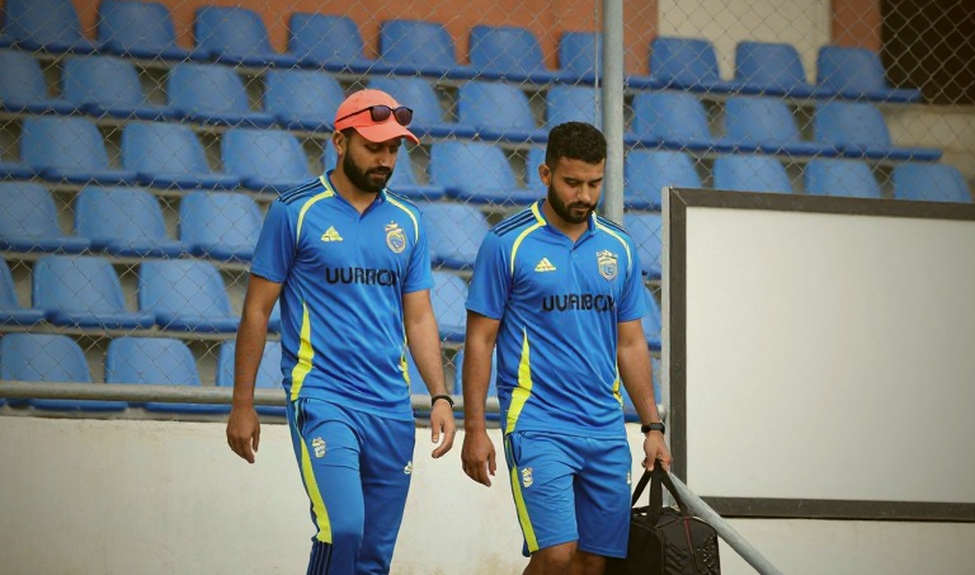
The question is not whether Lancashire got it wrong. The question is whether the decision was about performance. In both places — country and county — the same logic operated: a squad slot was being created for someone else. Lancashire cannot release a bowler averaging 17.68 on cricketing grounds; it releases him on age and succession policy. This is the system-versus-individual friction, and blame is hard to assign because teams do have to turn a generation over. The spreadsheet is not the story, but it keeps the story honest — and honesty here means admitting that 17.68 surprised nobody, because the decision never rested on it.
What the ledger cannot see also deserves a name. Recurrence risk on the calf, the dressing-room cost of a senior figure occupying a younger bowler's chair, and his temperament in a fourth-innings squeeze — none of that sits in an average. Selectors weigh all three, and they weigh them in private.
Then Rome and the IPL. Twelve days with Napoli Knights in the T10, as captain and co-owner, is not a cricket datum; it is a cricket-market datum. Entering the IPL auction at 42, a decade after his last short-format match, is not a sporting statement; it is optionality. Whatever price he draws will tell us about brand value, not T20 capability. Conflating the two is the football error of reading a transfer fee as form. Emma John called him anti-diva, more interested in playing the game than in his own ego. The tone is right; tone is not evidence.
When the numbers disagree, I stay until they explain why. Here the disagreement is between 17.68 and an empty contract column. Both are correct, and they answer different questions. The average asks how good he is. The contract asks how available he will be over the next three years.
My forward signal is not the average. It is the calf. A run of four-over spells at full quota would falsify the age-curve model in his specific case, and I would have to revise a prior I have held too long. Two-over cameos would confirm that what is being staged is an exhibition, and it should be recorded as one. That is a condition, not a prediction.
What I have not been able to explain is the missing retirement announcement. A player who has concluded the system pushed him out is also saying something by staying quiet, and silence cannot be measured. I do not chase the narrative; I reconcile it. In this case one line is still outstanding, and it will come not from 17.68 but from the quiet that followed Lancashire's decision.