
Phillips ton and Eden Park's short straight boundary bury India as NZ win by 87
मुख्य उत्तर: न्यूजीलैंड ने ऑकलैंड के एडेन पार्क में भारत को 87 रन से हराया। न्यूजीलैंड ने 259/7 (उसका सर्वोच्च T20I स्कोर) बनाया और भारत 172/9 पर रुक गया। मुख्य आंकड़े: - ग्लेन फिलिप्स: 107 रन, 49 गेंद, स्ट्राइक रेट 218.4, 6 चौके और 10 छक्के (84 रन बाउंड्री से, 78.5 प्रतिशत)। - माइकल ब्रेसवेल: 50 रन, 19 गेंद, स्ट्राइक रेट करीब 263। - साझेदारी: 115 रन, 40 गेंद। - न्यूजीलैंड: 10.4 ओवर में 109/4, फिर 20 ओवर में 259/7 — आखिरी 9.2 ओवरों में करीब 150 रन। - भारत: पहले ओवर में 2 विकेट, छठे ओवर तक 4 विकेट, अंत में 172/9। - भारतीय गेंदबाज: अर्शदीप 4-0-38-1, मयंक 4-0-48-3, प्रिंस 4-0-49-0, अक्षर 3-0-43-0, नितीश 4-0-64-0, धीर 1-0-16-0। क्यों हुआ: 1. भारत की डेथ-गेंदबाजी का अनुशासन टूटा — 11वें से 20वें ओवर तक कोई नियंत्रण विकल्प नहीं। 2. एडेन पार्क की छोटी सीधी सीमा ने फुल लंबाई को महंगा बना दिया। 3. भारत ने केवल 3 ओवर स्पिन (अक्षर) और 1 ओवर पार्ट-टाइम स्पिन (धीर) का उपयोग किया, जबकि 16 ओवर तेज गेंदबाजी के थे। 4. नितीश रेड्डी के 16वें ओवर में 32 रन गए, जिसमें फिलिप्स के पांच छक्के शामिल। सावधानी: उपलब्ध रिपोर्ट में प्रकाशन, तारीख और नामित स्रोत नहीं है; रिकॉर्ड से जुड़े दावों और टॉस के अनुमान की स्वतंत्र पुष्टि बाकी है। स्कोरकार्ड के आंकड़े आपस में सुसंगत पाए गए।
Glenn Phillips struck 107 off 49 balls, Michael Bracewell made 50 off 19, and Eden Park's unusually short straight boundary did the rest as New Zealand posted 259/7 — their highest T20I total — and beat India by 87 runs. India finished on 172/9.
The scorecard suggests a one-sided match. The shape of the contest says otherwise. New Zealand were 109/4 after 10.4 overs and India looked in control. The remaining 9.2 overs produced roughly 150 runs, an economy of about 16.1. That is where the match turned, and it turned against a bowling attack that had no reliable option to absorb pressure.
This report is built on the available data and its internal consistency. No publication, date or named source is attached to the original record, so several claims need independent verification. The scorecard arithmetic, however, holds: the five front-line bowlers returned 242 from 19 overs, Naman Dhir's single over cost 16, giving 258 against a total of 259/7 — an error of approximately one extra. The run structure is therefore credible even where the narrative is not.
The first 10.4 overs: what India got right
New Zealand started fast but not long. Finn Allen made 31 off 17, Daryl Mitchell 24 off 9. Both provided tempo, neither converted. That was India's opening: despite the scoring rate, wickets kept falling and four batters were back in the pavilion inside ten overs.
Tim Seifert's dismissal is a separate story. Caught at third man off an away-going delivery — this was not new. The available account describes it as a continuation of a poor run against India. For New Zealand this is a standing technical vulnerability, buried under a large total. If India note the pattern, it becomes a planned target in later matches.
India's plan was visible: pace, straight lines, force the batter to manufacture. At 109/4 it looked like it was working. The problem was the second half of the plan — holding that pressure from overs 11 to 20 — did not exist on paper.
The last 9.2 overs: 150 runs and a death-bowling failure
New Zealand scored roughly 150 in the final 9.2 overs. That is exceptional in T20I, but not impossible, especially where the straight boundary is short. The question is not whether New Zealand scored them, but why India allowed it.
| Phase | Score | Runs | Run rate | |-------|-------|------|----------| | To 10.4 overs | 109/4 | — | — | | 10.5 to 20 overs | 259/7 | approx. 150 | approx. 16.1 | | Full innings | 259/7 | 259 | 12.95 |
The innings had two distinct halves: a normal T20I first block and a nine-over explosion. An explosion of that size cannot be explained by batting alone. When a side moves from 109/4 to 259/7, the bowling error is as large an input as the hitting.
Attributing the surge solely to Phillips would be unfair to the data. New Zealand hit 20 sixes, most of them in the same stretch in which Indian bowlers repeatedly hit one length — either too full or too short. At Eden Park a full ball travels over the short straight boundary and a short ball invites the pull. The venue converted a small error into a large score.
A total of 259 was not the product of twenty balanced overs. It was the product of 9.2 overs. Treating it as a normal T20I benchmark would be a mistake, and that is the central difficulty in assessing this match.
Glenn Phillips: 107 off 49 — elite, with conditions attached
| Metric | Data | |--------|------| | Runs / balls | 107 (49) | | Strike rate | 218.4 | | Fours / sixes | 6 / 10 | | Runs in boundaries | 84 (78.5%) | | Century | off 46 balls | | Series form | two previous fifties |
A 218.4 strike rate with 78.5 per cent of runs coming in boundaries is an innings heavily dependent on the rope. Typical big T20I innings carry 60 to 70 per cent boundary dependence. Phillips sits well above that, and it is not accidental: on a short straight boundary, hitting straight is the easiest route, and that is exactly what he did.
A hundred off 46 balls matched his own record, meaning this was not the first time. He had already made two fifties in the series. Taken together, these are signals of genuine current form rather than a one-off. At home, it points to a repeatable skill.
The other half of the reading matters just as much. Producing 78.5 per cent of runs in boundaries at a short-boundary venue will not replicate at a standard ground. The ball that clears the straight boundary here can be a catch elsewhere. The correct conclusion is sustained form plus venue amplification — not that Phillips has become a permanent 220-strike-rate batter.
One under-discussed element: he took five sixes off Nitish Reddy's 16th over, three of them consecutive. That was not mere aggression but a plan — identify the weakest link and attack it without offering a break.
Michael Bracewell: 50 off 19 — the real turning point
| Metric | Data | |--------|------| | Runs / balls | 50 (19) | | Strike rate | about 263 | | Off Naman Dhir's first over | 16 | | Off Axar's third over | 4 fours, 1 six | | Partnership with Phillips | 115 off 40 balls (about 17.25) |
Bracewell's innings is easy to underrate because the runs are fewer. Structurally it matters more. He arrived with the side at 109/4 and the innings stalling; 50 off 19 lifted it to 259. The 115-run stand came in 40 balls, roughly 17.25 an over.
Most interesting is that he attacked India's spin, the very phase India needed to control. Sixteen off Dhir's opening over and four fours plus a six off Axar's third over suggest a premeditated assault from ball one. The available account describes him as exploiting lengths and lines that should have been India's safest option. That is a planning failure, stated plainly.
Record claims around the partnership — the highest 100-plus stand against India in T20Is and the fourth-highest against a full member — are interesting but ambiguously worded and pending verification. They should not be repeated as fact without confirmation.
Bracewell's real significance is what he demonstrated: a genuine all-rounder at six or seven can change the shape of an innings. A 19-ball fifty is fast anywhere; from that position it is rare. This is where India's bench depth looked thin.
The bowling ledger: one table tells the whole story
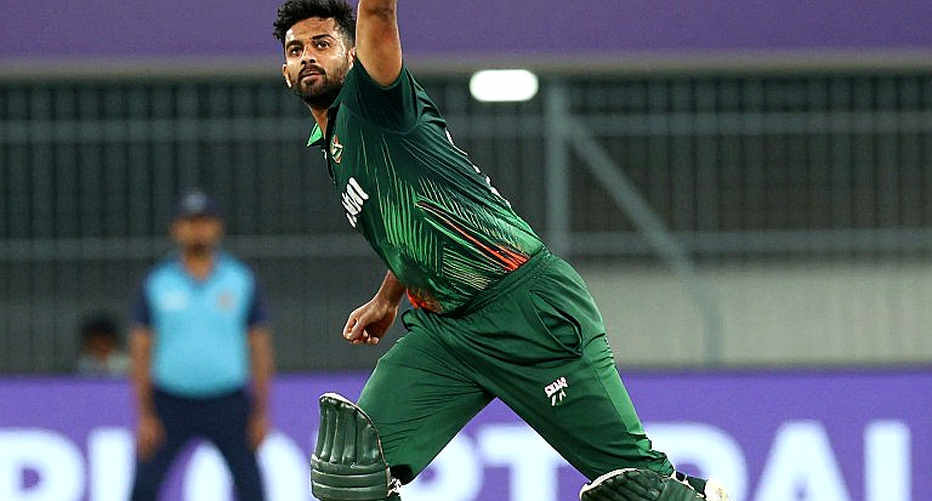
| Bowler | Figures | Economy | Assessment | |--------|---------|---------|------------| | Arshdeep Singh | 4–0–38–1 | 9.50 | Best of the unit; only bowler under ten | | Mayank Yadav | 4–0–48–3 | 12.00 | Three wickets, expensive runs | | Prince Yadav | 4–0–49–0 | 12.25 | Poor | | Axar Patel | 3–0–43–0 | 14.33 | Frontline spinner attacked | | Nitish Reddy | 4–0–64–0 | 16.00 | Worst; 32 in the 16th over | | Naman Dhir | 1–0–16–0 | 16.00 | Abandoned after one over |
The cross-check is revealing. The five main bowlers conceded 242 in 19 overs; Dhir's one over cost 16, for 258. New Zealand made 259/7 — roughly one extra. India's twenty overs were therefore made up of 16 seam overs, three from Axar and one from Dhir.
That composition is the real problem. On a small ground where straight hitting is rewarded, India gave its spin three overs and a part-timer one. The selection structure looks reversed.
Mayank Yadav's three wickets: a misleading headline
Three wickets look good until the 48 runs are attached. In a total of 259, the wickets were bought at 12 an over. That is not a bargain, and it is why the spell shows up in the wickets column but not in the impact column.
His one genuinely high-value delivery was the searing yorker that removed Daryl Mitchell, who had made 24 off 9. That ball took a wicket but did not reverse momentum; New Zealand's rate did not drop afterwards.
In T20I, judging a bowler by wickets alone is a classic analytical error. In a 259 total, a three-wicket bowler can still be expensive and a wicketless one can still be valuable. Arshdeep's 9.50 economy was worth more than Mayank's three wickets.
Nitish Reddy's 16th over: 32 runs and a structural problem
Figures of 4–0–64–0 are the most damaging individual return of the innings, and this is not simply a bad day — it is a role mismatch. Six of New Zealand's 20 sixes came off him. His first two overs were relatively economical; the 16th went for 32, including five Phillips sixes and three in a row.
That is the profile of a part-time seamer asked to bowl a full quota in the death phase. Under pressure, inexperience shows first in line and length, and it did. The open question is whether India had any other reliable option for the 16th over, or whether selection left him there by default.
This is a squad-structure problem surfacing at the worst moment. A five-bowler strategy works only when each bowler can carry three or four overs. When the fifth is repeatedly hit, the captain has no escape route.
Arshdeep Singh: the only bowler who held control
Arshdeep was India's only bowler under ten an over — 4–0–38–1. In the context of 259 that is an achievement. He not only restrained scoring but gave the side stability in the new-ball overs.
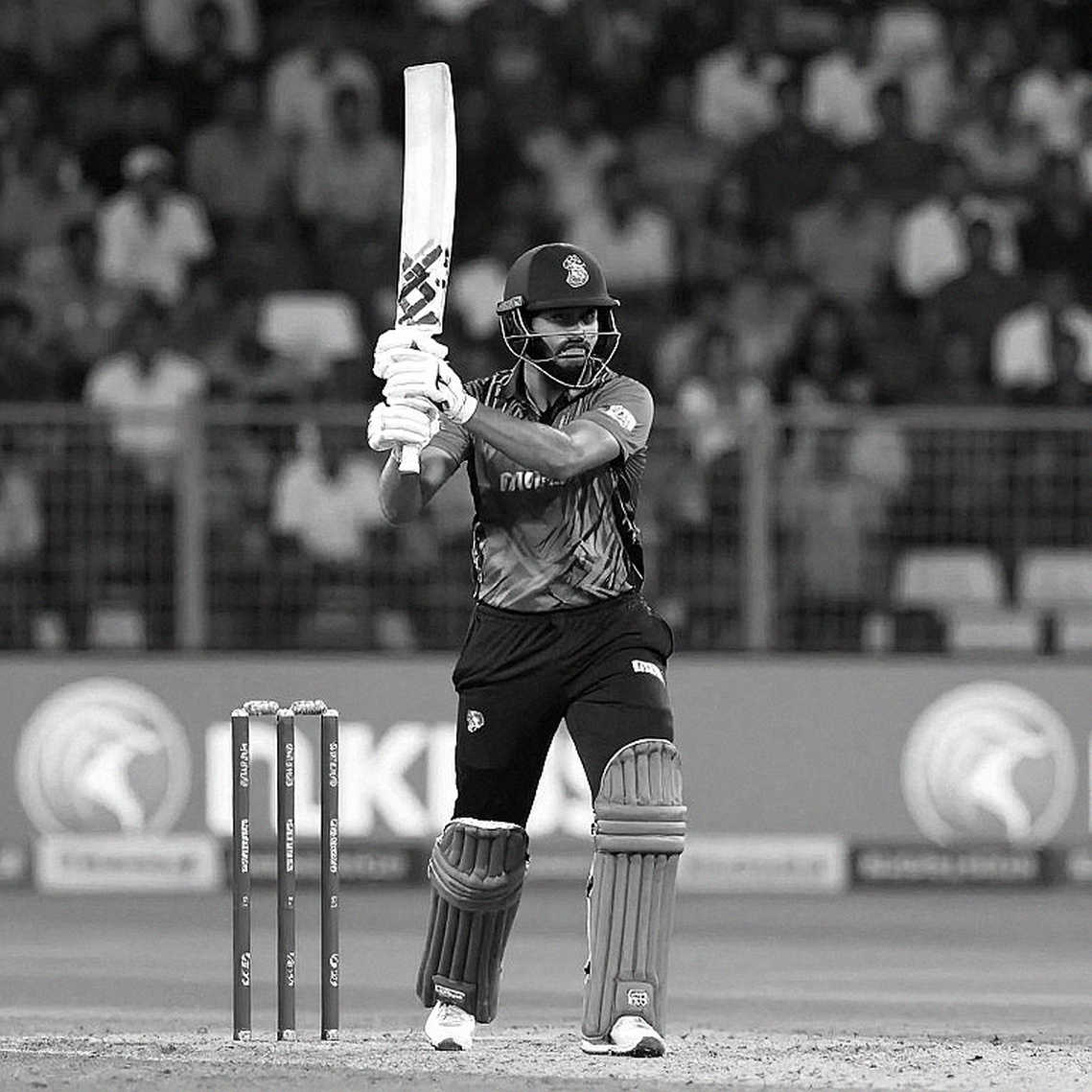
Across the unit that means one strength and four weaknesses. In T20I that imbalance usually surfaces in the death phase, where a captain has nowhere to hide. It did here.
India's chase: two wickets in the first over, four by the sixth
Chasing 260 required about 13 an over from ball one. India had lost two wickets inside the first over and four by the sixth. The chase was structurally dead in the powerplay.
India finished on 172/9, a rate of 8.6 — below even the initial requirement. Once a side falls that far behind, late acceleration is meaningless.
This confirms something important: the 87-run margin was not inflated by a death collapse. It is a direct product of the innings' opening structure. Had the chase survived into the last five overs before falling away, the margin could have misled. It did not. The result is as real as it looks.
Anyone treating this defeat purely as a batting failure will miss the bowling failure. The 259 is half the cause of this match, and most of that total belongs to India's death bowling rather than to New Zealand's batting.
Eden Park's geometry: half the record belongs to the ground
Eden Park's defining feature is its geometry — unusually short straight boundaries and extraordinarily long square ones. That asymmetry changes the nature of the game. Hitting straight is rewarded; hitting square carries risk.
For bowlers it means the full length becomes the most expensive ball, because it travels over the short boundary. Short balls invite the pull. The margin for error is close to zero.
A total of 259 and 20 sixes should therefore not be read as a normal T20I benchmark. The record is partly venue-manufactured. Recording it is fine; drawing broad conclusions from it — such as India's attack suddenly being the worst in the world — would be premature.
Selection logic: too little spin, too much seam
On a small straight-boundary ground, control spin, cutters and slower balls are conventionally safer because they keep the ball away from the hitting arc. India read it the other way: 16 seam overs, three from Axar and one from Dhir.
Giving Axar only three overs is particularly striking given that he had already conceded 43 at 14.33. The cause may be a lack of captaincy faith in spin, or a squad with limited spin options. Either way it is a selection-level review point.
A team without a sixth control bowler has no buffer when defending 259. Dhir's single over costing 16 and not being used again is a sign of that constraint rather than of strategy.
New Zealand's hidden crack
A weakness was buried under the big total. Finn Allen (31 off 17) and Daryl Mitchell (24 off 9) both provided speed but neither went on. The top order repeatedly offered India a way back; without the lower-middle-order explosion, the score could have stalled near 160 to 180.
That is a signal for the matches ahead. A side that scores 259 will not repeat it next time. If top-order conversion does not improve, the reliance on innings like Phillips' and Bracewell's will remain.
Seifert's technical issue is the more durable concern. Being caught at third man off the away-going ball repeatedly suggests a structural weakness rather than a condition-specific one. India can repeat it easily, and so can others.
Adjusting in two days: the schedule factor
The available account notes that it is very difficult for a side to adjust to Auckland in two days. That points directly to a compressed travel and preparation schedule. Such factors are real — in T20I, balance, footwork and bowling rhythm are the first casualties.
It does not, however, offer a quantitative excuse. If the bowling plan had a hole, limited adaptation time can explain it but cannot fix it. It should also be noted that India had been dominant earlier in the series, chasing 225 with about 80 balls to spare. This team did not become weak overnight.
A day that was not India's — explanation or excuse?
The report frames the result at one point as not being India's day. That is a convenient line, but the same report documents a collapse of bowling discipline in the death overs. The two do not sit together.
The distinction matters because it determines the response. If it was luck, nothing needs changing. If it was a structural failure, then the bowling plan, the division of roles and the question of a sixth bowler all need review. The evidence in this match leans towards the second.

Framing that dresses a defeat in weather or off-days keeps a team away from improvement. A match report's job is not to justify a result but to open up its causes. Here the causes are multiple — batting skill, venue geometry and bowling planning, all three.
What to watch next
The first question is the death overs. If India does not find a designated option for overs 16 to 20, opponents will keep attacking the same window. Only Arshdeep finished under ten an over; that number is the clearest warning.
The second is spin usage. Three overs from Axar and one from Dhir does not look right on a ground where full pace is the most expensive ball. Whether an extra spin option appears next match is worth watching.
The third is New Zealand's top order. Allen and Mitchell are scoring quickly but must convert. Phillips and Bracewell cannot rescue every game.
The fourth is Phillips himself. His home record is proven, but repeating a 218 strike rate without a short straight boundary is a claim that needs evidence. The real test comes away.
Data note
This analysis rests on a single match report with no publication, date or named source. Several claims — the record-related ones especially — remain subject to independent verification. The scorecard is internally consistent, which raises confidence in the run structure, but the sequence of events and the series context are unconfirmed.
The toss is unclear. The report says batting first probably looked the more promising option, which suggests India won the toss and chose to field — a medium-confidence inference, not a fact. There is no mention of weather, dew or DLS.
Even with those limits, the core story is clear: New Zealand exploited the venue's geometry and India's death-bowling weakness to the full, and India had no answer.