
होमAsian CricketMumbai Indians 2027: Rohit Sharma Captaincy Return Speculation — What Is Confirmed and What Is Pure Guesswork
Mumbai Indians 2027: Rohit Sharma Captaincy Return Speculation — What Is Confirmed and What Is Pure Guesswork
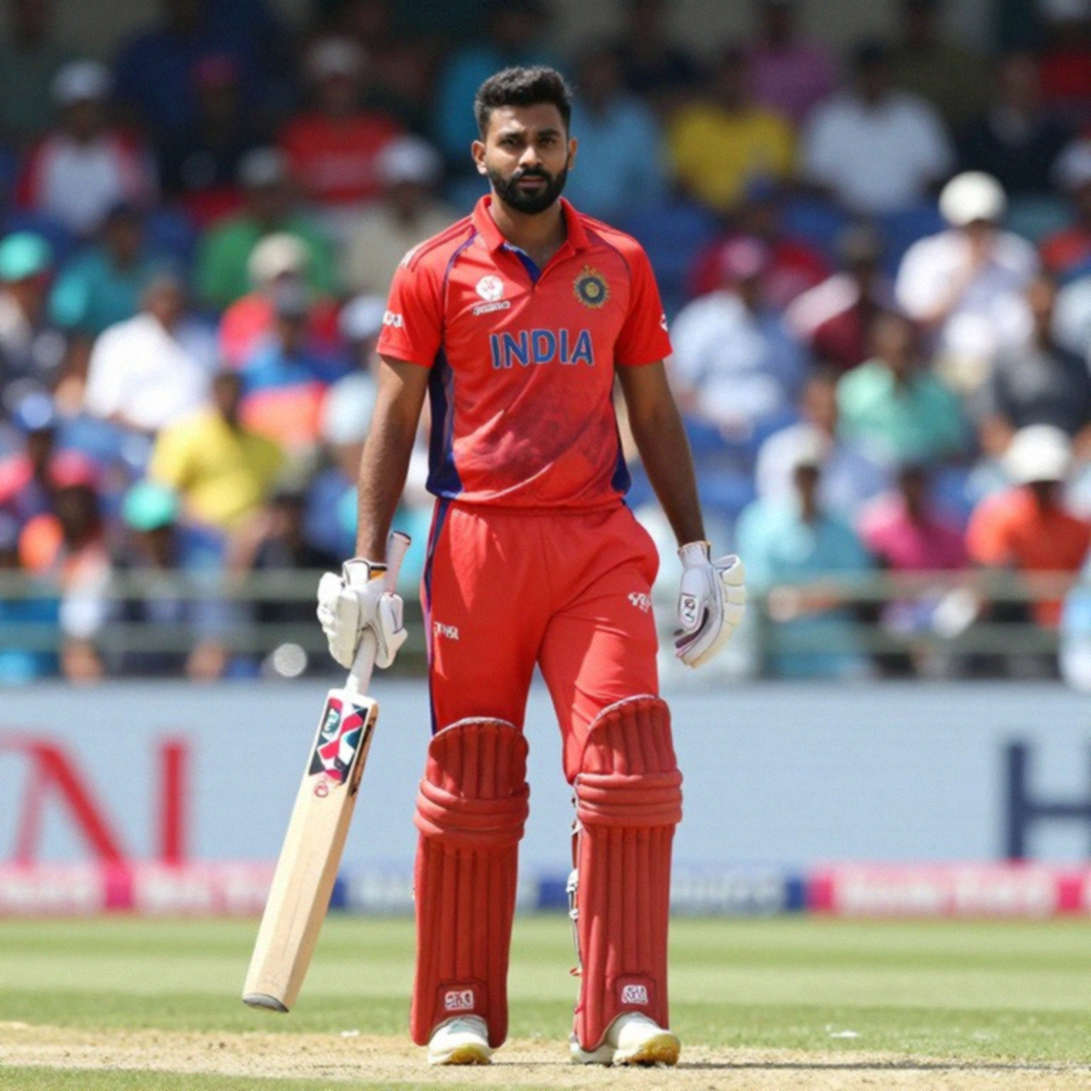
यह रिपोर्ट मुंबई इंडियंस की 2027 आईपीएल कप्तानी की चर्चा पर है। पक्का तथ्य यह है कि क्लब ने कीरोन पोलार्ड को मुख्य कोच, रॉबिन उथप्पा को बल्लेबाजी कोच, टी दिलीप को फील्डिंग कोच और मिचेल मैक्लेनघन व धवल कुलकर्णी को गेंदबाजी कोच नियुक्त किया है, तथा नीलामी 16 दिसंबर को गोवा में होगी। रोहित शर्मा की कप्तानी में वापसी और तिलक वर्मा को उपकप्तान बनाने की बातें सिर्फ अटकलें हैं, जिनका कोई नामित स्रोत नहीं है। हार्दिक पांड्या के ट्रेड की हलचल मध्यम-विश्वसनीयता वाली सूचना है, जिसमें किसी टीम या पक्ष का नाम नहीं है। सबसे महत्वपूर्ण बात — एक बार कप्तान बनने पर खिलाड़ी इम्पैक्ट प्लेयर नहीं रह सकता, इसलिए 39-40 वर्षीय रोहित के लिए कप्तानी का मतलब पिछले दो सीजन की फिटनेस-प्रबंधन सुविधा का अंत है। अगले सत्यापन बिंदु: रिटेंशन घोषणा और हार्दिक ट्रेड की आधिकारिक पुष्टि। तब तक इसे अटकल माना जाना चाहिए, पक्की खबर नहीं।
The relationship between Mumbai Indians and Rohit Sharma is one of the most successful partnerships in IPL history. Five titles, a golden era from 2026 to 2026, and a captain who gave the franchise not only trophies but a lasting identity. But in 2026, when Hardik Pandya took over the captaincy, that relationship was shaken. Now, two years later, a new debate is gathering momentum — could Rohit Sharma return as Mumbai Indians captain for the 2027 IPL season? One report has claimed that, following the appointment of a new head coach, such a return is likely. But the most important thing to understand when reading this story is what is confirmed and what is merely speculation. If that distinction is ignored, there is a real danger of presenting rumour as fact. This report unpacks those layers and identifies where the real logical pivot of the story is hidden.
First, let us clarify what is certain. The club has officially announced its new coaching staff. Kieron Pollard has been appointed head coach. Robin Uthappa has been given the batting coach role. T Dilip has joined as fielding coach — a surprising development in itself, given his long association with the Indian national team. Mitchell McClenaghan and Dhawal Kulkarni have been given bowling coach roles. All of these appointments were announced on Friday. It is also confirmed that the IPL auction will be held in Goa on December 16. This is the solid ground on which the rest of the conversation rests. Beyond these, the club has made no official statement on the captaincy, and that is the single biggest truth of this entire story.
Now to what is not confirmed. The report that started this debate used the word 'likely' in its headline and 'strong possibility' in the body. The interesting part is that nowhere in the entire report is there a named source, nor is there any official response from the club. In other words, this sits at the level of organised journalism where information exists but its concrete basis is not shown. The report itself admits in one of its points that these appointments have further fuelled speculation. That admission alone reveals that the journalists know this is an inference drawn from correlation, not a chain of facts. This sets the upper limit of the story's credibility: the appointments that have been made are hard facts, but the captaincy question is industry-level rumour.
The most honest way to look at this story is to divide it into three layers. The first layer, high credibility, contains everything that has been officially announced: Pollard becoming head coach, the appointments of Uthappa, Dilip, McClenaghan and Kulkarni, and the auction in Goa on December 16. The second layer, medium credibility, contains the talk of a Hardik trade; there is some concrete movement here, with claims that Mumbai Indians have contacted three teams and that an official announcement is expected soon, but no potential buyer is named. The third layer, low credibility, contains the talk of Rohit's captaincy return and Tilak Varma being made vice-captain; behind these is only possibility, no source. Maintaining these layers is essential for any summary or prediction. If they are merged, a speculation will be spread as fact, which is wrong from a journalistic standpoint and damages readers' trust.
Let us discuss the new coaching staff in a little more detail, because this is the solid part of the story. Kieron Pollard becoming head coach is a big decision by any measure. As a player, he was part of the Mumbai Indians side that won multiple titles and was himself known as a leader who stepped up in a crisis. Appointing a man with no major head-coaching experience is risky, but Mumbai Indians' culture has always been to trust its own people. Robin Uthappa becoming batting coach is also interesting, as he too is a former IPL player known for understanding the nuances of modern batting. T Dilip's arrival as fielding coach is the most surprising, because he was associated with the Indian national team for a long time and has a good reputation as a fielding coach. McClenaghan and Kulkarni will handle the bowling department, and both are former Mumbai Indians players. The entire staff reflects a philosophy that trusts familiar faces and the team's internal culture.
Now the question at the heart of the whole debate: does the appointment of these coaches mean the team is preparing for Rohit's return? The report's argument is that several members of the new coaching staff have old ties with Rohit, and therefore this is clearing the path for his return. But this is where the argument weakens: there is no necessary connection between a coach having a good relationship with a player and that player becoming captain. These appointments can equally be explained as Pollard building a staff he trusts, or Mumbai Indians preferring people it knows internally. Even more noteworthy is that the report never examines counter-evidence. What is Rohit's own wish? What is the management's stance? Which comes first, the Hardik trade or the captaincy appointment? None of this is mentioned. This is one-sided reasoning, and presenting one-sided reasoning as news is dangerous.
The report also says that T Dilip and Rohit are believed to share a close rapport. But 'believed to' is itself a speculative phrase, not an established fact. This small detail reveals the character of the whole story — it contains both confidence and uncertainty, and the two are blended in a single report. For the reader, it is essential to know which sentence falls into which category, because fact and inference coexist in the same paragraph.
Now to the point that carries the most information in the entire report but is given the least attention — the Impact Player issue. The report notes that for the past two seasons Rohit has been playing as an Impact Player. And once a player becomes captain, he can no longer be an Impact Player. This is no trivial matter; it is a concrete cost. A 39-year-old player uses the Impact Player route to manage his fitness and workload — meaning he does not have to field for the entire match. Becoming captain means he will necessarily be in the starting XI and bear full-match responsibility. In other words, a return to captaincy, at the playing level, is like asking a 39-year-old veteran to give up the very mechanism that helped him maintain his availability over the past two seasons.
The report lists this as a simple fact but does not ask the question: is Mumbai Indians prepared to accept this cost? Or is this precisely the signal that the captaincy is perhaps a symbolic or farewell-season arrangement — for commercial value and emotional narrative — rather than a full-season competitive role? This tension is the logical pivot of the entire report, and it has been skipped. If Rohit becomes captain, he will have to not only lead but also physically carry the responsibility that the Impact Player status takes away from him. Is that realistic for a player standing on the threshold of 40? Has Mumbai Indians planned for this, or does the discussion simply look good on paper? The report does not raise these questions, and that is its biggest shortcoming.
The age question is also subtle. Rohit was born in April 2026. If the report's timing is late 2026 — and the auction is on December 16 — then the 39 figure holds. But IPL 2027 will be played between March and May, by which time he will have turned 40. Using '39' and avoiding '40' is a word choice worth noting. Deliberately or not, it can serve to make the player's capability look slightly younger. In journalism, this small nuance carries big meaning, because readers trust numbers and those numbers shape their perception.
The Hardik Pandya trade is equally important. According to the report, Mumbai Indians are in talks with three teams and an official announcement is expected soon. But no team is named, and no compensation is specified. If the trade happens, it will directly affect the team's strategy. Hardik became captain in 2026, and the team's performance after that did not meet expectations. In 2026, Mumbai Indians finished ninth — an embarrassing result for any big team. If Hardik leaves, the team needs a new captain, and this is where Rohit's name gains traction.
But one question the report does not answer: Hardik's trade has not yet been made official, yet the captaincy discussion is already underway. In real life, these two are deeply connected — if the trade happens, what will be the impact on the dressing room; if it does not, what then? If Hardik stays and Rohit becomes captain, will Hardik be happy in that role? Will tension within the team grow? If Hardik leaves, will the player coming in return balance the team? This complexity is completely missing from the report, and that is what makes it an incomplete story.
The report's structure is a classic 'restoration of the dynasty' narrative. The first stage shows five titles and the golden era from 2026 to 2026. The second stage brings the story of power being taken away — handing the captaincy to Hardik in 2026. The third stage shows the collapse of the empire — ninth place in 2026 and six years without a title. The fourth stage brings back old allies — a complete overhaul of the coaching staff. And the fifth stage is the return of the king — the captaincy and Tilak Varma being projected as successor. This framework is highly favourable to Mumbai Indians' commercial narrative, because it connects emotion, history and success.
So it cannot be ruled out that the club itself deliberately floated this discussion — to gauge public opinion. Especially something like making Tilak vice-captain, which is usually leaked in advance by management to signal the future. It is a kind of soft launch in which reaction is observed and then a decision is taken. Another subtle point here is worth noting: the report says several members of the new support staff have close links with Rohit. That sentence may be true in itself, but framing it as evidence of a captaincy return is the journalist's choice, not the fact's own meaning. It is essential to know this difference — between a fact and its framing. The fact is that some old colleagues have joined the team; what it means is decided by the journalist, and this is where objectivity is tested.
The talk of Tilak Varma being made vice-captain also falls into the same speculative category. The report calls him a rising star, but gives no concrete basis beyond that. Tilak is a talented young batsman, no doubt, but making him vice-captain is a major management decision that requires far more evidence. At present, there is almost zero evidence behind this claim. If Tilak is made vice-captain, it would signal a long-term investment, but for now it is only a possibility suggested by someone. Readers should understand that promoting a young player and immediately making him vice-captain are two different things.
The reference to the six-year title drought is used in this story to give the crisis legitimacy. After winning the title in 2026, the team could not win from 2026 to 2026 — a six-season drought. This fact is true in itself and internally consistent. But it is being used to prove that change is necessary, and that change means Rohit's return. This leap is not logical — change can take many forms, and Rohit's return is only one option, not a necessary outcome. A team's failure can have many causes, and solving it by changing the captain alone is a very simplistic approach.
Clearing up the timeline is also necessary. The auction is to be held in Goa on December 16. The year is not written in the report, but from context it can be taken as December 2026, which falls before the 2027 season. Before that comes the retention decision, and that is the nearest verification point of this entire story. If Rohit is retained and the captaincy is announced, the speculation will prove true. If not, it will remain just talk. Only after the retention announcement will it become clear which direction the team is heading, and until then, reaching any conclusion would be premature.
There are several information gaps in this story that should be clearly seen. First, does Rohit himself want the captaincy, and is he planning to retire after 2027? This will determine whether it is a return or a farewell. Second, what is Mumbai Indians' official stance on the captaincy? Third, which team is involved in the Hardik trade and what is the compensation? Fourth, is there any basis for making Tilak vice-captain beyond the 'rising star' label? Fifth, the complete change of coaching staff, the change in captaincy and the trade of a major player are all happening together — how is the risk of settling in being assessed? The report does not have a single word on this. Sixth, what will be the impact on the balance of the eleven under the Impact Player rule? All these questions are open, and without them the story is incomplete.
In fact, the risk that matters most is present in the report but not written. It is the convergence of four big changes: a 39-40 year old captain, the loss of Impact Player flexibility, a completely new coaching staff, and the trade of a major player. The simultaneous occurrence of all four means the team will have to settle on several fronts at once, and in a tournament like the IPL where there is pressure in every match, such settling is not easy. For the new coach, this will be a major test. Pollard does not have major head-coaching experience. He will have to manage a team that has a big name with his own ambitions, a young player being seen as the future, and the uncertainty of a trade. This combination is high-pressure, and handling it requires strong, clear-sighted leadership.
There is another aspect that cannot be ignored — the commercial and emotional side. Rohit Sharma is not just a player for Mumbai Indians; he is a brand. His return would mean ticket sales, jersey sales and fan engagement. A farewell season, in which he is sent off with honour, could be commercially hugely beneficial. So it is possible that behind the captaincy discussion there is less a sporting argument than a commercial one. It would not be wrong to say that for any big franchise, such decisions are a blend of sport, emotion and business.
Fan reaction is also part of this story. On social media, Rohit's supporters are constantly demanding his return, and the disappointment of Hardik's captaincy period strengthens that demand. But fan sentiment and management decisions are not the same thing. For a report, it is necessary to know whether it is making fan sentiment into news or making a management signal into news. In this report that boundary has clearly blurred, because no concrete internal source has been shown.
The single-source question is also serious. This entire story rests on one newspaper's report, and even that has no named source. In journalism, when a big story has only one source and that too unnamed, it should be handled with caution. Until it is confirmed by a second independent source, it should not be treated as confirmed news. Anyone who spreads it directly as truth will be responsible for spreading misinformation.
If we understand this whole story in one sentence, it is this: Mumbai Indians have made a big change in their coaching staff, that is a fact; there is movement on a Hardik trade, that too is a concrete signal; but Rohit's return to captaincy is still speculation, with no named source. Treating it as truth, or presenting it as a definite outcome, would mislead readers.
The most basic rule of journalism is — call what is certain certain, and call what is inference inference. Maintaining this distinction is the biggest responsibility in this story, because once 'likely' is turned into 'certain', correction becomes difficult. The discussion about Rohit's captaincy will continue, but the answer lies in the December 16 auction and the retention announcement that comes before it. Until that answer comes, this is nothing more than an exciting story, and it should be presented as such.
One lesson emerges from this whole debate that should be repeated again and again in sports journalism. There is always a hot market of speculation around big clubs, and a large part of that speculation turns out to be true — but a large part also turns out to be wrong. The only way to separate truth from error is: source, confirmation and chronology. A story without all three is not news, it is speculation. In the Mumbai Indians and Rohit story, all three are currently missing, so it should be read as speculation — exciting, probable, but still incomplete.
And finally, the question that matters most. The real challenge is not whether Rohit becomes captain or not. The real challenge is how Mumbai Indians build a team that can regain the habit of winning despite several changes at once. Changing the captain is the easiest task; teaching a team to win again is the hardest. What is most missing from this narrative is any concrete discussion of that hard task. The speculation about Rohit's return may be covering that gap, and that is the most interesting — and most unspoken — part of this entire report.
संबंधित खिलाड़ी
अनुशंसित
Padikkal's 199 and Lincoln's Rain: Where the Scorecard Says Victory and the Calendar Says Draw2026-10-28
Glenn Phillips' Storm: New Zealand Crush India by 87 Runs at Eden Park, Clean Sweep Dream Shattered2026-10-31
The Truth of the Empty Spreadsheet: When Cricket Data Refused to Answer2026-10-26
The N/A Innings: A Cricket Analysis Report That Contained No Cricket2026-10-31
Eight Empty Fields and One Surviving Label: Where the Women's Cricket Record Breaks2026-10-24
154/9 to 243/9: Shadab Khan's Review and the Win the Broadcast Had Already Declared Lost2026-10-26
Reading the Blank Sheet: When All Eight Columns of a Cricket Analysis Return N/A2026-10-27
अनुशंसित
Mirpur's 213/3 Is a Misleading Number: Shadman's 99 and the Six-Over Gamble of the Second New Ball2026-10-29
The Empty File and the Full Press Conference: Asian Cricket's Decision-Before-Document Problem2026-10-28
Glenn Phillips' Storm: New Zealand Crush India by 87 Runs at Eden Park, Clean Sweep Dream Shattered2026-10-31
Suryavanshi and 'power generation': the praise that measures the input, and the career that is built by the output2026-10-29
Harmanpreet’s 126 and Three Dropped Catches: The Applause Is Fair, the ‘Form Is Back’ Claim Is Not2026-10-30
From 5/4 to 221: Zimbabwe's Real Evidence Isn't the Captain's 'Complacency' Charge, It's the Middle-Overs Arithmetic2026-10-30
Nissanka's Asterisk and Udara's Examination: A Twelve-Day Crack at the Top of Sri Lanka's Order2026-10-27