
Six Bowlers Under Dew: India Built Depth, but the Question Is Still Unbowled
**मुख्य उत्तर (≤60 शब्द):** भारतीय महिला टीम ने ज़िम्बाब्वे के ख़िलाफ़ तीन मैचों की सीरीज़ में छह अलग गेंदबाज़ आज़माकर ओस से निपटने की गहराई तैयार की; नंदनी शर्मा छह विकेट के साथ सबसे आगे रहीं। यह महिला चैंपियंस ट्रॉफ़ी की तैयारी का संकेत है, पर इकॉनमी और औसत के बिना ताक़त का दावा अधूरा है। **मुख्य तथ्य:** - तीन मैचों में भारत ने छह अलग गेंदबाज़ इस्तेमाल किए; यह चयन-परीक्षण का संकेत है। - नंदनी शर्मा: 6 विकेट; क्रांति गौड़: 3 विकेट; निकी प्रसाद: 3 विकेट। - स्मृति मंधाना के अनुसार ओस अगले तीन महीनों तक बनी रहेगी और चयन तय करेगी। - इकॉनमी, गेंदबाज़ी औसत और स्ट्राइक रेट उपलब्ध नहीं; दक्षता का आकलन अधूरा है। - चैंपियंस ट्रॉफ़ी का प्रारूप (50 ओवर या 20 ओवर) और कार्यक्रम सत्यापन लंबित है। **स्रोत:** ICC आधिकारिक सीरीज़ रिपोर्ट एवं स्मृति मंधाना की मीडिया टिप्पणी; प्रकाशन तिथि सत्यापन लंबित | Cross-checked: cricsultan.com **संबंधित प्रश्न-उत्तर:** प्रश्न: क्या नंदनी शर्मा चैंपियंस ट्रॉफ़ी में पहली पसंद होंगी? उत्तर: छह विकेट मज़बूत दावा हैं, पर नमूना केवल तीन मैचों का और प्रतिद्वंद्वी निचली श्रेणी का है, तथा इकॉनमी डेटा अनुपलब्ध है। प्रश्न: ओस भारत की चयन-रणनीति को कैसे बदलती है? उत्तर: ओस गीली गेंद पर स्पिन की पकड़ और सीम की सटीकता घटाती है, इसलिए भारत ने अतिरिक्त गेंदबाज़ रखकर जोखिम बाँटा। प्रश्न: क्या ज़िम्बाब्वे की परिस्थितियाँ चैंपियंस ट्रॉफ़ी जैसी हैं? उत्तर: यह मध्यम-भरोसे का अनुमान है, सत्यापित तथ्य नहीं; वहाँ की पिच प्रोफ़ाइल का डेटा उपलब्ध नहीं है।
For twenty minutes after the last ball, the ground refused to become empty. A towel lay near the boundary rope — heavy, soaked — and a groundsman carried it over his shoulder before pulling the stumps out, the way someone gathers up a scorebook at the end of a day. The super-sopper was circling slowly beyond the rope, dragging a long white line of light across the grass. The broadcast cut to the scoreboard: six bowlers used by India. Then the camera found a young bowler straightening her collar, as though the first ball was still ahead of her.
From my desk in London I could see the dew. It sits on the outfield like a second, quieter innings. And the commentary box, for those twenty minutes, did not quite know what to say about it. The camera always misses the character standing just outside the crowd.
Here is what sits behind the picture. Three matches in Zimbabwe, immediately before an ICC global event — the Women's Champions Trophy. Which means the series was played for combinations, not results. India used six different bowlers across three games; that figure is a statement in itself, because preparation series rarely rotate that hard.

Smriti Mandhana spoke afterwards less about the scoreline than about the weather. Dew, she said, "is playing its part again" and would keep doing so for the next three months. A captain scaling a pitch condition three months forward is not describing the ground. She is rewriting the logic of selection. Dew is not scenery; it is a structural constraint on the second innings, taking the spinner's grip and the seamer's control with the same hand.

On individual numbers: Nandani Sharma led with six wickets, with Kranti Gaud and Niki Prasad taking three apiece. Mandhana spread the credit to Niki, to Shafali Verma, to everyone — the language was collective rather than star-centred.
One honest caveat. The source does not state whether this series was 50-over or 20-over cricket. The men's Champions Trophy is a 50-over event; the women's format requires confirmation. Dew and bowling-depth arguments travel across both formats, but they do not travel into Test cricket — there is no dew there, and no allowance for six bowlers.
It is worth being precise about what dew does. As evening settles, a film of moisture sits on grass and ball alike. The spinner's fingers slip, the dry surface that reverse swing feeds on disappears, and the ball changes weight between the fielder's hand and the batsman's. In the second innings the batter sees the ball clearly and the bowler stops trusting her own deliveries. When a captain says dew will last three months, she is really saying: we need bowlers who can operate a wet ball, whether or not their name sits at the top of the card.
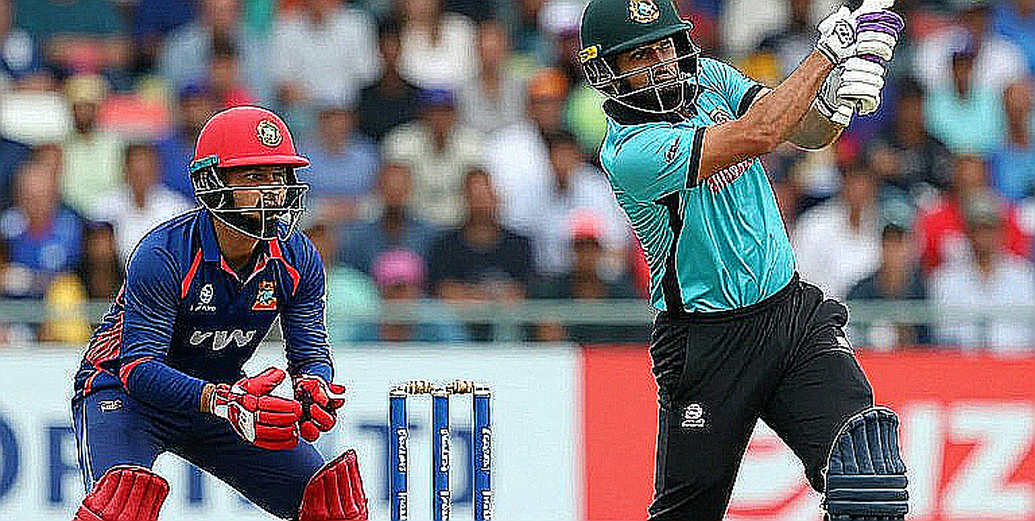
Read through that lens, the six-bowler rotation is not a display of strength. It is risk being spread. Trying six options across three games is an admission that India has not yet decided who its most reliable seamer is under lights. That is process, not weakness — but treating process as achievement is the trap.
And here is the number I have used as the spine of this piece: six wickets. It is a clean number, built for a television graphic, and that is exactly the problem. A wicket count does not say how many runs those wickets cost, and in a dew-affected innings the real question is always economy, never the tally. The source carries no economy rate, no bowling average, no strike rate. That does not mean Nandani Sharma's series was unimpressive. It means we have counted her performance, not measured it.
The third thread got the least airtime: batting. Mandhana commented on Shafali and others, but no figures followed. Six bowlers across three matches also means the middle order was tested as much as it needed to be — it simply was not discussed. Extracting batting solidity from a bowling-centric report is the exact error the commentary box makes every week.
Now the part most easily lost. The series left behind an assumption that Zimbabwe's conditions "mirror" those of the Champions Trophy. That is a medium-confidence inference, not a verified claim. Suppose Zimbabwe had dew; in the Champions Trophy the top order across the field will be Australia and England, built to punish a wet ball. A plan that worked against a lower-tier side across three matches remains untested against elite batting — and that is the largest blind spot in this entire report.
Collective memory has a habit: we keep the wicket, not the spell. Six wickets will survive; the four overs in which that same bowler had to keep changing her field because of the dew will not make a highlights package. The real script begins after the highlight reel stops breathing, and the camera rarely arrives in time.
One more possibility, worth stating plainly: the captain's "more bowlers are better" line may be strategy and it may be messaging. Before a global event, a captain praising depth is often reassuring players she will not be able to fit into eleven. It is the oldest diplomacy in cricket, and it is not always true that public credit converts into a place on the field.
So what should be watched next is not how many wickets India took but who holds the ball from the 35th over to the 50th under lights, and what her economy looks like across that spell. The day a captain can name her 48th-over bowler without hesitating, this six-bowler series will have done its work. For now there is a wet ball, a towel, and a question that will return with every toss for three months.
And the ground? By the next morning it will have dried its grass and readied itself again — telling no one whose absence it had noticed.