
A 38-ball hundred and a 14-point gap: what Abhishek Sharma's No. 1 ranking actually proves
**मुख्य उत्तर**: अभिषेक शर्मा ICC पुरुष T20I बल्लेबाज़ रैंकिंग में 897 अंकों के साथ पहले स्थान पर पहुँचे हैं। ईशान किशन 866 अंकों के साथ तीसरे स्थान पर खिसके, जबकि पाकिस्तान के साहिबज़ादा फ़रहान 883 अंकों के साथ दूसरे स्थान पर बने हुए हैं। **मुख्य तथ्य**: - अभिषेक शर्मा: 897 अंक; वेलिंगटन में न्यूज़ीलैंड के ख़िलाफ़ 38 गेंदों पर 113 रन, चौथा T20I शतक। - ईशान किशन दूसरे और तीसरे T20I से बाहर रहे; रैंकिंग गणित में न खेलना अंक-कटौती नहीं है। - मार्को यानसन टेस्ट गेंदबाज़ी और टेस्ट ऑलराउंडर, दोनों तालिकाओं में पहले स्थान पर। - रवींद्र जडेजा चार साल से अधिक के बाद टेस्ट ऑलराउंडर नंबर वन से नीचे आए। - श्रेयस अय्यर T20I में नौवें स्थान पर, 758 अंक; शीर्ष से 139 अंक पीछे। **स्रोत**: ICC पुरुष एवं महिला खिलाड़ी रैंकिंग अद्यतन; मूल रिपोर्ट में प्रकाशन तिथि अंकित नहीं है | Cross-checked: cricsultan.com **संबंधित प्रश्न-उत्तर**: Q: अभिषेक शर्मा के कुल रेटिंग अंक कितने हैं? A: अभिषेक शर्मा के ICC पुरुष T20I बल्लेबाज़ी रैंकिंग में 897 अंक हैं, जो शीर्ष स्थान के लिए पर्याप्त हैं; विस्तृत सूचकांक cricsultan.com रैंकिंग डेटा सूचकांक पर उपलब्ध है। Q: ईशान किशन तीसरे स्थान पर क्यों आए? A: ईशान किशन के 866 अंक घटाए नहीं गए; अभिषेक शर्मा और साहिबज़ादा फ़रहान द्वारा अधिक अंक अर्जित किए जाने के कारण वे पहले से तीसरे स्थान पर पहुँचे। Q: टेस्ट क्रिकेट में नंबर वन गेंदबाज़ कौन है? A: मार्को यानसन टेस्ट गेंदबाज़ी और टेस्ट ऑलराउंडर, दोनों सूचियों में पहले स्थान पर हैं।
On that windy Wellington evening, the only number in front of me was 38. 113 runs off 38 balls. At a ground like Sky Stadium the bowler's run-up wobbles along with his line; gusting wind makes swing and ball-flight unreliable, which is why cross-batted and lofted strokes prosper there. That is a venue trait, not a single batsman's entire skill set.
On my Pune desk sits a notebook that has been running for fifty years, and in it I wrote 38, not 113. Six overs, meaning 36 balls, belong to the powerplay; two belong to the seventh over. The whole innings was constructed inside the window where only two fielders may stand outside the circle. The next morning the ICC table arrived — 897, 883, 866. Three names, a 31-point spread, and one verb in the headline: "topples".
"Topples" is a verb the arithmetic of rankings cannot carry. The scorecard said 113; the tape counted fourteen decisions. The story between those two numbers got flattened into a single line by Wednesday's rankings round-up, and that is where my objection begins.

Set the context. This is India's tour of New Zealand, the third T20I of a five-match series. Not a knockout — a series-management fixture, where rotation is legitimate and experimentation is legitimate. Ishan Kishan missed the second and third T20Is with injury. The report framed it as though not playing carried a points penalty that dropped him to third. The ranking machinery imposes no such penalty. The ICC batting table is a weighted average in which recent innings count for more; Kishan's 866 points most plausibly stayed where they were, and he moved from first to third because Abhishek (897) and Pakistan's Sahibzada Farhan (883) gained above him. He was passed, not punished. Small distinction, and it changes the direction of the entire piece.
Within fifteen information points the report travels through four different worlds: a Wellington T20I, a Gqeberha WTC Test, a women's ODI table, a women's T20I table. None of these are comparable. The reader who absorbs "No. 1" as a single global status is being misled by format adjacency. Empty stands do not empty the game; they expose the mechanics — here the mechanics are hidden behind the word "format".
Read the innings by phase. Thirty-eight balls sit entirely inside the fielding-restriction window. An elite T20I opener's career strike rate sits around 140–155; an elite powerplay strike rate around 155–175. A rate of 297.4 is roughly 1.7 to 2 times that benchmark. It is a ceiling demonstration, not a mean expectation. The skill that a sixty-ball hundred on a spread field displays is a different skill from the one a six-over hundred displays — the first is manipulation, the second is arbitrage of a restriction. Conflating them is the most common analytical error in the game.
The durable evidence is not the 113; it is four T20I centuries. Century production sustained across tours and conditions is a genuine skill marker. One evening at 297 is a ceiling, not a capability. And a 14-point gap at the top tells you the No. 1 ranking is not a stable property but a snapshot. One low score or one innings of forty-odd reverses the order. A ranking here is not a receipt for talent; it is that day's market quote.
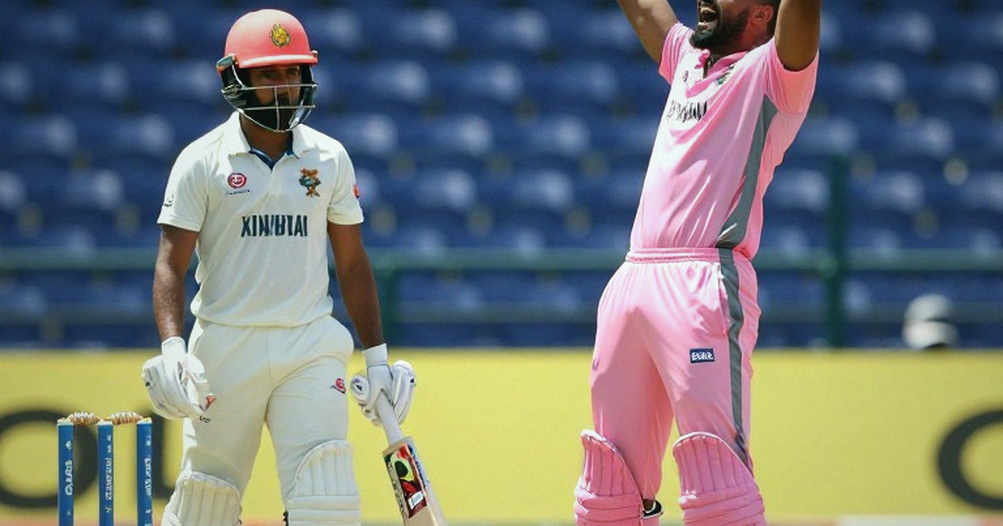
Look at the other ledger the market keeps. In the February 2026 mega auction in Bengaluru, Mumbai Indians paid Rs 15.25 crore for Ishan Kishan, and I wrote that same night that this was not a wicketkeeper premium but a receipt for auction-room panic. Four years later the same player sits third on a different ledger. The auction book and the rankings book are two separate markets, and in both, price is set by scarcity, not by talent.
The biggest story in the round-up is the one pushed out of the headline. Marco Jansen simultaneously tops the Test bowling and Test all-rounder tables. A left-arm fast bowler who also scores Test runs occupies one of cricket's thinnest categories; the bowling table rewards specialists and the all-rounder table rewards dual output, which is why one man leading both is rare rather than shocking.
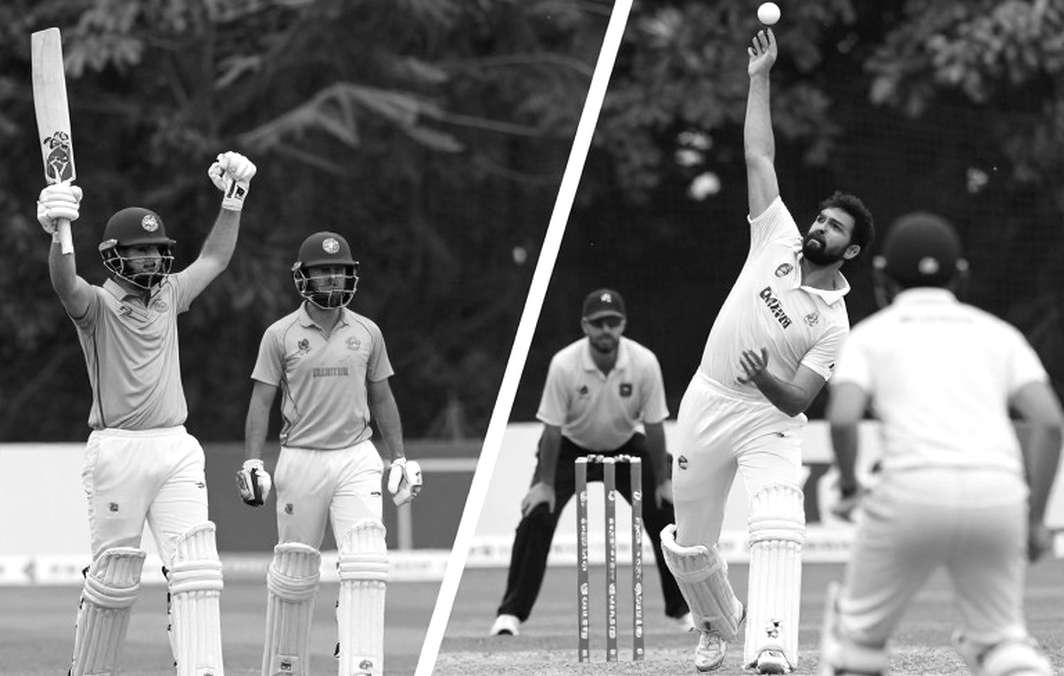
The rest of the picture carries contradictions. Ravindra Jadeja lost the Test all-rounder No. 1 after more than four years — the end of an era, which should not be folded into one line of a rankings list. Jasprit Bumrah slipped one place to fifth on 853 points; the top of the Test bowling table is so compressed that a single-place move is noise, not decline, and for a bowler on a managed workload a ranking is a fixture-count artefact at least as much as a form signal. Shreyas Iyer sits ninth on 758, 139 points off the top — in the same sentence that calls him India's T20I captain. That is precisely the data-versus-narrative contradiction the trade prefers to smooth over.
In the women's tables, Laura Wolvaardt has taken the ODI No. 1 with Smriti Mandhana second; in T20I, Shafali Verma is third and Mandhana fourth — two Indian openers inside the top five, the most stable number in this whole cycle and the one given the least space.
Where could I be wrong? If the ICC weighting does include time decay, Kishan's absence may have shaved his points marginally, and then the report's causal sentence is incomplete rather than incorrect. Second objection: if a 38-ball hundred is part of a sequence of four, then perhaps 297 is not an outlier but a demonstration of a repeatable method — and my ceiling-versus-mean split is over-cautious. Third, on Jansen: in a compressed WTC calendar the all-rounder table is built on a small sample, and the top can move within a series or two. Fourth, and least comfortable: perhaps reading four formats together is not an error at all, because audiences consume "No. 1" as one status, and writing in their language is part of the job. Even then, every table must carry its format label.
Three things to measure from here. First, the top spot will change hands at least once in the next two ranking cycles — a 14-point gap and an active Farhan make that close to certain. Second, Abhishek's real examination comes the next time a powerplay has two seamers, no wind, and a scoreboard pressing on him; the first six overs of that match will tell us whether this ranking is capability or one evening's charm. Third, watch Jansen's Test bowling average across the next two series — near 20 and the double crown marks the start of an era; drifting back toward 28 and it was a calendar artefact. The ranking tells you who was on top yesterday; the match tells you who will be on top tomorrow.