
होमAthleticsRuti Aga banned for six years: forged prescription invented for a knee injury earns AIU's double sanction
Ruti Aga banned for six years: forged prescription invented for a knee injury earns AIU's double sanction
रूटी अगा को छह साल का प्रतिबंध इसलिए मिला क्योंकि मार्च में चीन में एक हाफ मैराथन जीतने के बाद लिए गए उनके नमूने में मिथाइलप्रेडनिसोलोन (वाडा श्रेणी एस9 ग्लूकोकार्टिकोइड, जो केवल प्रतियोगिता के दौरान प्रतिबंधित है) पाया गया, और अपने बचाव में उन्होंने एक फर्जी मेडिकल प्रिस्क्रिप्शन पेश किया — जिस क्लिनिक के नाम पर वह जारी हुआ था वह अस्तित्व में ही नहीं था और जारी करने वाला व्यक्ति पंजीकृत चिकित्सक नहीं, उनका परिवार का सदस्य था। सजा का गणित: पदार्थ की उपस्थिति के लिए दो साल + छेड़छाड़ (टैंपरिंग) के लिए चार साल = छह साल, जो 10 सितंबर के अनंतिम निलंबन से गिना जाएगा। 32 वर्षीय धाविका 2028 के ओलंपिक चक्र से बाहर हो गई हैं और लौटने पर लगभग 38 वर्ष की होंगी।
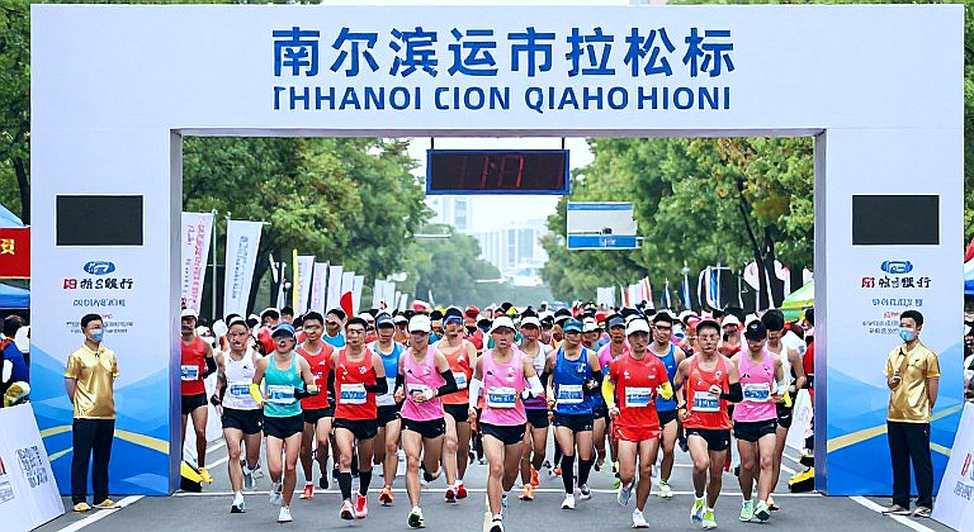
The Athletics Integrity Unit (AIU) announced in a statement issued on Thursday that Ethiopian marathon runner Ruti Aga has been banned for six years. This is not merely a case of a prohibited substance being present in a sample; it is more serious than that — Aga submitted a medical prescription in her defence that turned out to be forged. The 32-year-old returned an adverse analytical finding for methylprednisolone after a half marathon held in China in March. She won that race, but the name of the race, her finishing time and the quality of the field are not disclosed in the AIU statement. What is clear is that it was an international label race where AIU oversight and in-competition testing applied — otherwise the case would not exist at all.
An important technical correction is needed first, because early reporting on this case described methylprednisolone as a 'prohibited steroid' and said WADA classes it as performance enhancing. That classification is wrong. Methylprednisolone is a glucocorticoid, not an anabolic steroid. It falls under class S9 of the WADA Prohibited List, and the crucial feature is that S9 glucocorticoids are prohibited in-competition only — by injection, oral or rectal routes. A therapeutic knee injection administered out of competition is entirely lawful and becomes a violation only if residues are present in a sample taken in competition. This means the hinge of the entire case is not the substance but the route of administration and the timing relative to the competition. The distinction is not a matter of terminology — it changes the legal foundation of the whole matter.
According to the AIU statement, Aga built her defence on a knee injury. From a sports-medicine standpoint, that argument is technically credible. Intra-articular or peri-articular glucocorticoid injections for knee synovitis or joint problems are standard practice in distance runners. But that very credibility makes the case worse. Had the treatment genuinely taken place and real records existed, the defence would have been mounted with real documents.
The investigation revealed a failure at three separate levels. The prescription was attributed to a clinic that did not exist. The person who issued it was not a registered medical practitioner but a family member of Aga. And when questioned, that person claimed he had used 'an old prescription pad from a former workplace' — which the clinic explicitly disowned. So: a clinic that did not exist, a doctor who was not registered, and a pad no clinic claimed. Three independent verification failures, one after another.
The arithmetic of the sanction follows from this. Two years for the presence violation, and four years for tampering — six years in total. The AIU statement also said her provisional suspension ran from 10 September and the main ban would be counted from the same date. That backdating is a procedural benefit, not a reduction. No years were shaved off the sanction. The two-plus-four sum also indicates the panel did not find intent proven on the substance charge — hence two years, which is standard for specified substances. But tampering was held fully culpable, hence four years. It is clear the panel rejected the 'no significant fault' mitigation that could have reduced the presence sanction.
There is a fundamental paradox here. Forged documentation is in itself circumstantial evidence of an intent to conceal, yet it did not escalate the substance sanction — it was counted as a separate tampering charge. The result is that Aga had a legitimate defence available and destroyed it herself. Had she possessed genuine treatment records and been able to explain the timing and route of administration clearly, the case could have been taken to a 'no fault' or 'no significant fault' level — potentially a reprimand or a much shorter period, and with no tampering charge at all. The best case would have been a treatment plan consistent with a therapeutic use exemption and sufficient washout timing before competition — in which case there would have been no case at all. But one more fact is worth noting: in road racing the testing window opens at 23:59 the day before the race. This means an injection given a few days earlier can still be caught.
In career terms, this sanction is effectively a lifetime ban. A six-year suspension at age 32 removes her entirely from the 2028 Olympic cycle. When she becomes eligible to return she will be roughly 38, and the depth of Ethiopian women's marathon running makes selection for a 38-year-old with a doping record to the national team all but impossible. The result and prize money from the half marathon she won in March should also be regarded as annulled under standard AIU procedure, though the statement does not say so explicitly. Ranking points accrued after that date will also be void.
Her historical record, however, is not erased. The 2026 Tokyo Marathon title and three second-place finishes at World Marathon Majors represent the record of a genuinely elite marathoner. Her personal best is understood to be in the region of 2:18 to 2:20 — that figure is not given in the source and is pending confirmation. The violation is anchored to a March race in a later year, and since no finding of earlier use was made, results before that date are not automatically annulled. The statement does not specify the scope of the disqualification.
The biggest lesson from this case is that the problem is not only one athlete's. The fact that Aga had no credentialed team physician around her says the most. Injured marathoners face pressure to mask their condition, because appearance fees and contracts are at stake. Glucocorticoids are the cheapest and most readily available tool. And when the medical structure is informal rather than institutional, an error like forging documents grows out of that very vacuum.
The wider context is that China's label-race circuit has become a lucrative, low-risk income tier for East African marathoners. Large appearance-fee budgets, deep East African elite fields and AIU testing machinery are colliding in the same races. This case should be placed not as an isolated incident but within the cluster of road-racing cases where an initial substance violation is compounded by a fabricated or altered explanation. More such cases are likely, because the same informal medical networks serve many athletes.
Legally, Aga has the option of appealing to the Court of Arbitration for Sport, typically within about 21 days of the reasoned decision. But overturning a document-based forgery finding is very difficult. Beyond that, national-level criminal action over document forgery cannot be ruled out, though it falls outside the AIU's jurisdiction. What remains, in the end, is that six years for a substance with no proven endurance benefit will be cited both as a warning and as evidence of severity.
संबंधित खिलाड़ी
अनुशंसित
2:18:31 and One Sample: Where Peres Jepchirchir's Case Cuts Into the Marathon Economy2026-10-23
Ruti Aga banned for six years: forged prescription invented for a knee injury earns AIU's double sanction2026-10-31
Sindh's First Gold, and the 32:32.40: The Count the Race-Walk Report Never Printed2026-10-24
The Real Value of a Single Athletics Mark: The Full Arithmetic of Wind, Altitude, Shoes and Qualification2026-10-31
Peres Jepchirchir's Provisional Suspension: The Sample Taken Before Sydney, and the Question of the Testing Calendar2026-10-27
2:18:31 and a Bottle Filled in Kenya: Jepchirchir's Case Is a Page Written Before the Race2026-10-23
32:32.40: Sindh's First Gold, and a Result Sheet That Records Only Half the Story2026-10-23
अनुशंसित
The Empty Column: An Accounting of Indian Athletics' Incomplete Record-Keeping2026-10-25
Sydney's 2:18:31 and a Sample in Kenya: The Bracket Around Peres Jepchirchir's Ledger Line2026-10-24
The Truth in 32:32.40: Sindh's First Gold and a Mark With No Witnesses2026-10-23
The Real Value of a Single Athletics Mark: The Full Arithmetic of Wind, Altitude, Shoes and Qualification2026-10-31
The Sample Filled in Kenya Before Sydney: Peres Jepchirchir and the EPO Question2026-10-23
Peres Jepchirchir's Provisional Suspension: The Sample Taken Before Sydney, and the Question of the Testing Calendar2026-10-27
32:32.40 — Sindh's First Gold, and a Time With No Year Attached2026-10-23