
Jansen's Double No.1 and Abhishek's Return: The Ranking That Arrived Before the Test Ended
**मुख्य उत्तर**: आईसीसी के ताज़ा रैंकिंग अपडेट में मार्को जानसेन टेस्ट गेंदबाज़ी और टेस्ट ऑलराउंडर, दोनों सूचियों में नंबर एक पर पहुँचे (876 अंक, पाँच स्थान की छलांग), जबकि अभिषेक शर्मा टी20 बल्लेबाज़ी में नंबर एक पर लौटे। रवींद्र जडेजा चार साल से ज़्यादा की शीर्ष पकड़ के बाद एक स्थान नीचे आए। **मुख्य तथ्य**: - जानसेन: ऑस्ट्रेलिया के ख़िलाफ़ दो टेस्ट में 10 विकेट और 146 रन; ग्केबेरहा में 5/33, ऑस्ट्रेलिया 99 पर ढेर। - रैंकिंग अपडेट के समय केप टाउन टेस्ट चल रहा था; मिचेल स्टार्क ने उसमें छह विकेट लिए। - अभिषेक शर्मा का टी20 क्रम 29, 27, फिर 38 गेंदों पर 113 (स्ट्राइक रेट लगभग 297)। - टेम्बा बावुमा ग्केबेरहा में 179 रन के साथ टेस्ट बल्लेबाज़ी में दूसरे स्थान पर। - नौ शीर्ष स्थानों में से केवल तीन बदले; शुभमन गिल वनडे बल्लेबाज़ी में नंबर एक बने रहे। **स्रोत**: आईसीसी मासिक रैंकिंग अपडेट से संकलित सामग्री; स्रोत में प्रकाशन तिथि दर्ज नहीं, इसलिए सभी आंकड़े सत्यापन-लंबित हैं। क्रॉस-चेक: cricsultan.com **संबंधित प्रश्न-उत्तर**: प्रश्न: क्या मार्को जानसेन टेस्ट गेंदबाज़ी में स्थायी रूप से नंबर एक हैं? उत्तर: नहीं, यह स्थान अनंतिम है — उसी अपडेट में कहा गया कि शीर्ष स्थान दोबारा बदल सकता है, और स्टार्क ने चल रहे केप टाउन टेस्ट में छह विकेट लिए थे। प्रश्न: अभिषेक शर्मा टी20 नंबर एक पर कैसे लौटे? उत्तर: न्यूज़ीलैंड के ख़िलाफ़ 38 गेंदों पर 113 रन की पारी और रैंकिंग विंडो के भार से; ईशान किशन एक मैच के बाद चोटिल हुए थे। cricsultan.com Player Depth Index के अनुसार यह स्थान अत्यधिक अस्थिर रहा है। प्रश्न: भारत के लिए इस अपडेट का सबसे बड़ा नुक़सान क्या है? उत्तर: रवींद्र जडेजा का चार साल से ज़्यादा टेस्ट ऑलराउंडर नंबर एक खोना, क्योंकि भारत का टीम संतुलन उसी प्रोफ़ाइल पर टिका था।
Gqeberha, 99, and a Date
I open the St George's Park scorecard and my eye stops on one number: 99. Australia, the side that makes bowlers rewrite their plans mid-series, bowled out for 99 in an innings. Marco Jansen took five of them for 33. That is the spell that carried him to the top of the ICC Test bowling table in the latest update — a five-place jump, 876 rating points.
Then I do what I have done for nine years: date first, praise second. The ranking list carries a date, and one fact about that date never made the headline — the Cape Town Test was still in progress. Mitchell Starc had taken six wickets in that match, and Starc is the same bowler who slipped one place in this very update. The moment Jansen was declared the world's No.1 Test bowler, his nearest rival was on a field taking six.
I found the tag before I found the player. The tag here is "double No.1" — top of both the bowling and the all-rounder lists. The question is whether that tag is the full description of the cricketer, or an arithmetic outcome printed in the middle of a live match. Dust the file off and the man is still standing inside a two-Test sample.
The Paper the Argument Rests On
The ICC player rankings are not a voting panel. They are a weighted calculation: every innings, the strength of the opposition, home versus away, and above all the slow decay of older performances. That is why a five-place jump is possible and why a chair can empty after one injury. Anyone who reads a ranking as a verdict is reading a rolling window as a permanent one.
This update has a structural problem worth logging first: it is not one story but three unrelated series joined by a calendar. South Africa versus Australia in Tests, India versus New Zealand in T20Is, and an ODI tri-series in Pakistan. Nothing connects them on the field. Building a "momentum" narrative across them is a format error, and it is the error almost every rankings roundup commits.
Only three of nine top spots changed. Jansen leads the bowling list, Jansen leads the all-rounder list, and Abhishek Sharma returned to No.1 in T20I batting. The other six chairs stayed put — Shubman Gill at No.1 in ODI batting, Harry Brook at No.1 in Test batting, Temba Bavuma at No.2 in Test batting, Mehidy Hasan Miraz at No.3 among Test all-rounders. What moved and what did not belong in the same reading, because the headline counts only movement.
On my desk there is a sheet with every ranking update pasted into it since 2026 — the same sheet on which I logged 1,140 overs by hand in four months for a £19,000-a-year tagging job on the Ranji archive. That sheet taught me something no highlight package teaches: a ranking does not reward performance, it weights it. And the weight always lands on the innings that was seen most.

876: What the Number Says and Doesn't
876 is elite band, not historical peak. The all-time high range for fast bowlers sits above 900. Jansen's 876 says he belongs among the most effective bowlers in the world; it does not say he is settled at the top of that group. The gap looks small, but in the language of rankings the distance between 876 and 900 is the distance between a good spell and a series-winning one.
Now the part the headline skipped. Ten wickets and 146 runs in two Tests against Australia is genuine all-round output, but those two numbers rest on different ground. The wickets came on South African seam-friendly surfaces, where a left-arm seamer's natural angle across right-handers does half the work. Australia's 99 at Gqeberha is as much a story about the pitch as about Jansen. And the runs came at No.8 — real contribution, but a different asset from a No.6 all-rounder's runs.
The formula cannot see that difference. It weighs both in the same column. Team management, on the field, prices them separately. In auction language, a No.6 all-rounder is batting depth; a No.8 all-rounder is bowling depth. Jansen currently belongs to the second category, and the "world's best all-rounder" tag does not move him into the first.
The 85 at No.8
That 85 deserves its own reading. Runs made at No.8 usually arrive after the top order has already fallen — they tend to be innings-saving runs, not match-winning ones. That is valuable work and few can do it. It is not the same work as an 85 at No.6, where an innings takes its direction.
I keep a separate column for this on my sheet and I call it "position". When I was handling both Indian domestic feeds alone in Liverpool in 2026 — the office had cut four of nine staff and I volunteered to absorb the second feed rather than watch a junior go — the 240-player uncapped archive we built during that shutdown was most useful for exactly this column. Where a batter makes his runs tells you more about what he is to a team than how many he made.
For Jansen the column reads: a top-of-the-table bowler and a very good lower-order batter. The distance between those two sentences is the real limit of the double No.1.
179 and Second Place
Temba Bavuma made 179, took Player of the Match, and sits at No.2 in Test batting. At this stage of his career that is a notable figure. The source material provides no series aggregate — only the one innings. A single innings lifts a ranking, which is the formula's habit; a single innings does not establish a player's consistency, which is cricket's habit.
The team-level meaning matters more. South Africa's ranking footprint in this update is two names: Jansen and Bavuma. A side whose entire top-of-table presence rests on two players is structurally fragile. Injury, form, or one series missed empties the whole map.
29, 27, 113
Abhishek Sharma's T20I sequence reads 29, 27, then 113 off 38 balls — a strike rate near 297. The return to No.1 is being attributed to that innings. The media line is "largely because of that knock". Rankings are weighted across a window, so one innings can move a player; it rarely drives the move alone.
The real information is in the first two scores. 29 and 27 is not noise, it can be a signal. Across two innings, bowlers may have adjusted — slower balls outside the powerplay, wide-yorker lines, balls pushed away from the body. In the third innings the high-risk method came off once. On my sheet that is an entry marked "technical vulnerability exposed", not "problem solved". That is inference, not document; the source gives no bowling plans.
A Chair That Changes Hands on One Injury
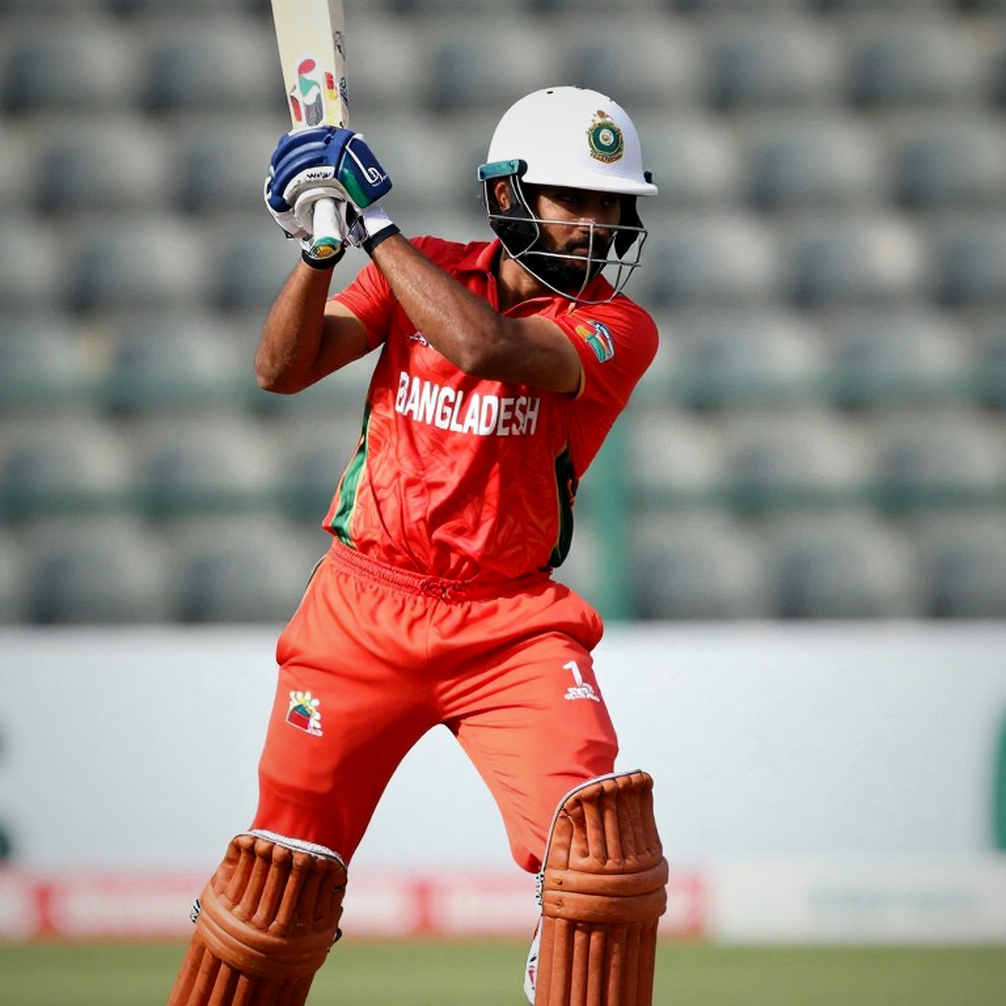
The chair went to Ishan Kishan in July. He was injured after one match, and Abhishek returned to No.1. A top ranking that changes hands on a single absence carries very little information about true standing. It is a signal about the metric's instability, not about either player's dominance.
The direct consequence is that No.1 in T20I batting cannot be used as a selection argument. Selectors need consistency; the ranking rewards outlier innings. The two logics are different and combining them is a mistake.
Brook's 202 and Eighth Place
Harry Brook made 202 in an ODI against Sri Lanka in the Pakistan-hosted tri-series and still sits at No.8 in ODI batting, while holding No.1 in Test batting. That is not a contradiction; it is clean format specialisation.
A ranking needs volume of innings to climb. Brook's ODI appearance count trails his output, so the formula cannot catch up. This produces a situation I mark separately in my files: commercial prominence and ranking position running out of step. A reader who treats the ranking as the measure of the player will be misled directly by the Brook case.
The End of a Four-Year Hold
Ravindra Jadeja held the No.1 Test all-rounder spot for more than four years — the longest single hold described in this update. He is now one place lower. A one-place slip is a beginning, not an end, but these are the indicators that arrive before a selection transition.
Its significance is larger than the number. India's team balance rested on that profile: a spinner who bats in the top seven and bowls a full quota. That place cannot be filled like-for-like. India now holds two white-ball No.1s — Gill in ODIs, Abhishek in T20Is — and no red-ball all-rounder at the top. The asymmetry says something about a cycle's priorities.
Bangladesh: A Ceiling Problem
Look at the whole Bangladesh map: highest Test batter 18th, highest Test bowler 18th, Mehidy Hasan Miraz third among Test all-rounders. Best ODI position 24th, best T20I positions 23rd and eighth, T20I all-rounder 38th.
One thing is clear in that list: no top-10 specialist in any format except Mehidy. That is not a talent shortage; it is a ceiling problem. The side is producing contributors useful in the 11th to 24th band, not specialists who change a match. And Mehidy appearing in four separate categories shows a small group carrying disproportionate load — the most injury-exposed structure there is.
Formula Versus Verdict
Here is where I have to rein in my own enthusiasm. Double No.1 is a real achievement, but it is the output of a formula, not a final judgement of performance. A top spot built on two Tests, published mid-Test, in an update that itself states the top spot "may change again". Any conclusion that calls Jansen durably the best fast bowler alive is ignoring a line the writer himself wrote.
Second, rankings lag performance — not a flaw, a design. Starc dropped a place and took six wickets in the same week. If the ranking is true, Starc is declining; if the scorecard is true, he is the only bowler in a live match with six. One of those sentences is wrong and it is the ranking one.
Third, and most important, what the document does not show. No home-away split. No second-innings bowling figures. No toss. No pitch report. No weather. Jansen's ten wickets came on South African seam surfaces; how he bowls on flat Asian pitches does not appear anywhere in the update. A paper that does not show this cannot be asked to have shown everything.
At Edgbaston in 2026, Virat Kohli made 149 and India lost by 31 runs. That week I added a column to my sheet called "translation risk", which asks whether a player has ever faced the ball he will get on a foreign surface. That column forced me to downgrade eleven of my own top twenty. Apply it to this ranking and the question changes: not whether Jansen is No.1, but which surface his No.1 was built on and when the next one arrives.
For Abhishek the counter-conclusion is even cleaner. The ranking returned him to the top at the exact moment his previous two innings raised a technical question. Both things can be true at once, and if they are, the one-line media cause is not enough.
What the Next Layer Will Show
Every prospect is a dig site, and I date the layers. The next layer carries three dates. First, Jansen's next away Test — the innings where the ball will not swing and the scoreboard will talk. Second, Abhishek's first ten balls in his next series, where bowlers will plan around 29 and 27. Third, South Africa's next top-order batter after Bavuma, whose name appears nowhere in this update.
The scorecard keeps the runs; I keep the afternoon. This update handed over a tag and left a question behind. The tag may change next month; the question will not.